
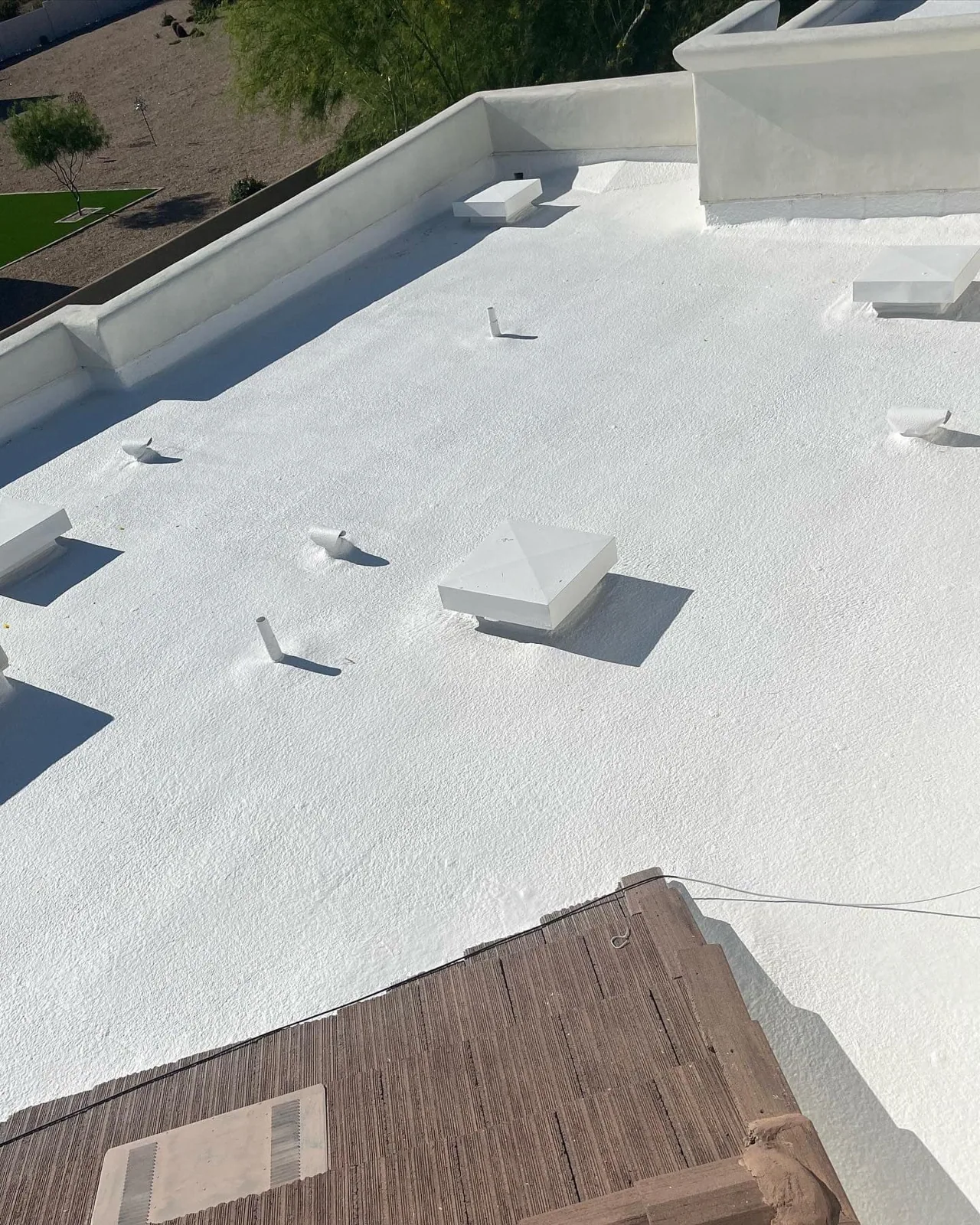
Record the Failure Before Setting the Repair
Water may travel under a membrane or along a deck before reaching a ceiling. A stain, wet insulation, and a split seam are different observations, so each belongs in its own line of the report. We mark the interior location, trace the roof-side path, and use a moisture survey or test cut when evidence calls for it. Testing records a sample point; it does not define conditions across an untested roof zone.
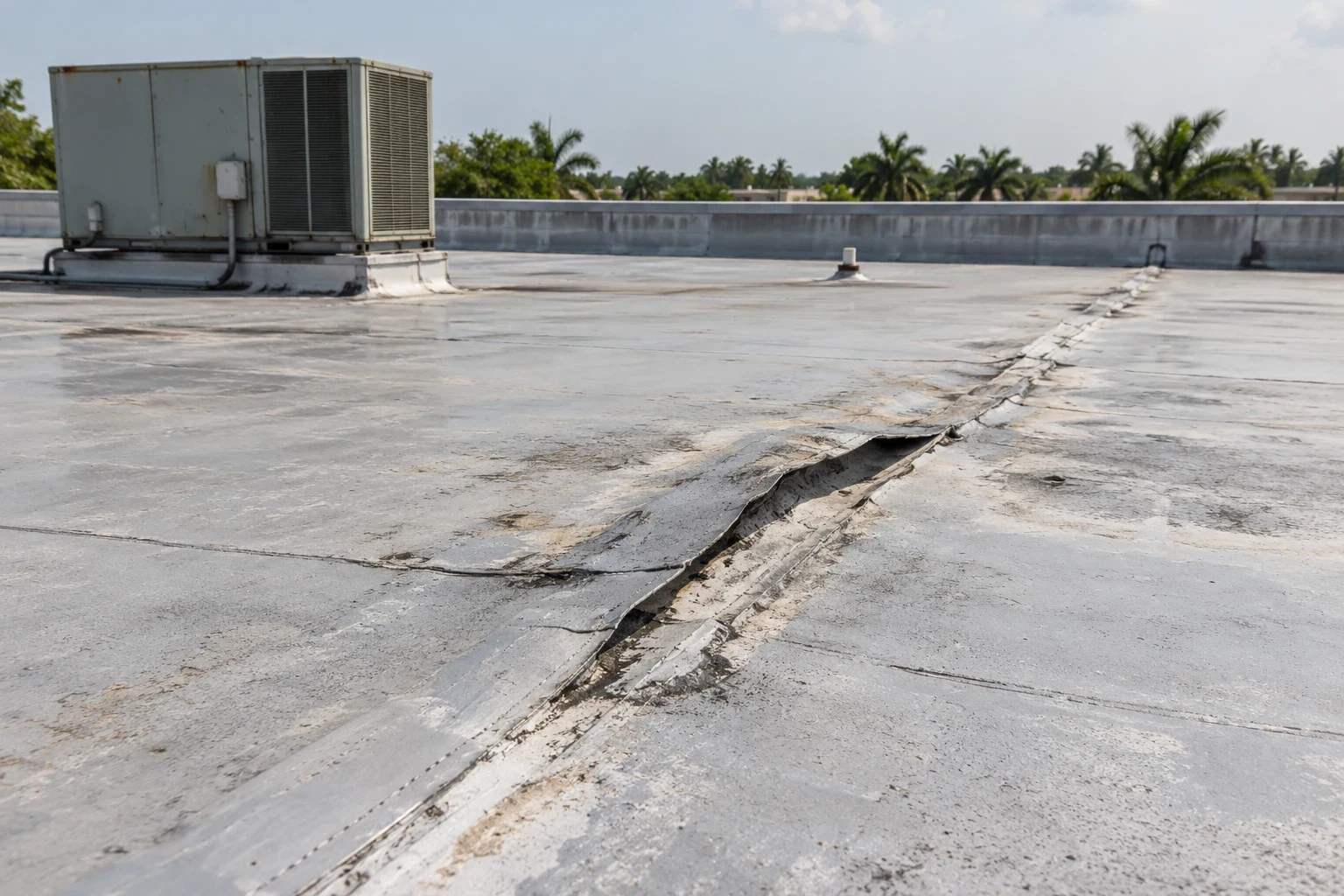
Central Texas brings sustained summer heat. The nearby Austin Camp Mabry climate normal has an August average high of 97.8°F for 1991 to 2020. That station provides regional context rather than a reading on a Round Rock roof. Heat can stress details and accelerate movement; a field inspection establishes whether seams, coatings, or flashing have actually changed. Heat and UV damage review separates surface wear from a failure that allows water through.
Keep Emergency Protection Separate from Permanent Work
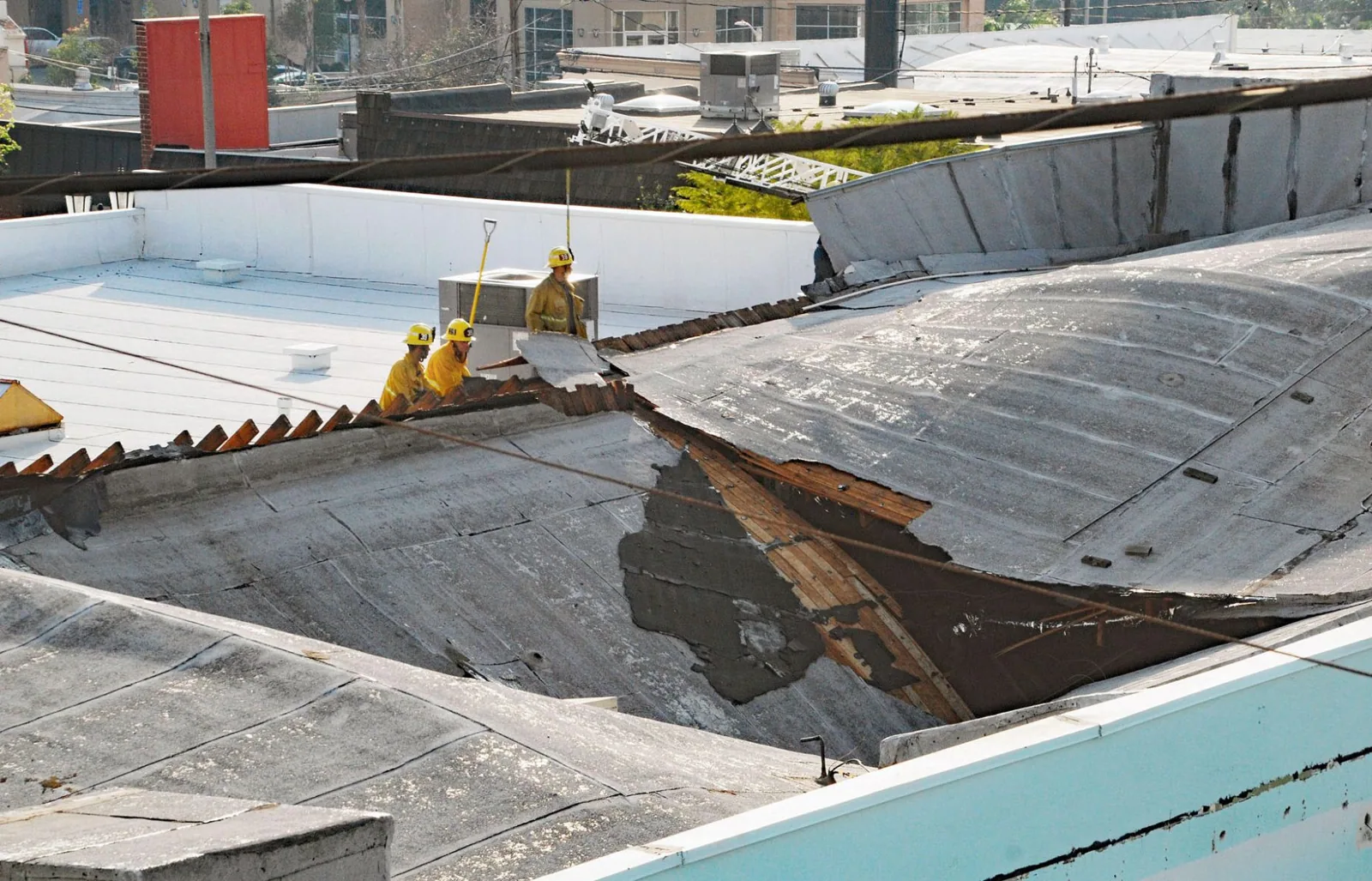
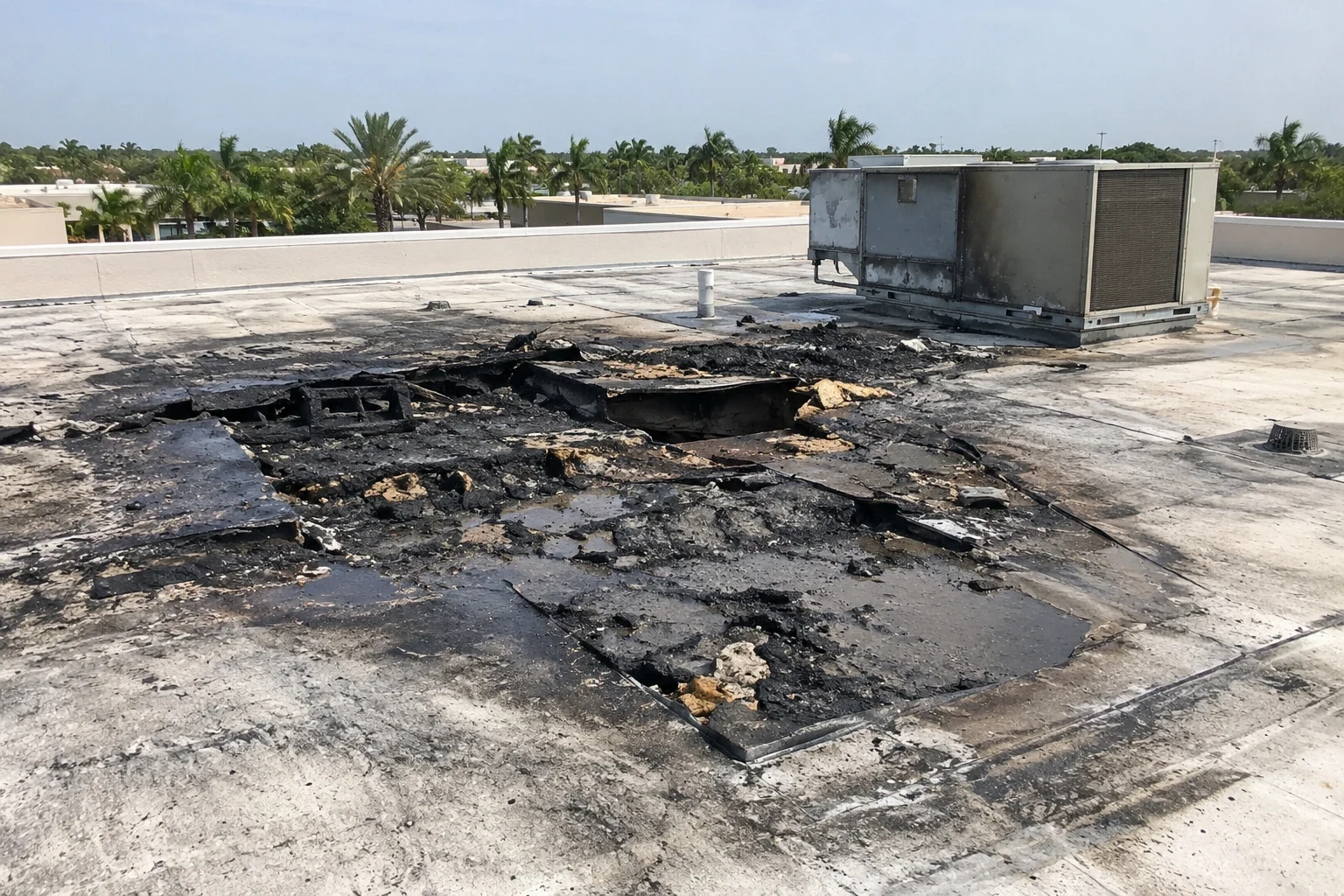
When water is active, a temporary cover or localized correction may limit further entry while the source is investigated. We record that work separately from a permanent repair. A flashing repair, seam repair, or membrane puncture repair should follow a defined boundary and identify adjoining material that remains. If moisture or recurring failures extend beyond that line, we explain what additional testing or replacement comparison may be needed.
Drainage can also contribute to a damage pattern. Ponding-water repair begins by checking the drain bowl, overflow route, slope, and any obstruction. A larger scope depends on whether the water has affected the assembly or whether a local correction can restore flow. Round Rock's severe-weather and summer-heat context helps prioritize the roof walk; it cannot replace evidence from the inspected property. Share the address, roof plan, reported area, access contact, and event date through a commercial roof inspection or the contact form.
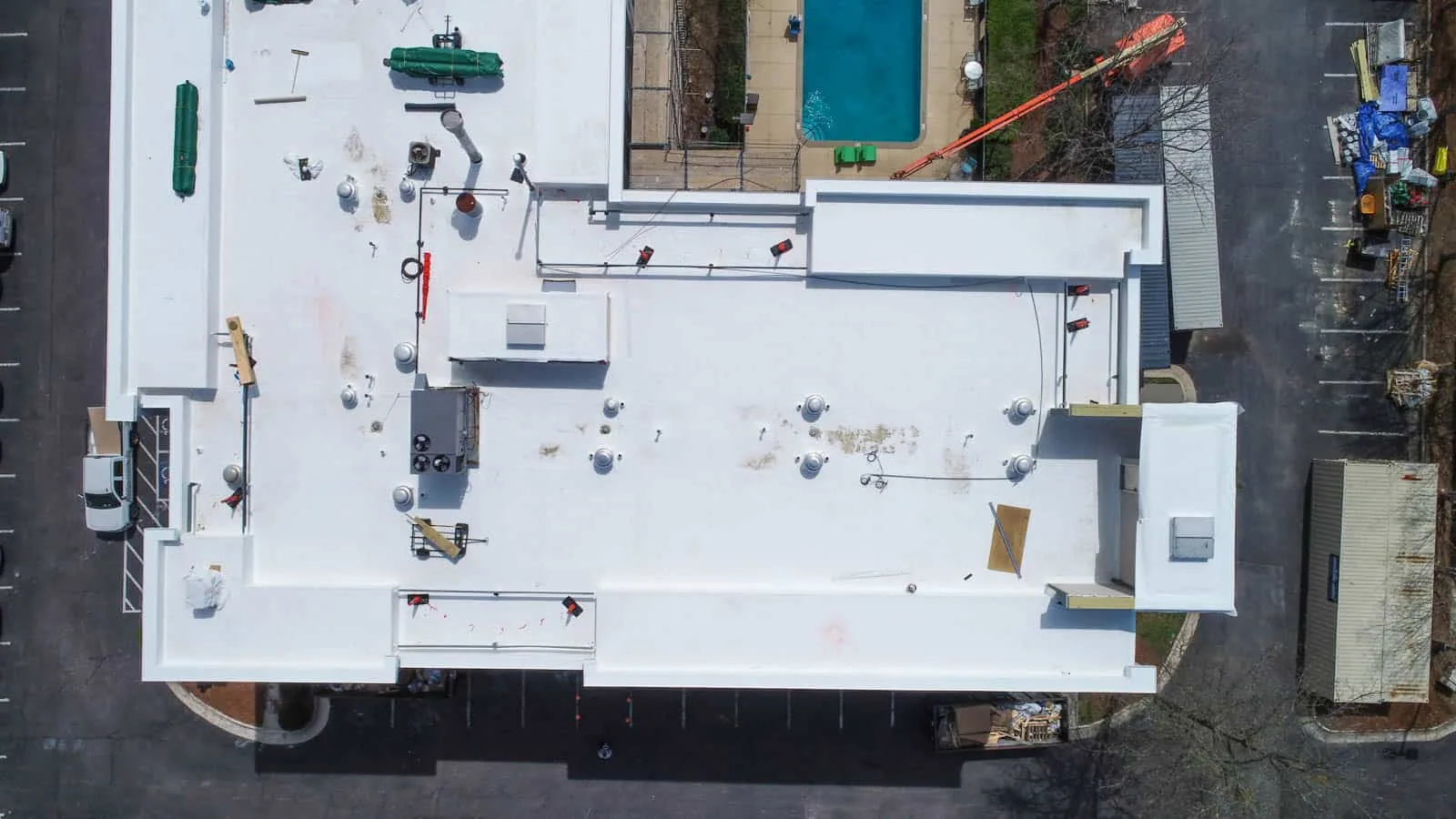
Follow the Entry Point Beyond the Stain
Water can travel along a deck, insulation facer, or framing before it appears indoors. We compare the ceiling location with roof penetrations, seams, drains, and perimeter details above it. A controlled hose test may help when conditions allow, but the report should separate observed evidence from a suspected route until the source is confirmed.
Close the Repair at the Detail
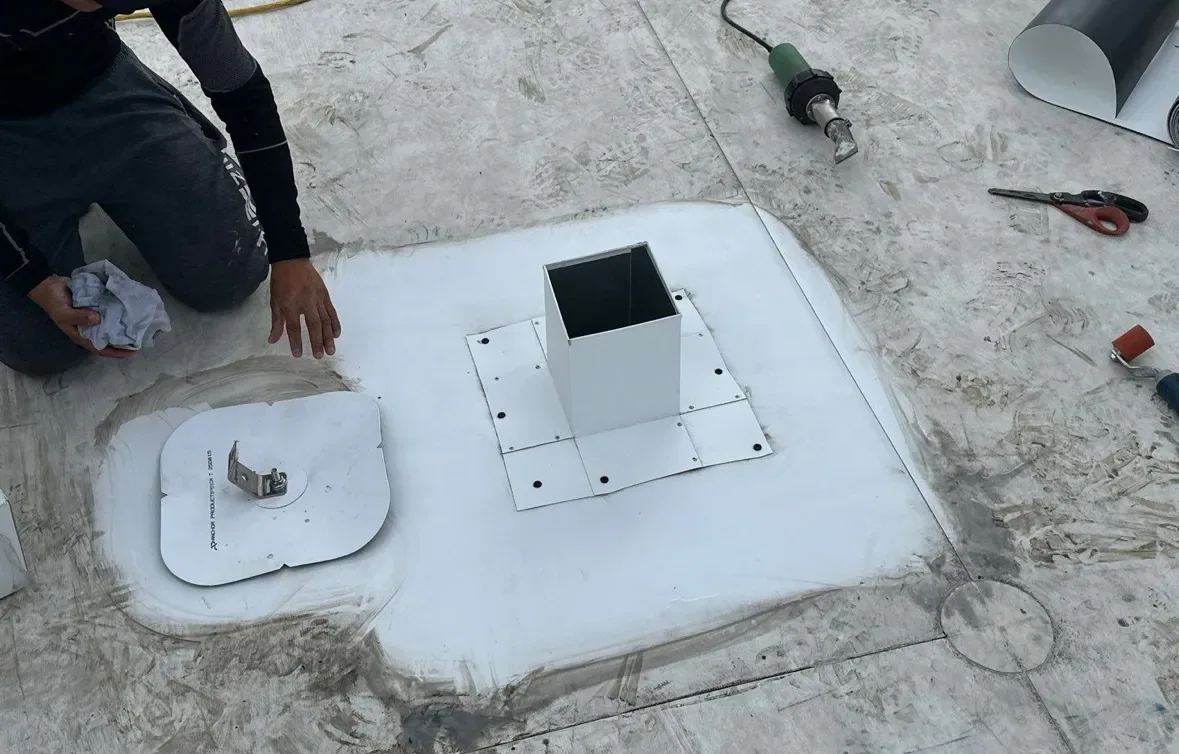
A repair is complete when the failed detail is corrected and the surrounding assembly is checked for related movement or trapped moisture. We photograph the finished area, note the materials and limits of the work, and list any follow-up test. The record gives the next roof walk a clear starting point.
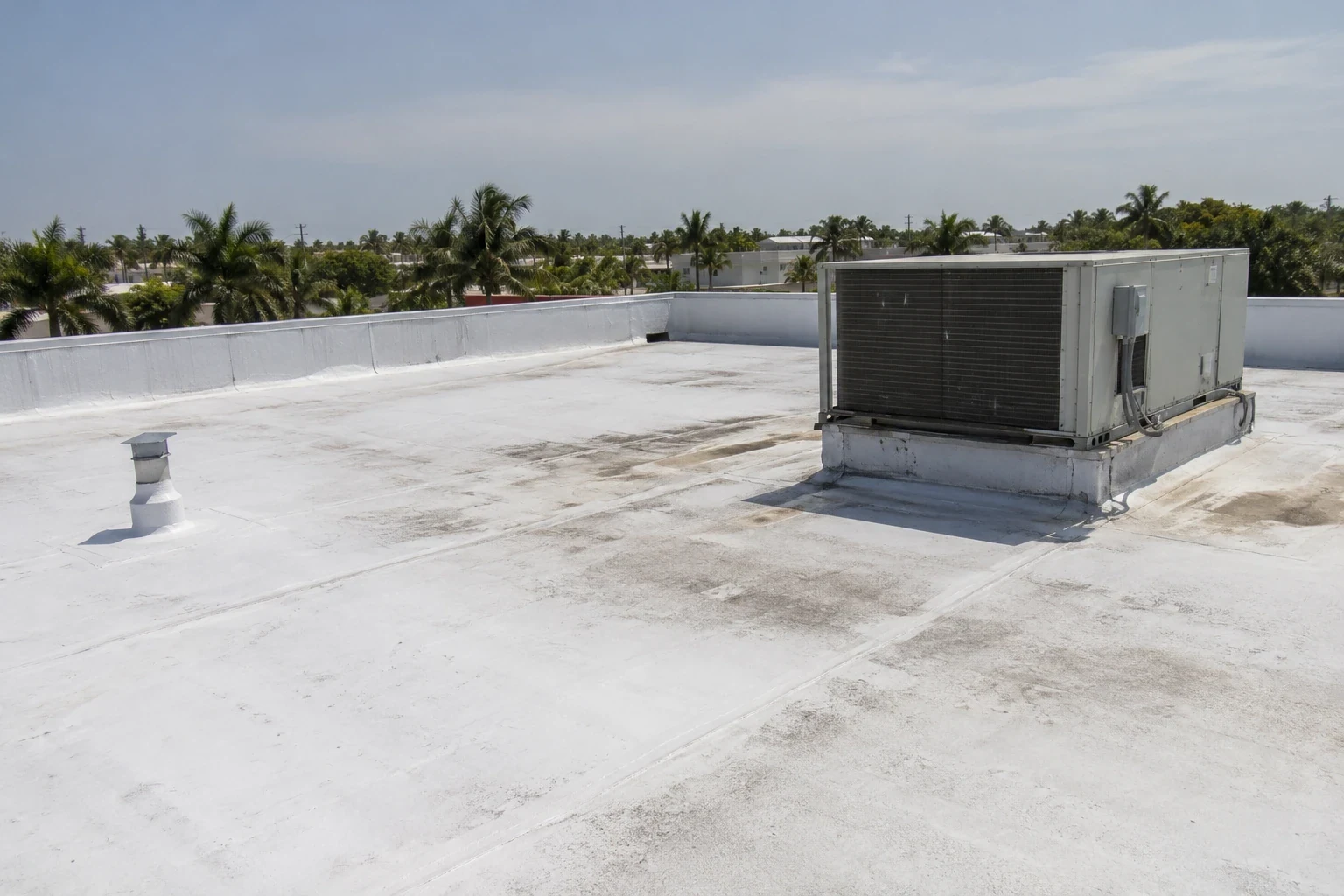
Roof Damage Repair: Common Questions
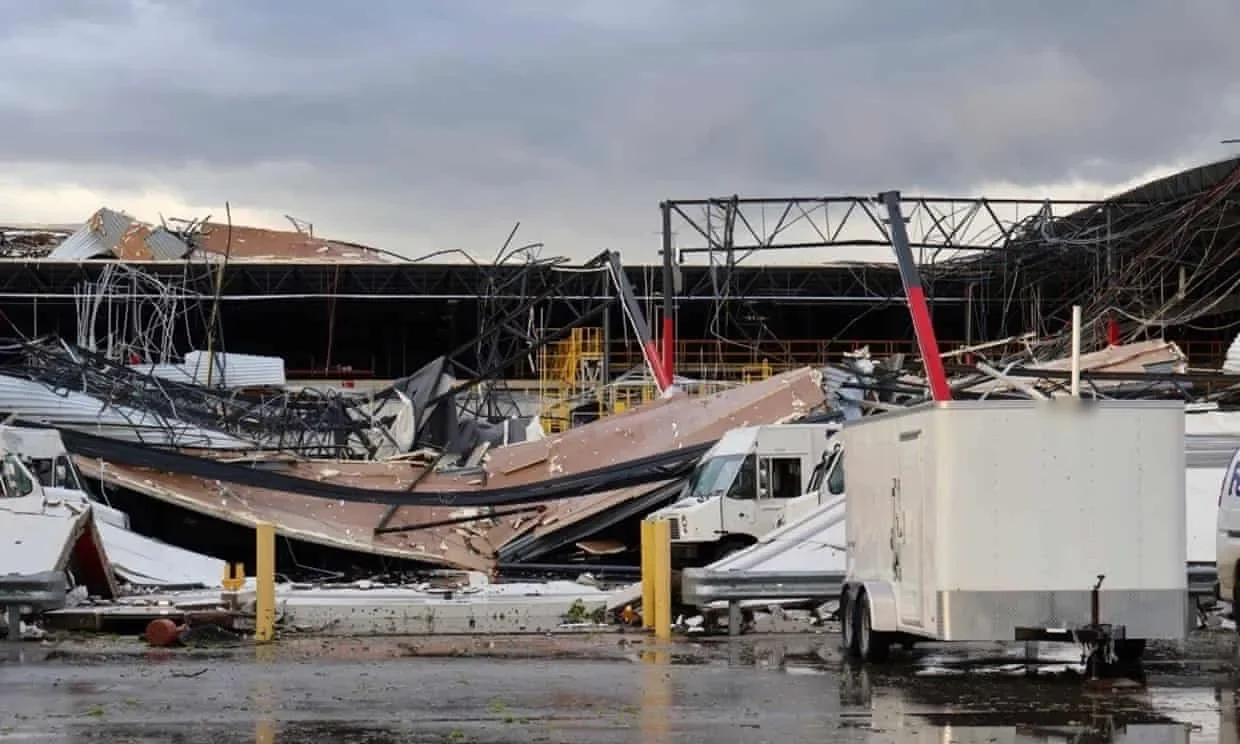
Does a tornado or hail report establish a roof claim?
No. The report provides timing and regional context. We document the observed roof condition and the areas reached before defining repairs.
Can temporary protection close out a damage repair?
Temporary protection limits exposure while diagnosis or permanent work is pending. We list it separately and state what remains to be checked.
What should happen after a hail or tornado report near my property?
Schedule an inspection of the actual roof assembly and preserve interior photos and incident dates. We document visible damage and access limits; regional weather reporting alone does not establish a condition or insurance outcome.
What belongs in a temporary roof protection scope?
It should identify the covered area, the method used, expected limitations, and what permanent diagnosis remains. We keep temporary protection separate from the repair price and return plan.
Share the building address, event or leak details, roof plan, access contact, and prior repairs. We will inspect the affected area and set a clear repair boundary. Call 555-555-5555 or request a roof assessment.