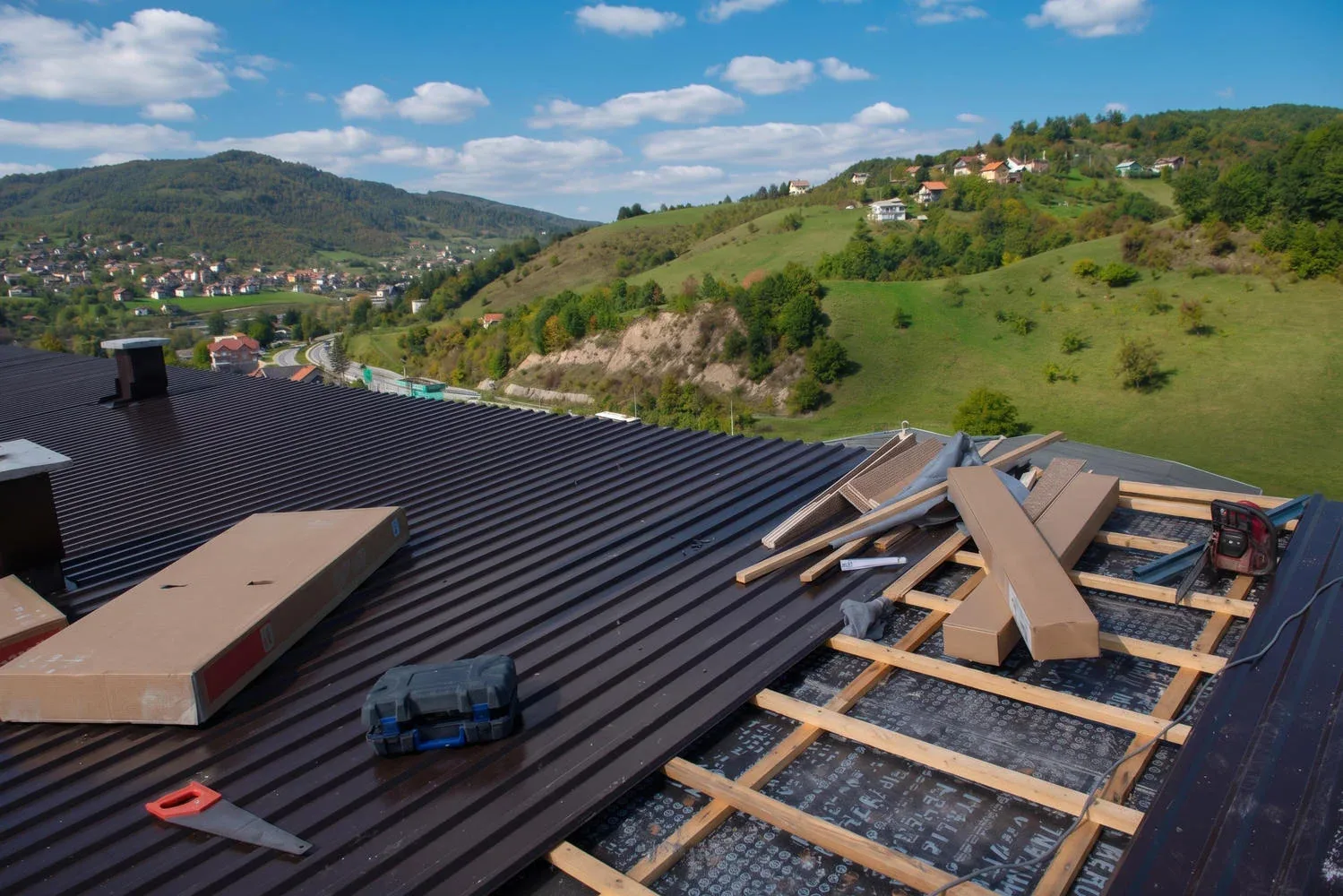
Document the Hail-Affected Roof
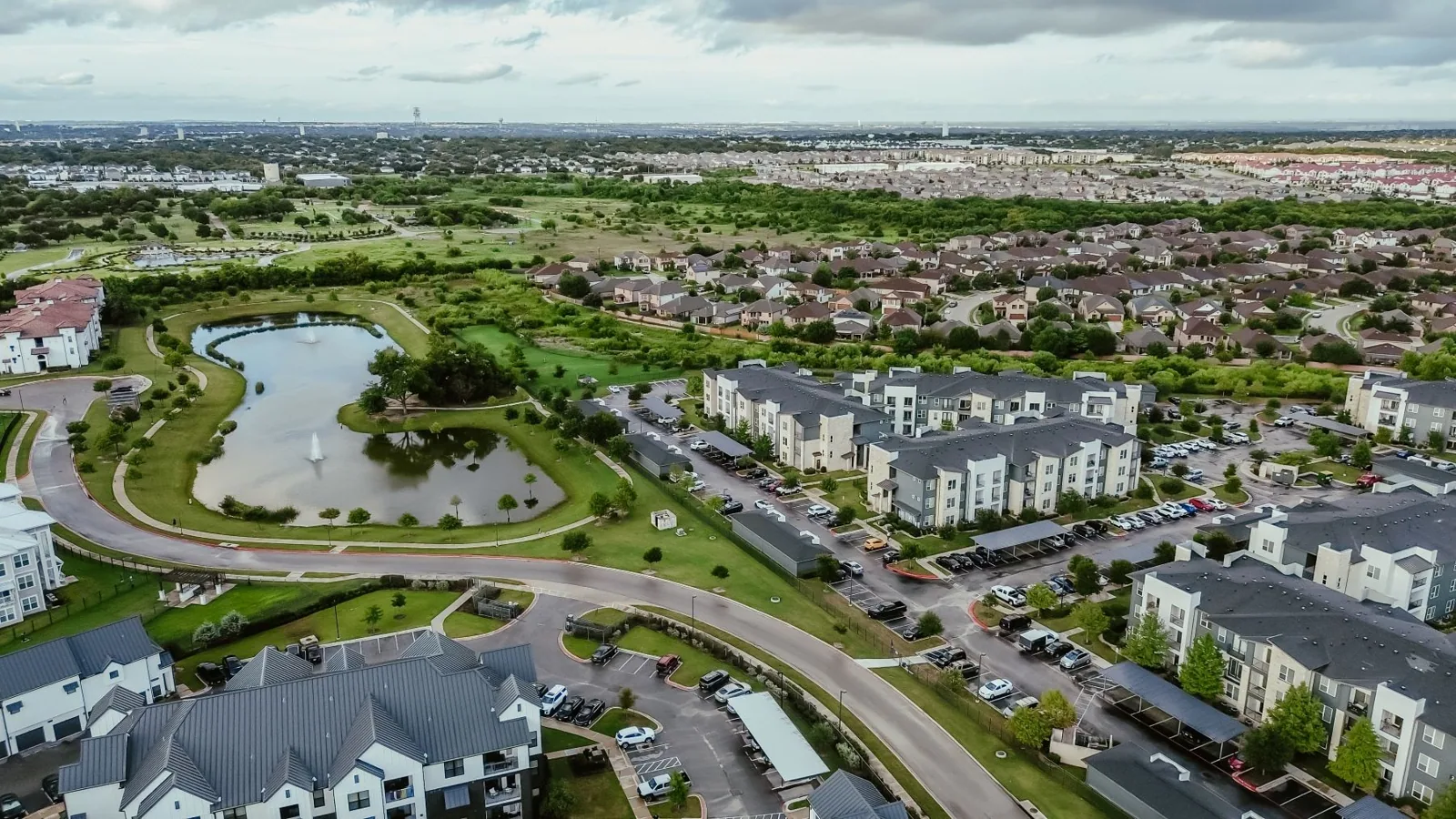
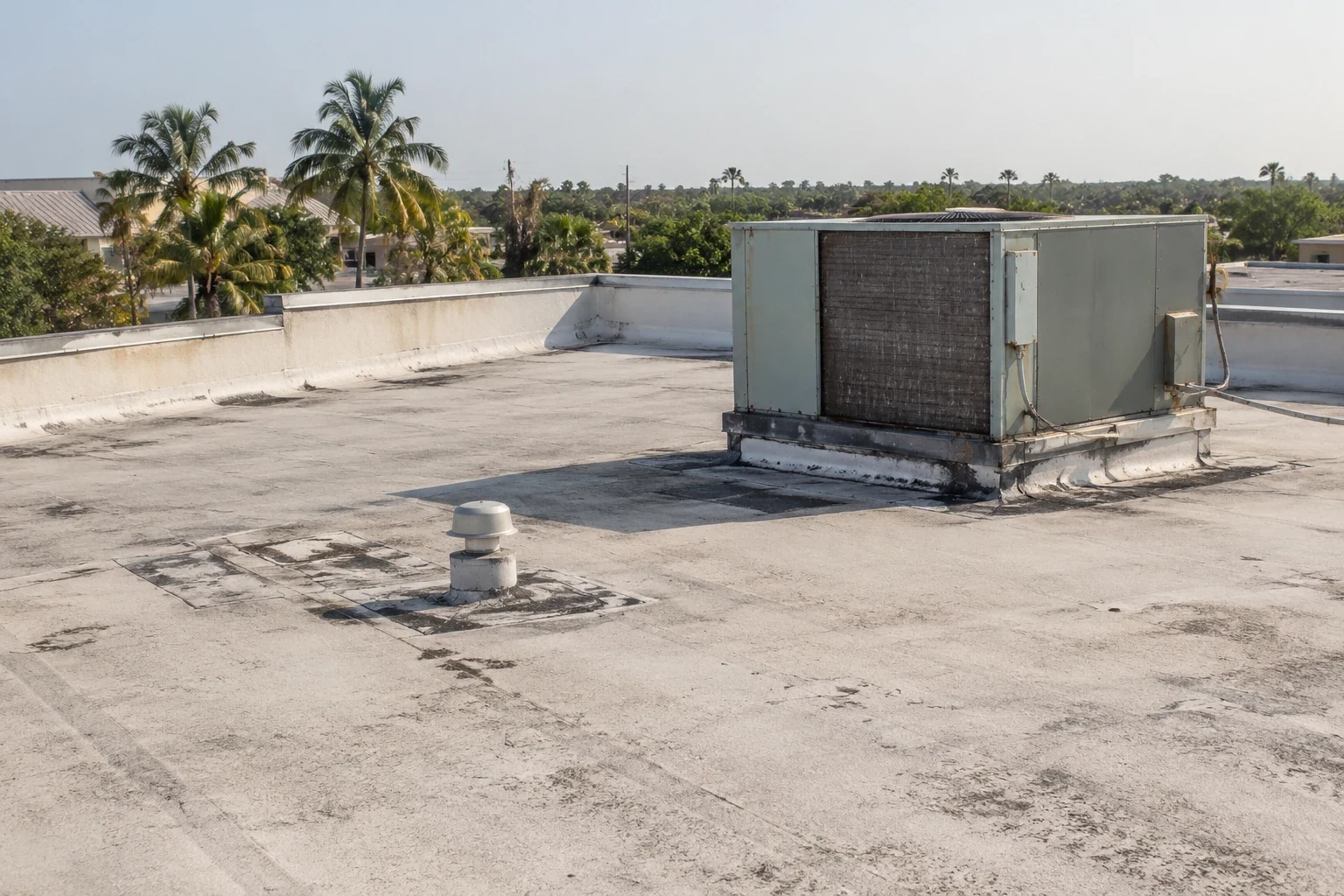
A rooftop unit cover has fresh impact marks, but the membrane below it may show a different condition. We inspect both surfaces and map any opening before proposing repair. The March 2022 severe-weather outbreak brought large hail reports across the Austin and San Antonio area, including a tornado track through Round Rock. Round Rock has regional retail, while Pflugerville's industrial parks cluster around SH 130. We inspect each property’s roof and distinguish observed damage from regional weather reports. Compare a Round Rock property with businesses across Pflugerville using the actual roof findings, not nearby land uses.
Hail can mark exposed metal, damage a membrane, or leave no functional opening. We record the roof material and impact evidence, then test whether water can enter.
Send the storm date, property address, roof plan, interior reports, access contact, and any inspection deadline. We will map visible conditions and confirmed repair needs. Call 555-555-5555 or request a roof assessment.
Compare Impacts Across Roof Materials
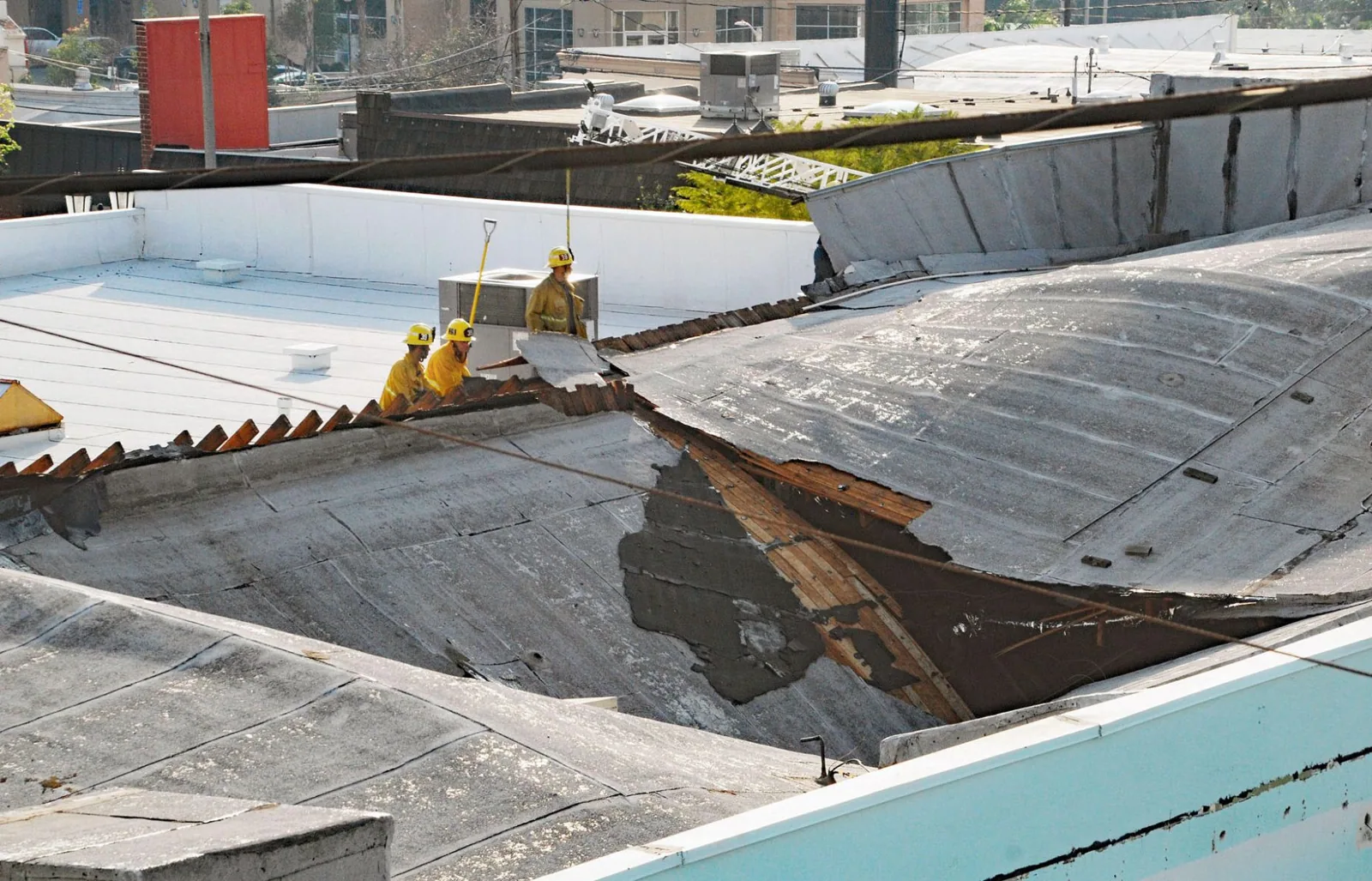
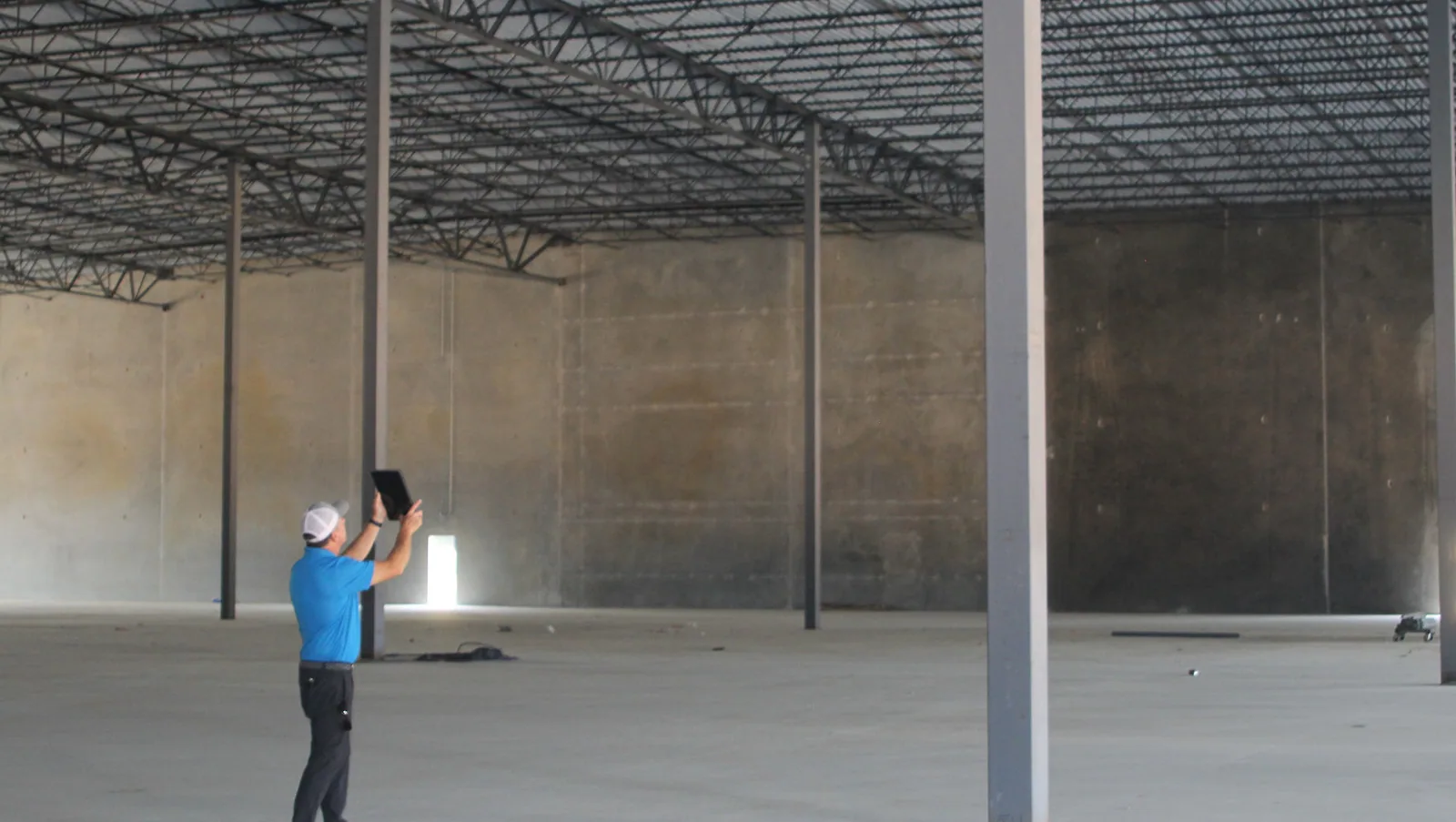
We begin with the weather date, property address, and roof sections that can be safely reached. The inspection checks membrane surface, seams, flashings, edge metal, skylights, rooftop unit covers, and soft-metal accessories. Dents in a metal component do not automatically mean the membrane below has failed. We show which surfaces were inspected and note any obstruction.
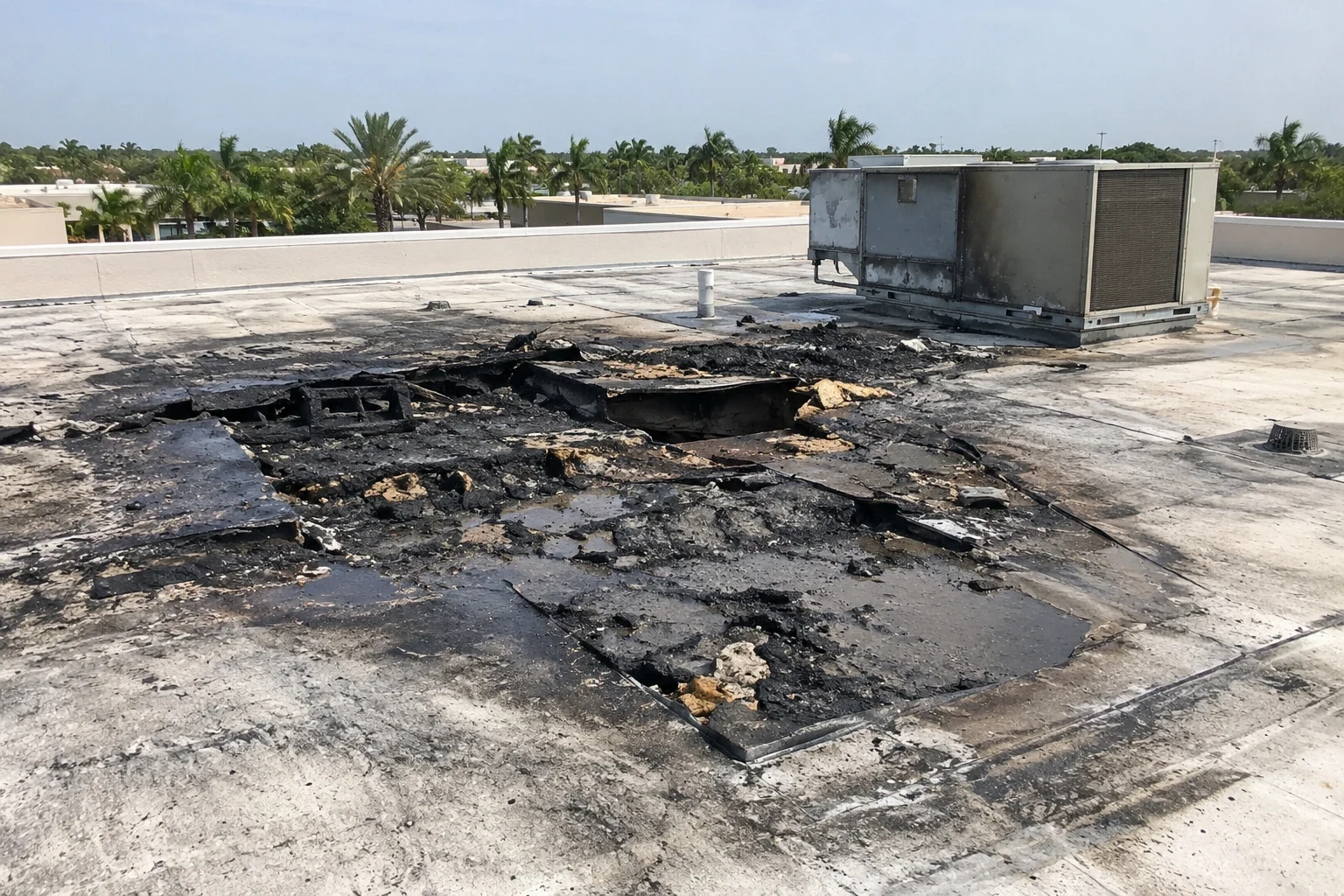
On a single-ply membrane, look for cuts, punctures, fractured coating, or a seam that has opened at an impact point. On metal, inspect panel laps, fasteners, and trim for displacement or water entry. On a built-up roof, examine surface aggregate and exposed reinforcement without assuming a mark means the underlying plies are damaged.
We compare impact marks with interior reports and drainage. A leak may follow the deck away from the opening, while a ceiling stain can also predate the storm. If evidence is uncertain, a test cut can sample insulation at one approved location. The report describes that point, not an entire roof field.
That event explains why owners request inspections after hail. The field review still needs to distinguish new marks from older damage, maintenance traffic, and ordinary aging.
On a metal roof, inspect more than the center of a dent. Panel laps, exposed fasteners, ridge caps, and edge trim determine whether water can pass into the assembly. A dent without an opened lap may be a cosmetic condition, while a small fastener displacement can require attention. We note both appearance and function separately.
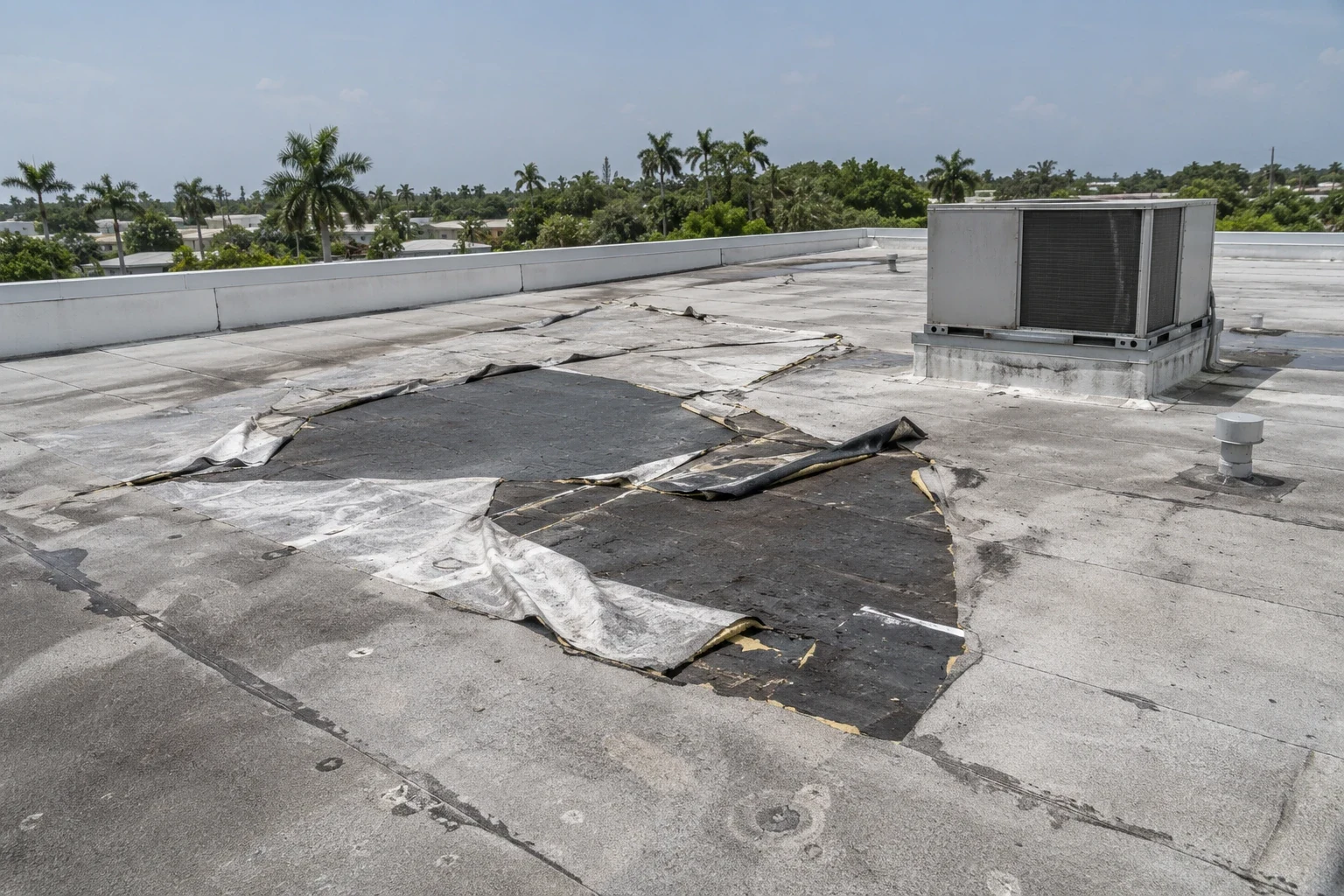
On a membrane roof, check whether impact fractured the surface, cut through reinforcement, or reached the insulation. The repair method may differ for a puncture, seam opening, or bruised but intact area. We avoid treating every visible mark the same way. Each observation names the material, location, and reason for repair or monitoring. The property owner can separate immediate water control from later documentation needs on the specific property.
Repair Confirmed Openings First
An active leak may need temporary water control while the inspection continues. We can dispatch for active water entry at any hour, holidays included. Building staff direct the crew to the room, protect contents, and confirm roof access. We record temporary protection separately from permanent repair so the status is clear.
A membrane puncture can be patched when the surrounding surface is sound and dry enough for bonding. A damaged seam may require a separate joint repair. Bent metal can be replaced or secured when it affects the roof edge or a water-shedding lap. We measure each area and describe which material is included.
If moisture appears beneath the surface, the owner may need to open a defined area and replace wet insulation. The crew documents the layer condition and quantity before requesting scope expansion. A single sample should not be used to extrapolate damage across every roof zone.
Related work includes storm damage roof repair, commercial roof inspection, and claim documentation. A related wind condition or tornado impact needs its own observations. A metal roof assembly is evaluated at panel laps, fasteners, and edge details.
Keep the Inspection Boundary Visible
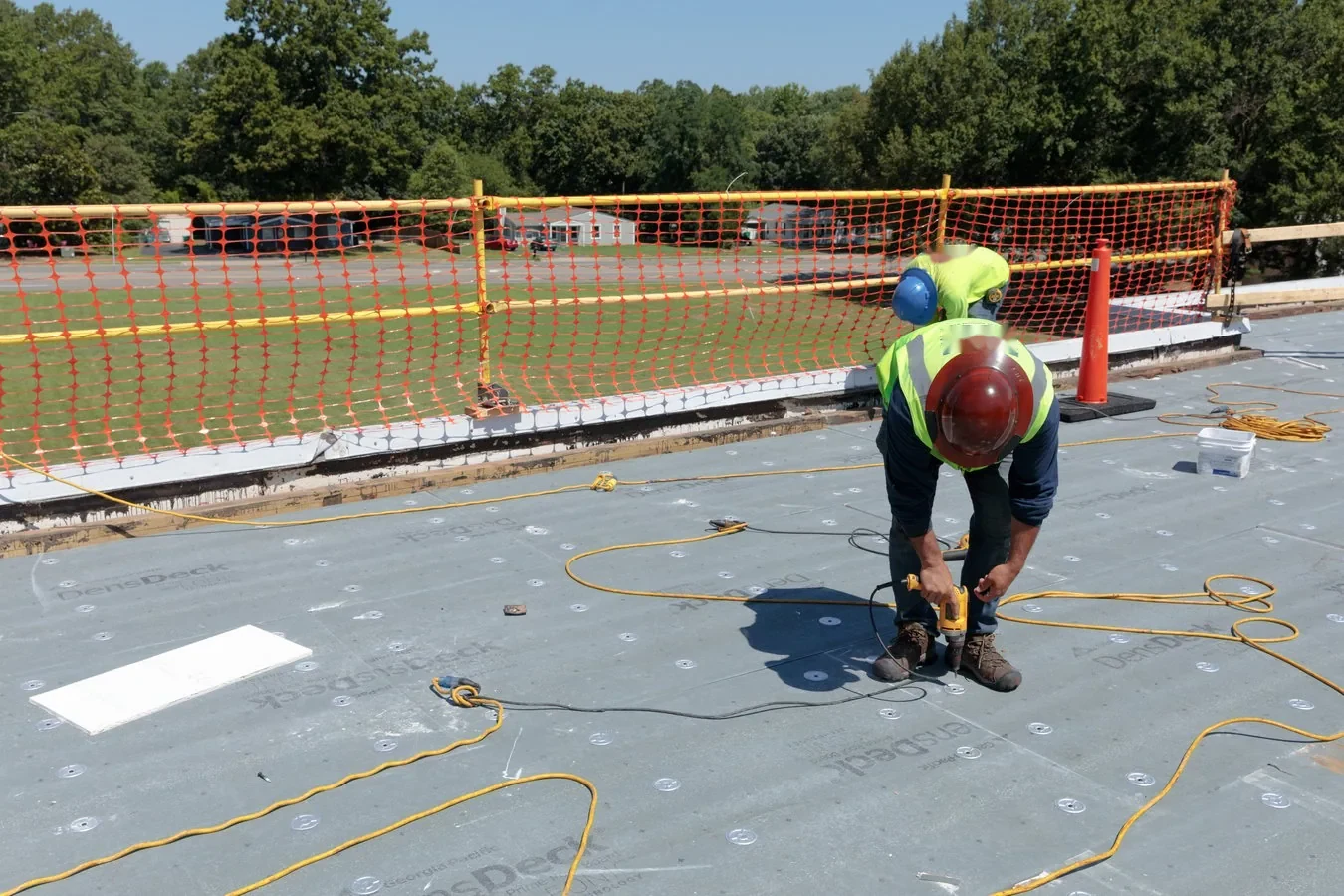
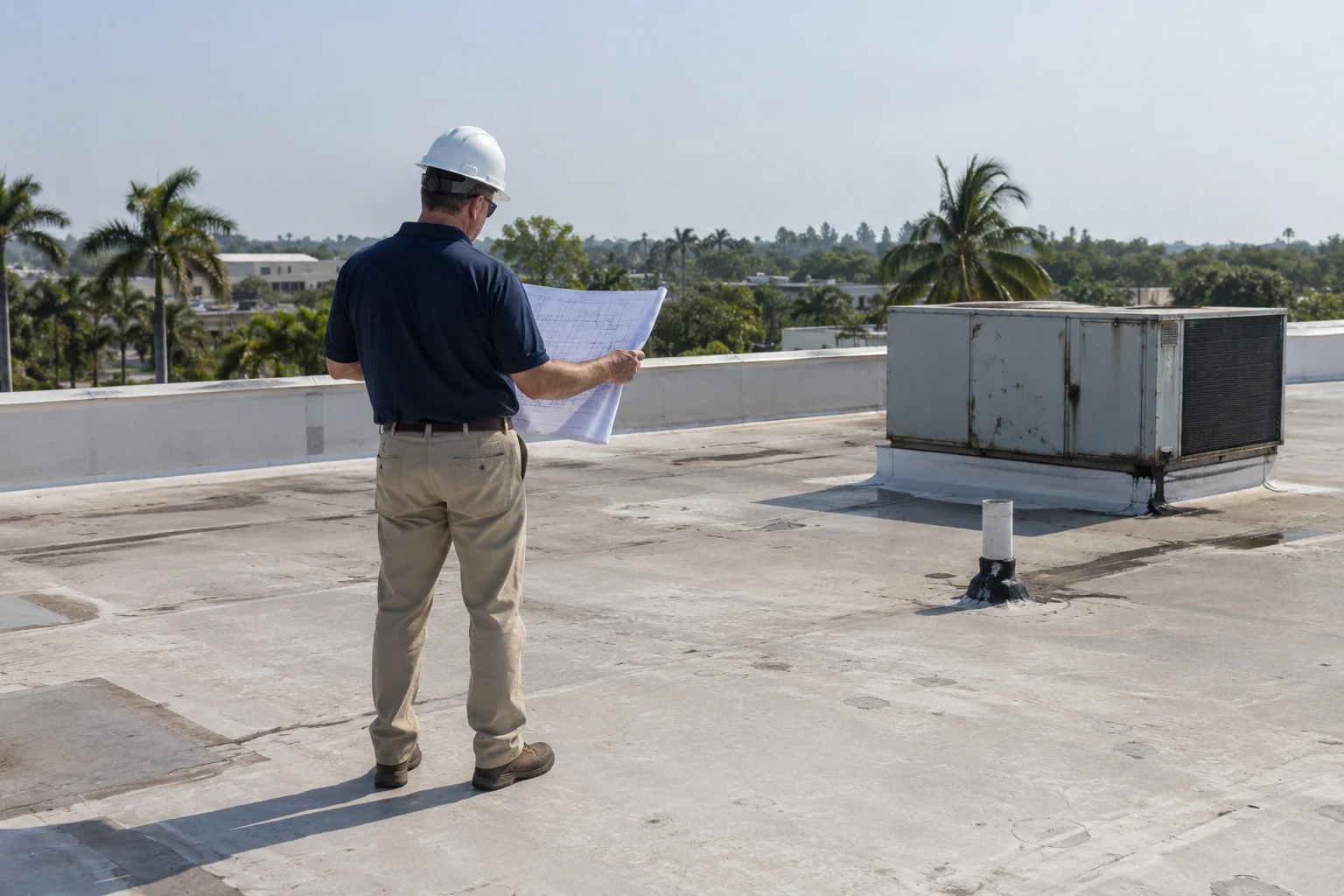
The owner provides the roof plan, site contact, access rules, and any locations that cannot be photographed. We map each impact area by roof section and label the parts not reached. Occupied offices, clinics, and retail spaces may need interior protection or a work window outside public hours.
For repairs, the crew checks weather and surface condition before applying membrane or coating materials. Hail-damaged pieces are removed only within the approved limit. If tear-off exposes wet insulation or damaged deck, the crew protects the opening and requests direction before broadening the repair.
Cost and timing depend on roof area, material, number of impacted details, access, equipment, moisture, interior protection, and material availability. An estimate separates urgent leak control from permanent work. If the inspection and repair occur on separate visits, the report states which details were tested during each visit.
Material deliveries can use the regional network of I-35, US 79, SH 45, and SH 130. The owner confirms the property entrance and staging area before the visit. A property contact should identify those rules before the crew arrives.
Use the Repair Record for Follow-Up
Closeout identifies the storm date provided, roof sections inspected, observed impacts, repair materials, and open questions. Photos should show location and scale where permitted. The record distinguishes impact marks from confirmed openings and from areas that were not inspected.
After rain, building staff can report whether water appeared and where. If the repair has not experienced a weather test, state that limitation. A follow-up visit can return to the marked opening and adjacent seam rather than rechecking unrelated sections.
Keep the roof plan, inspection, proposal, and repair record in one property file. If a later storm occurs, the owner can compare new marks with the prior condition. That comparison works only when each finding names its roof zone and material.
Round Rock's regional climate includes severe storms and sustained summer heat. Heat exposure can change sealants and membrane surfaces independently of hail. The report should separate those conditions so a repair scope addresses the right cause.
Hail assessment should distinguish functional roof damage from cosmetic marks and pre-existing wear. Inspect representative areas of membrane, metal, edges, rooftop equipment, and flashings, and record the methods and limits of the review. A dent alone does not establish a leak or justify replacement. Where impact may have compromised a seam or coating, use appropriate testing or a closer inspection. Keep event observations, repair recommendations, and any insurance documentation factual and separate from coverage conclusions.
Retain representative photos and note the roof areas included in the review.
Keep representative photographs and a list of roof zones included in the review. This makes a later inspection easier to compare and helps separate observed impact marks from damage that develops over time. If the owner requests documentation for another process, provide the factual roof observations and leave decisions about coverage or responsibility to the appropriate party.
Questions About Hail Damage Roof Repair
Does a hail report prove roof damage?
No. It documents regional weather. We inspect the actual roof and describe visible impact, openings, and any area needing further testing.
Do dents in rooftop equipment mean the roof is damaged?
Not necessarily. We inspect the equipment cover and roof membrane separately and look for a confirmed path into the assembly.
Can you inspect a roof before an adjuster visit?
Yes. We can document accessible roof conditions, repair needs, and inspection limits. The owner coordinates any joint visit and required format.
Should hail marks be patched even when there is no leak?
The material and function determine the response. We identify which marks affect the roof's water-shedding surface or attached components.
How do you handle wet insulation found during repair?
We document its location and amount, secure the area, and request approval before expanding beyond the authorized boundary.
Related Roofing Work

Round Rock
Pflugerville
Storm Damage Roof Repair
Commercial Roof Inspection
Commercial Roof Insurance Claim Assistance