Discuss a Hutto Commercial Roof
Before a Hutto crew opens any roof, plan around a typical tenant schedule, loading window, equipment shutdown, or an afternoon storm forecast. The City’s comprehensive plan identifies US 79 and SH 130 as important regional corridors and describes the way growth follows those routes. The road network helps shape access and staging; the inspection still has to establish what is happening on the building. We begin with the water path, the roof assembly, and the people responsible for keeping the property operating.
Citywide service includes buildings near the Hutto US 79 and SH 130 corridor and the Hutto Innovation Corridor, with a separate roof plan and access check for every facility.
Send the roof access details, leak location, prior repairs, and timing needs for a building-specific review. Call 555-555-5555 or request a roof assessment.
Start with a traceable roof walk
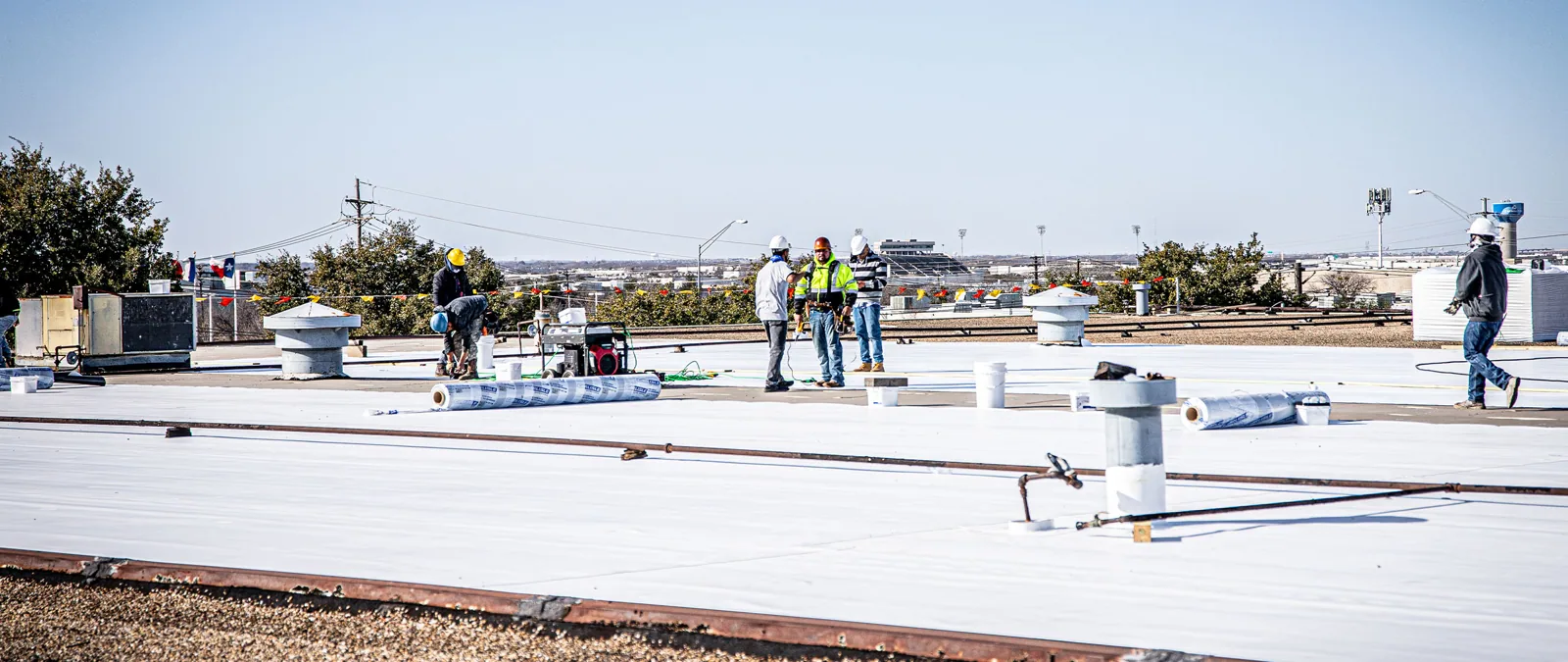
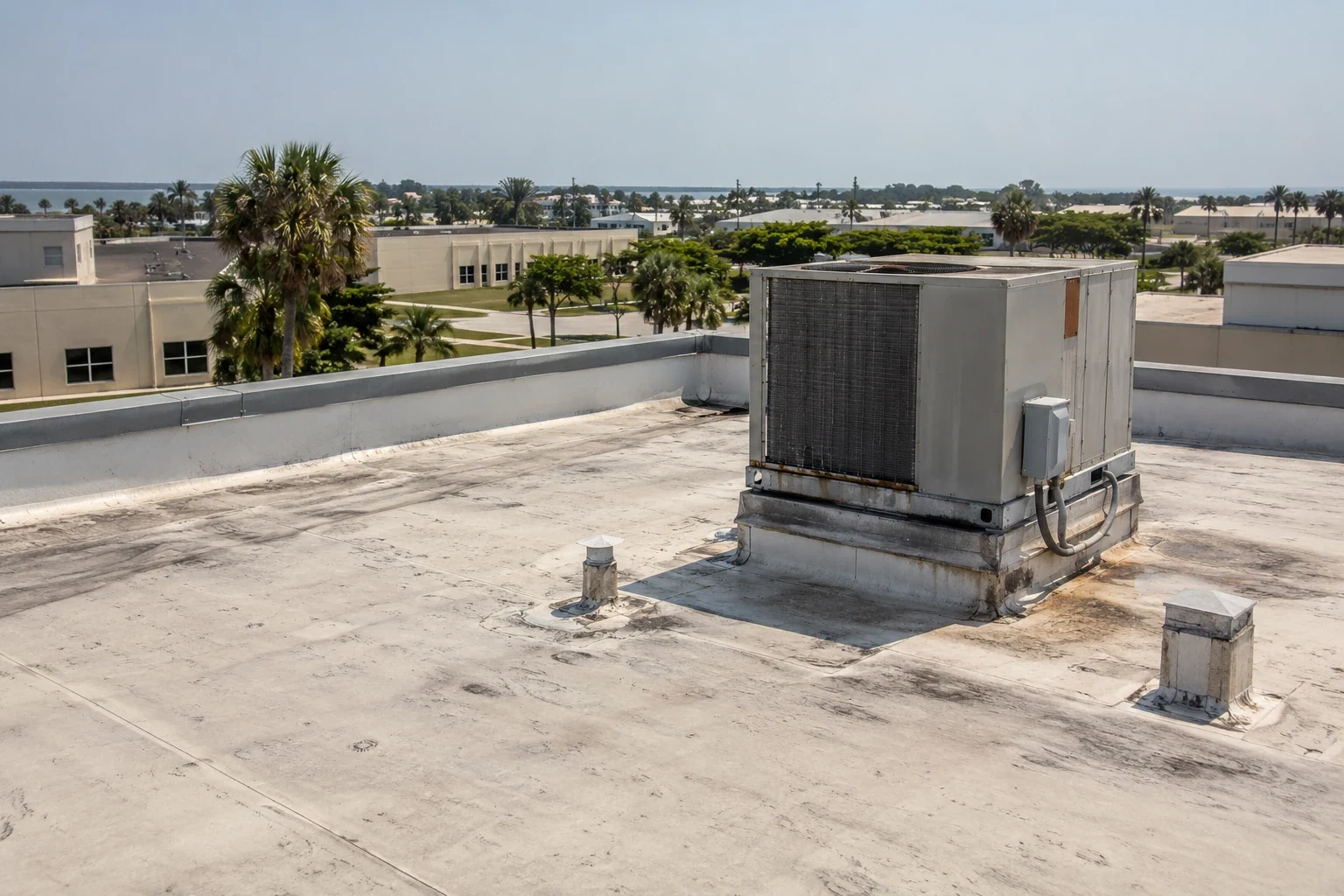
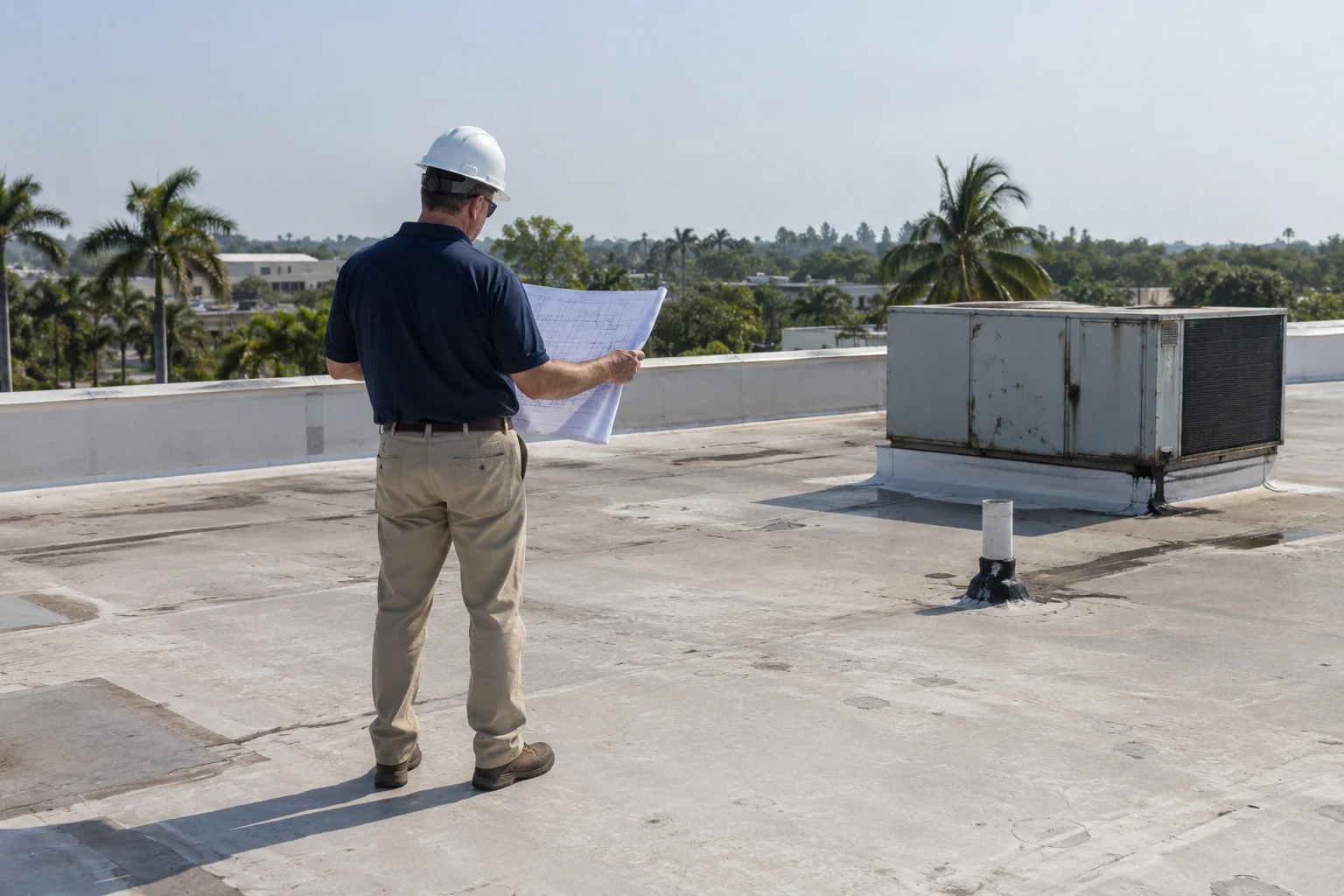
When a leak report arrives, note the room, time, and weather before going up. A roof opening can sit away from the ceiling mark because water travels along the deck or framing. The walk checks seams, penetrations, drains, curbs, walls, and prior repairs around the likely path. We mark each finding on a plan or photograph so the owner can see which section was inspected and where the evidence stops. A commercial inspection should map the suspected leak path before work is priced.
A useful report separates confirmed defects from unanswered questions. If the roof surface looks intact, the water may be entering at an up-slope transition or coming from another building system. We compare roof conditions with the interior location and identify what test could narrow the cause. A roof inspection should produce a next step: repair, test, monitor, or coordinate with another trade. It should not recommend a broad replacement from one ceiling stain.
Match repair material to the installed roof
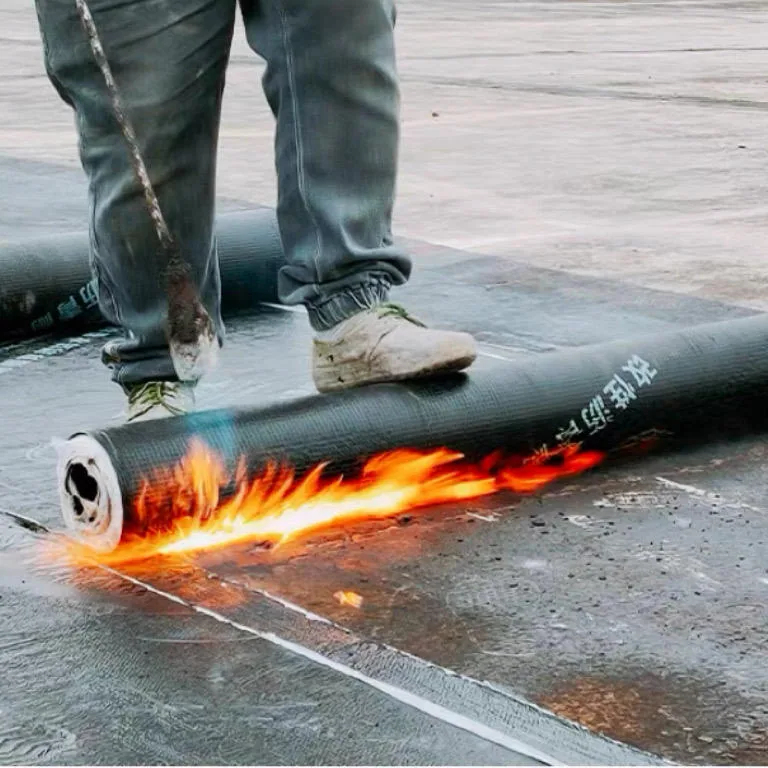
Commercial roofs can combine membrane, metal, modified bitumen, coatings, cover board, insulation, and repairs added at different times. A repair is only as sound as the connection between the new work and what remains. We identify the system from records and visible details, check adhesion and moisture where relevant, and remove loose or failed material to a suitable boundary. If the original assembly cannot be confirmed, the scope should explain that uncertainty. If a defect is confirmed, a roof repair can address it without opening unaffected zones.
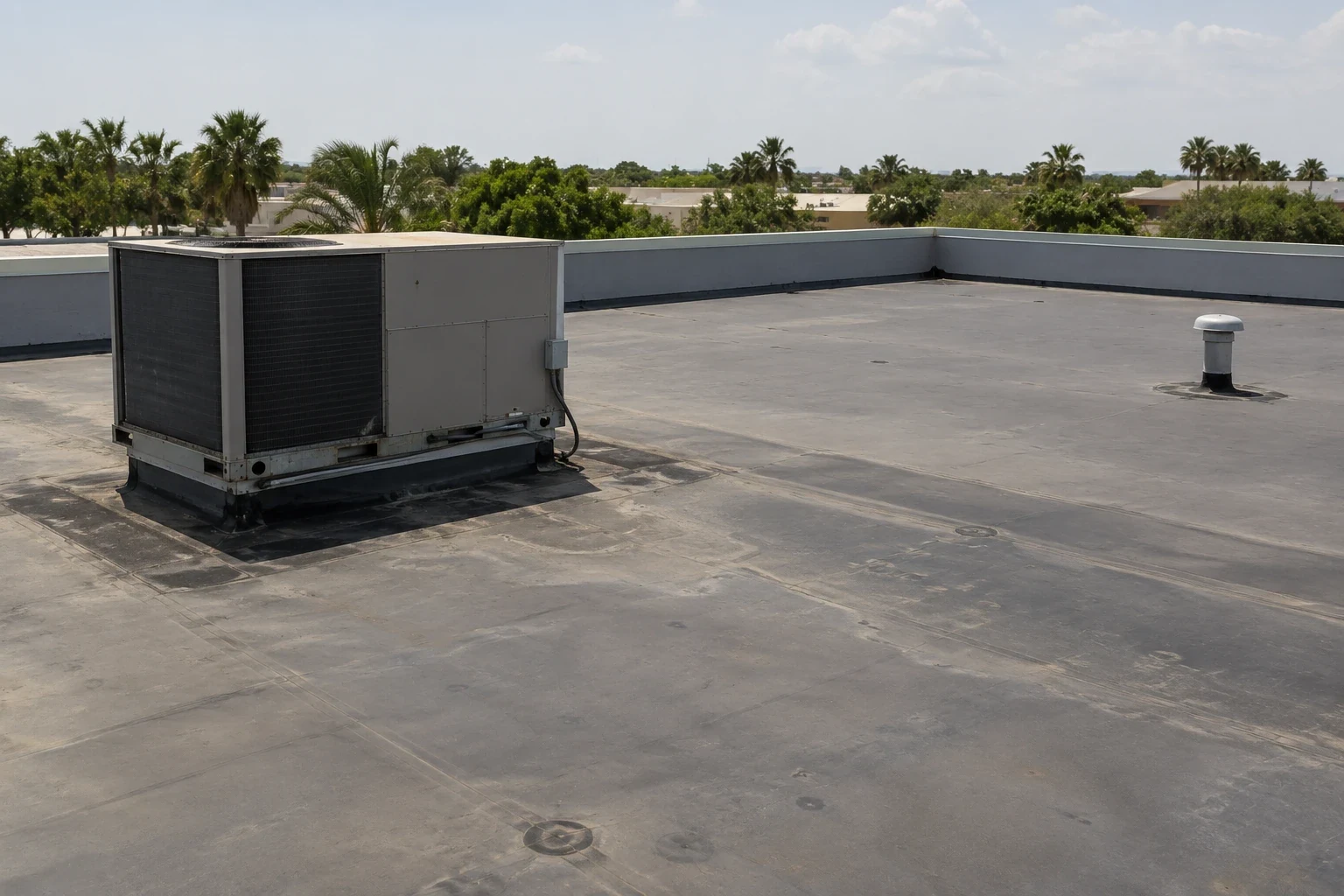
Penetrations and curbs require careful tie-ins. A mechanical change can leave a curb too low, a support poorly flashed, or a membrane cut without a finished termination. We check whether fasteners, sealant, and flashing work together, and we coordinate any unit movement with the equipment contractor. A patch that blocks access or drainage can create a new issue. The repair plan should state which party handles equipment disconnects and who restores the roof after the unit is reset.
Keep the workday weather-tight
A roof opening should be sized to the crew, forecast, and available work window. Before tear-off, identify the interior rooms below it, move vulnerable contents, and confirm the person who can approve additional substrate work. Materials stay covered and dry. If hidden damage appears, the opening is secured while the owner reviews photos and measurements. This makes the scope change visible before the repaired area extends beyond the agreed boundary. Following hail, a roof damage review records dents, punctures, and displaced details.
The end-of-day close-in deserves a named method and a clear handoff. The report can identify which roof section is complete, which temporary protection remains, and what conditions require another visit. In a property with regular deliveries or multiple tenants, temporary staging needs a safe route and a finish time. If weather makes the planned opening too large, reduce the area and preserve the building rather than chasing production at the expense of dry-in.
Read the drain path after rain
A drain is one point in a larger water route. Check the roof slope feeding it, the strainer and bowl, and nearby seams or compression. At a scupper, inspect the flashing and the wall outlet. Overflow paths matter because a primary drain can slow under debris or heavy rainfall. Photos taken during and after rain can show where water collects and how quickly it leaves. Assembly condition should guide whether a modified-bitumen system is a suitable renewal choice.
Some ponding reflects a maintenance need; some points to slope, insulation, deck, or outlet problems. Clearing leaves can restore flow, but it will not correct a depression. We identify the evidence and separate roofing from plumbing or structural scope where needed. The owner should get a recommended next check, such as a post-rain observation or a targeted test. That record helps determine whether the repair changed the water path instead of simply hiding the stain.
Choose a scope that fits the roof
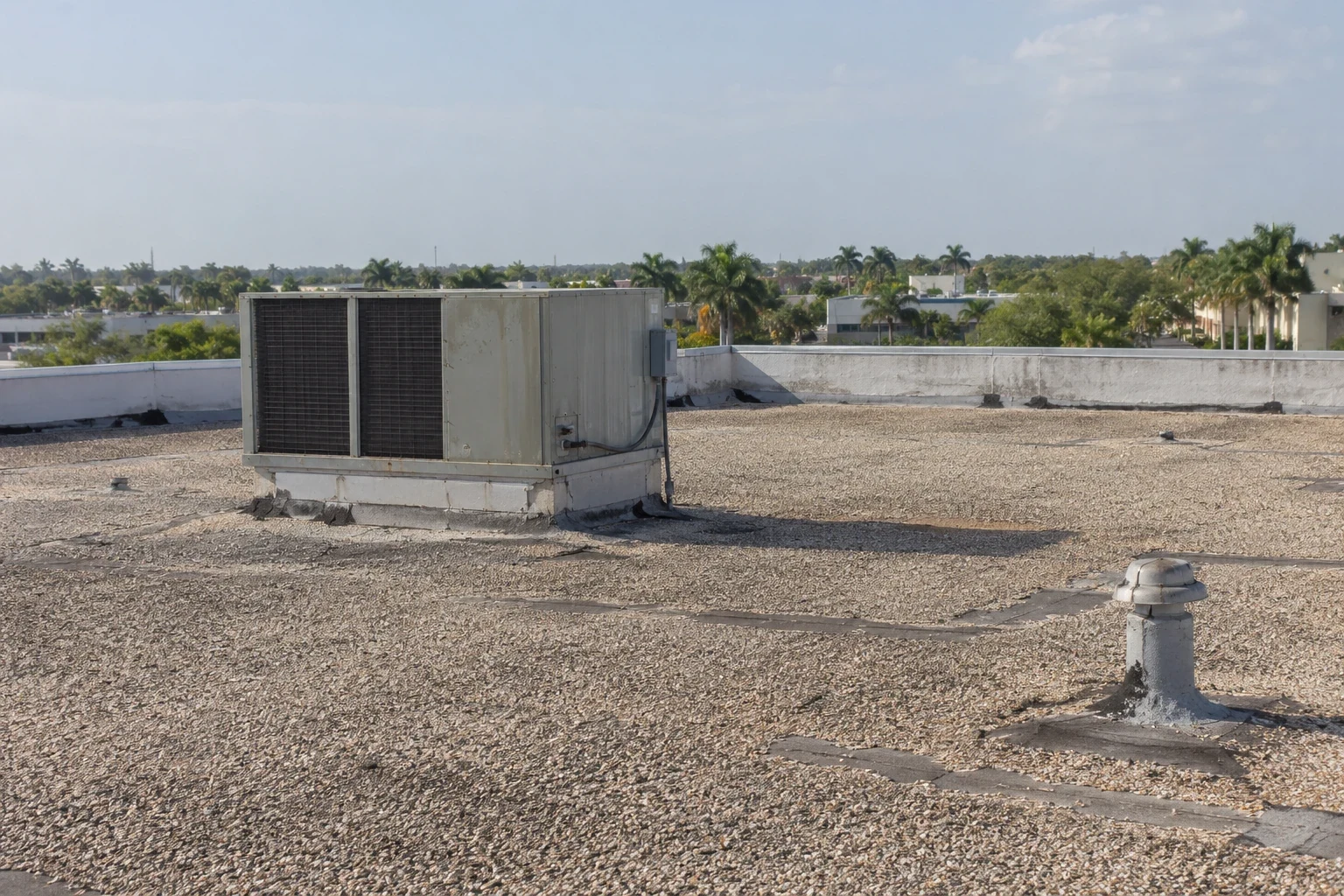
An isolated puncture on a stable, dry field may need a local repair. Repeated leaks or a broad pattern of wet insulation call for mapping and testing before repair quantities are set. A coating may be suitable when the existing membrane is compatible, attached, and dry. A recover can add a layer when assembly and edge conditions allow it. Replacement is considered when the current system cannot provide dependable repairs or has reached a condition that justifies renewal. A replacement project needs a daily dry-in plan and protected material staging.
Every option has limits. A coating cannot dry insulation; a patch cannot rebuild deteriorated deck; a replacement cannot be priced accurately without accounting for rooftop equipment, tear-off, disposal, and daily weather protection. We state the repair boundary, substrate assumptions, and exclusions so the owner can compare proposals. When the roof remains occupied by maintenance crews, walkway pads and access paths should be part of the conversation. The decision should account for operating interruptions along with material and labor.
Keep maintenance tied to findings
A scheduled roof walk checks the areas that carry the most risk: drains, perimeters, penetrations, traffic lanes, and repairs with a history of callbacks. We record debris, open seams, loose edges, wet spots, and changes to equipment. A maintenance note is different from a repair order; it names the work needed and the consequence of deferring it. After a storm, the first inspection can focus on edges and rooftop details before a full condition survey. An owner can track the next roof walk in a maintenance plan.
Over time, the roof record should show how the assembly changed. Keep marked plans, photographs, repair invoices, warranty details, and mechanical work orders together. If a tenant adds a vent or replaces equipment, update the roof map and identify who restored the flashing. That makes the next visit faster and reduces the chance that a later contractor mistakes a previous patch for original construction. Share roof access details, plans, leak locations, and prior work so the inspection starts with useful history.
Questions About Hutto
What does the first Hutto roof walk cover?
It follows the reported leak, checks the nearest seams, drains, curbs, and edges, and marks each accessible finding.
Can you respond before the permanent repair is ready?
Temporary protection can limit interior exposure while the roof cause and permanent scope are confirmed.
Will you coordinate around equipment shutdowns?
Yes. The facility contact sets restrictions and equipment windows before the crew approaches curbs or service routes.
Does a coating work on every low-slope roof?
No. The existing surface must be dry, attached, compatible, and able to drain before a coating is considered.
How are unexpected tear-off conditions approved?
The crew photographs and measures the condition, secures the opening, and requests approval before increasing the work area.
Related Roofing Work
Hutto US 79 and SH 130 Corridor

Hutto Innovation Corridor
Commercial Roof Inspection

Commercial Roof Repair
Hail Damage Roof Repair