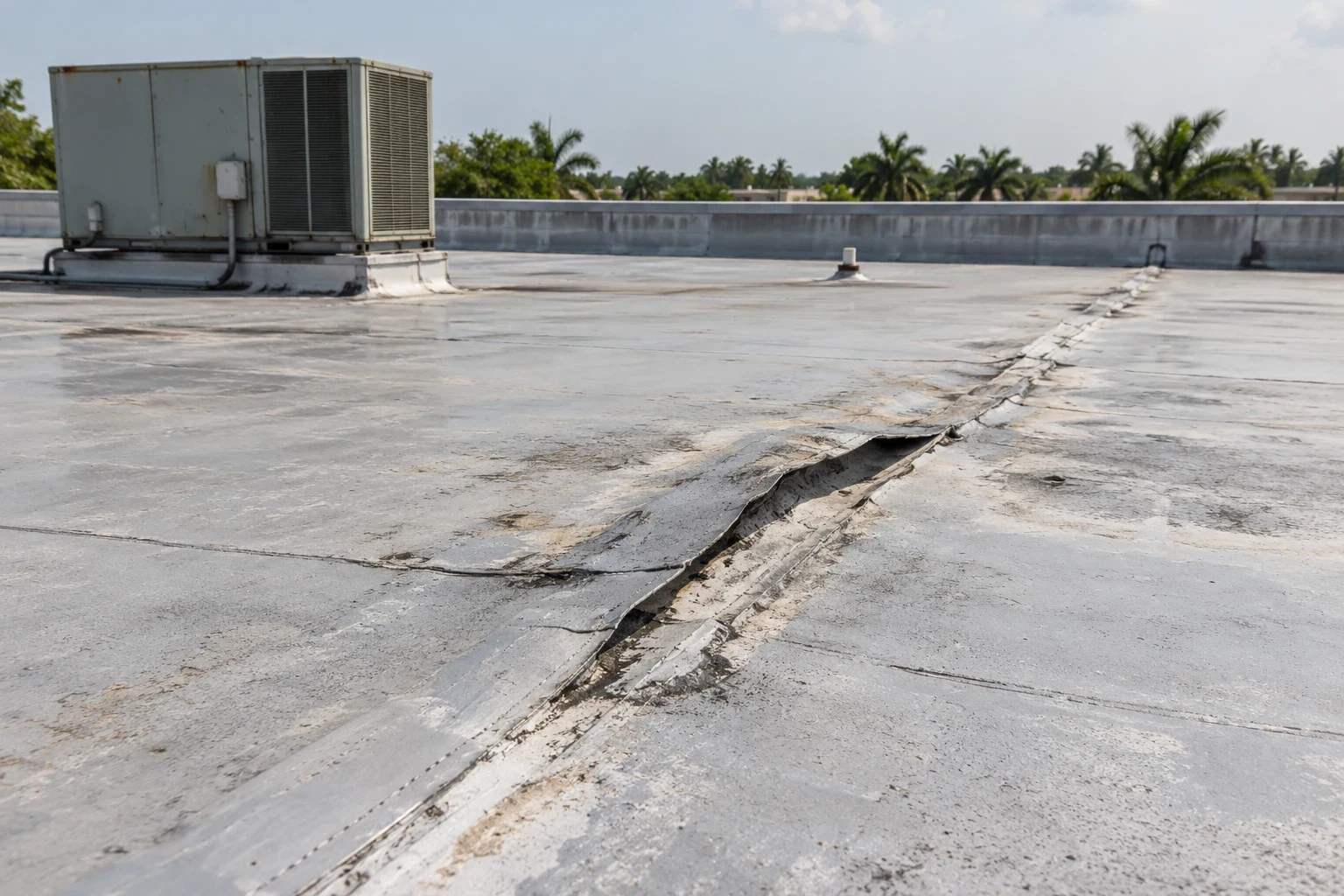
Inspect the Failed Roof Transition
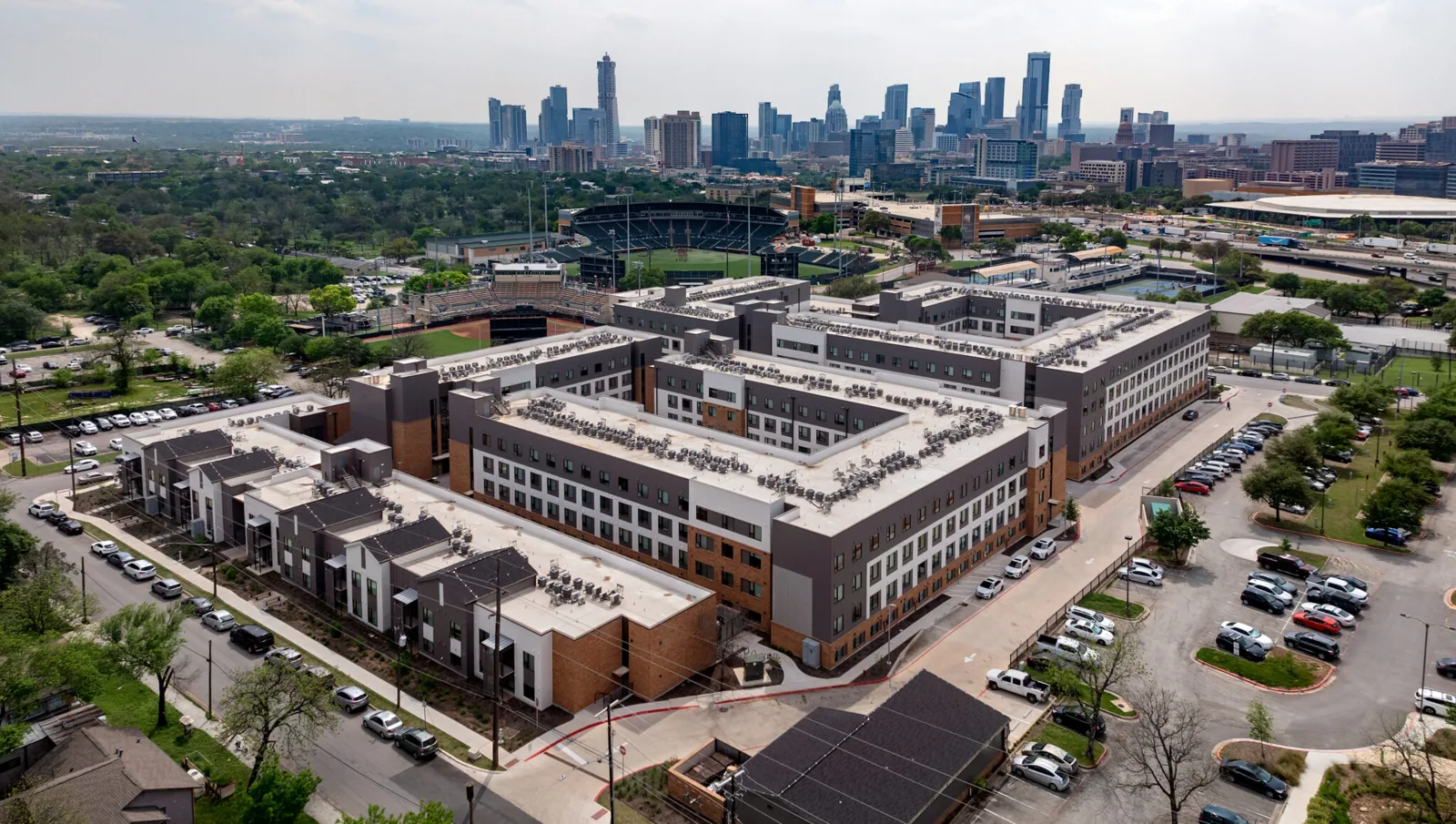
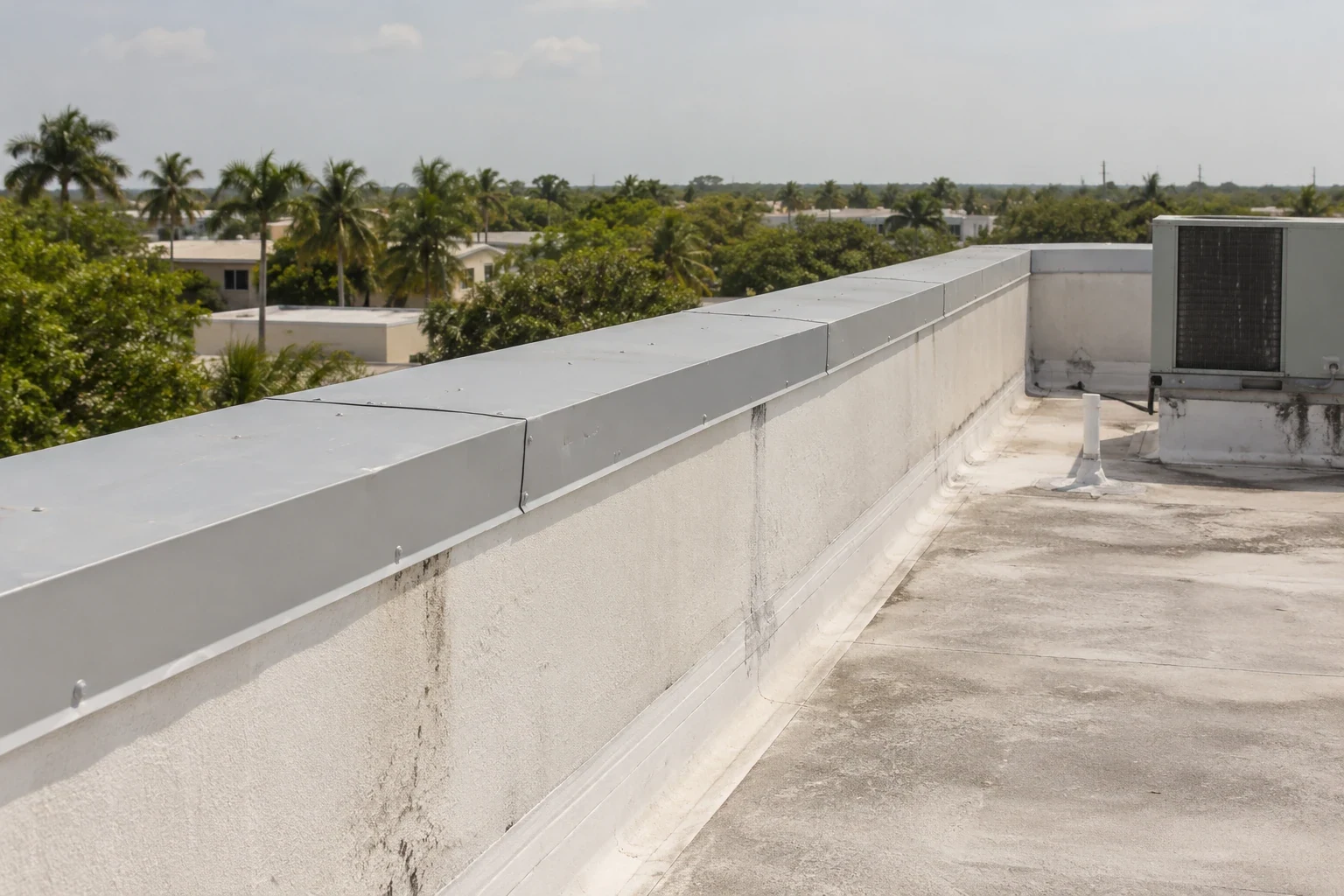
A wall counterflashing has pulled away from its termination bar, leaving a narrow gap that can admit wind-driven rain. We check the entire transition before applying sealant or membrane. Round Rock's healthcare and education properties include Baylor Scott & White and the ACC and Texas State campuses. Industrial and commercial buildings in Taylor and campuses along University Boulevard have different access and interior-protection needs.
Flashing seals a change in plane or material. It may surround a curb, wall, skylight, drain, pipe, or edge. We identify which component failed and whether nearby roofing remains sound.
Send the affected room or detail, roof system if known, access contact, photos, and recent equipment or wall work. We will define the repair boundary and material. Call 555-555-5555 or request a roof assessment.
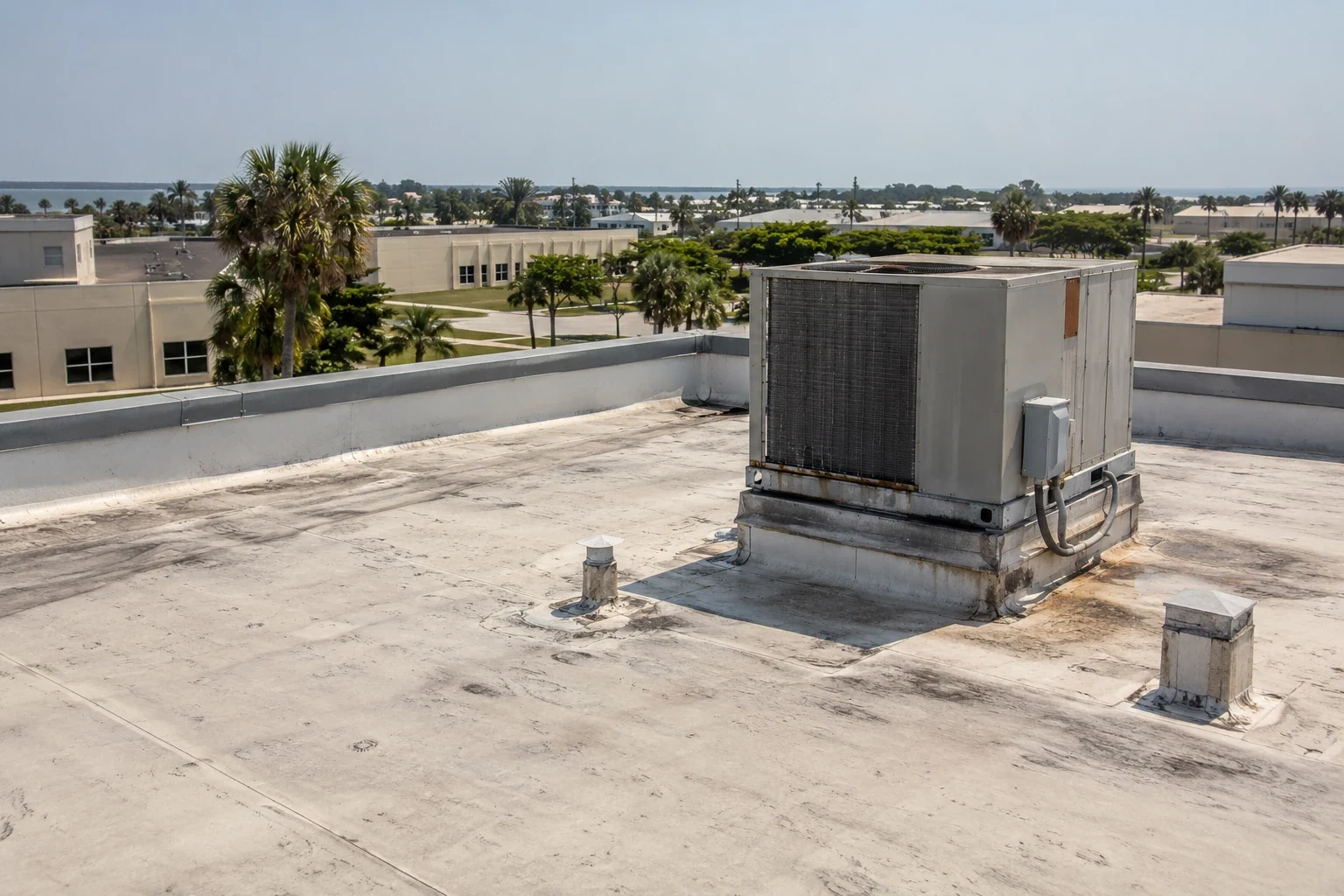
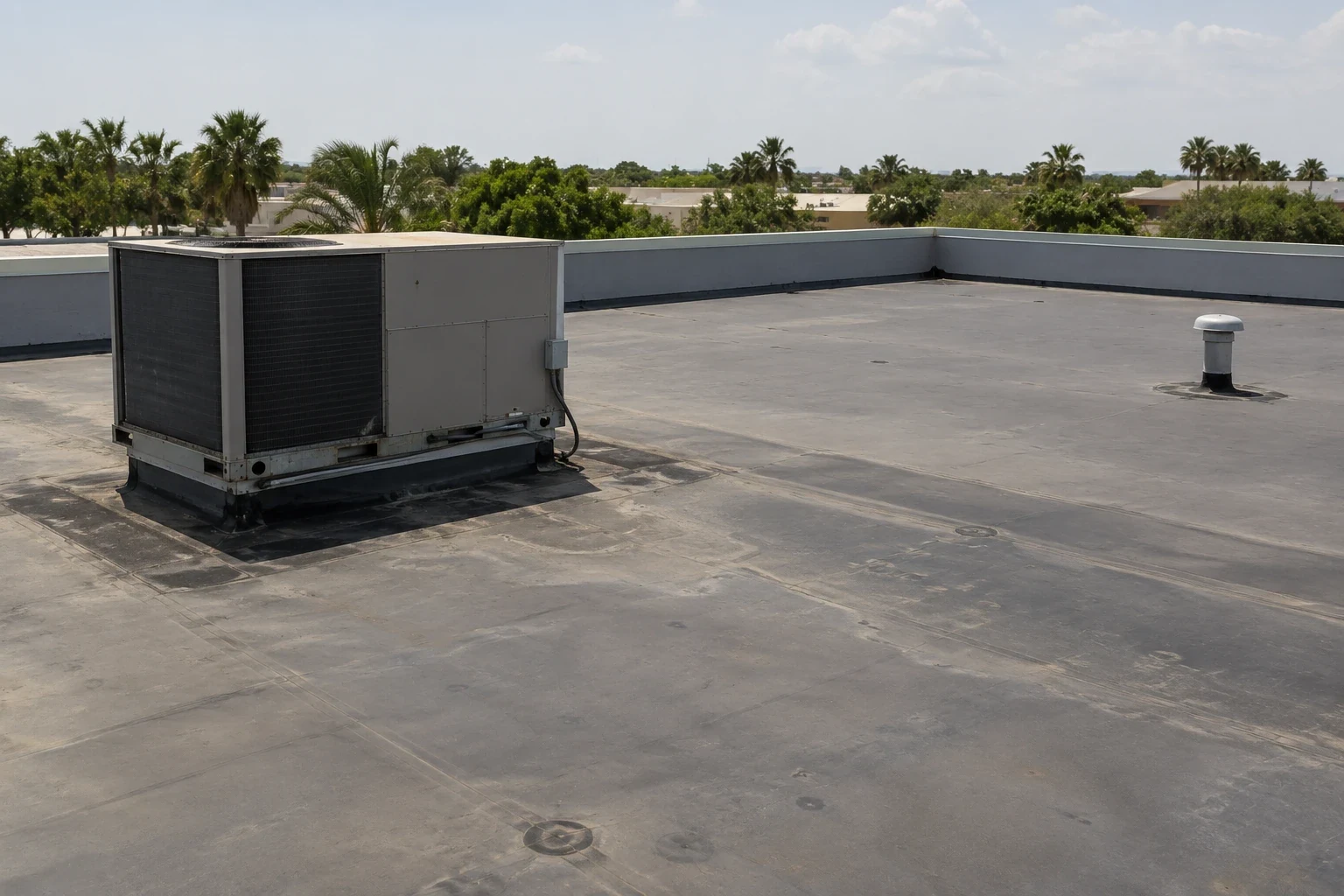
Find the Failed Connection
We begin with the room or roof detail tied to the report. Water can enter at a wall and travel before reaching a ceiling. We inspect the transition from low point to high point, including the vertical leg, termination, sealant, and membrane tie-in. The report identifies the exact break rather than calling every nearby surface a flashing failure.
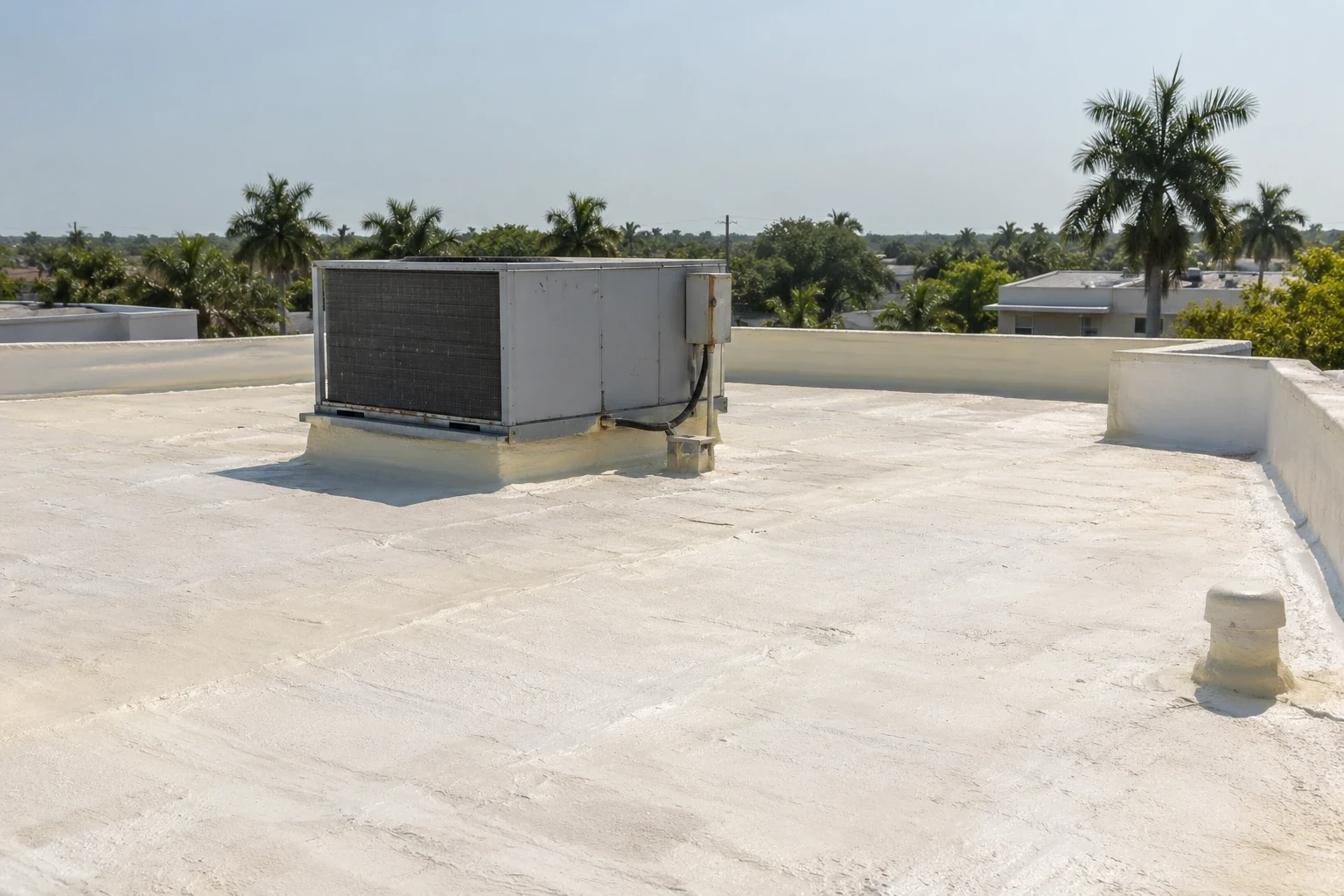
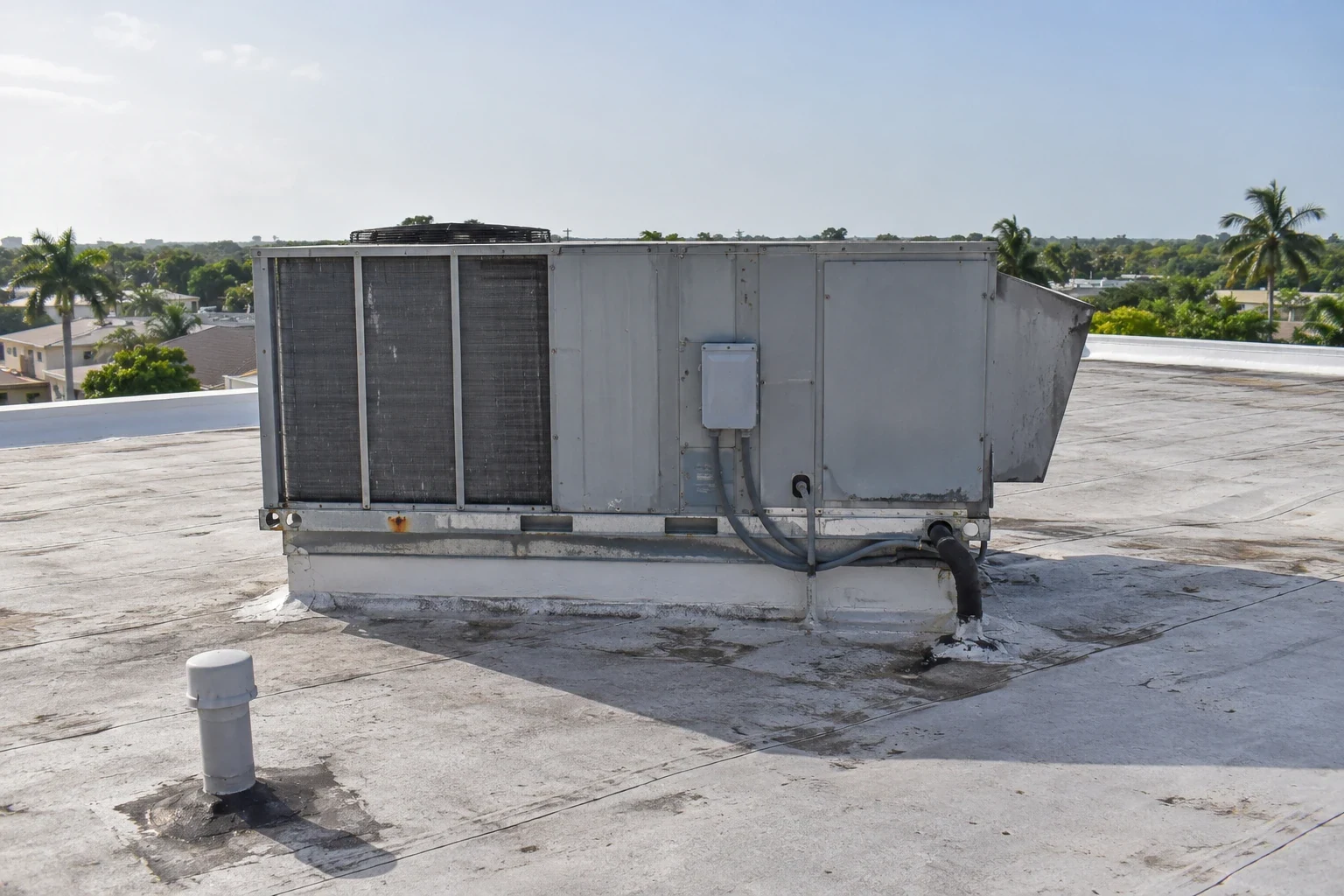
At a rooftop unit, we check curb height, corners, counterflashing, and the membrane lap. Movement from equipment service can loosen metal or split a seal. The facility contact identifies recent unit work and any service route that crosses the roof. If a pipe or support is no longer used, its removal and roof restoration need a defined trade scope.
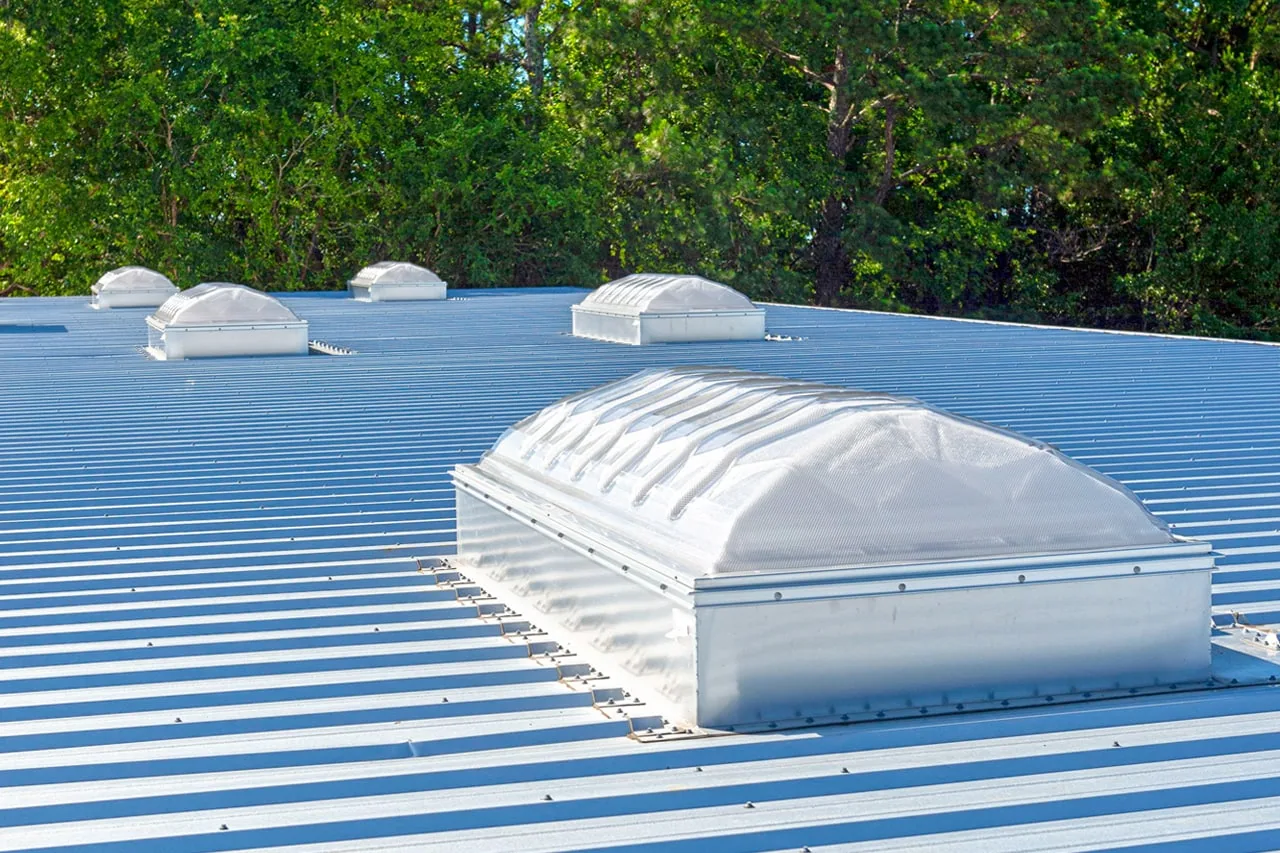
Skylight and roof hatch transitions require separate attention. We inspect the curb, corners, cover, and membrane connection for gaps, cracked sealant, or movement. A cloudy interior lens or ceiling mark can have another source, so the inspection compares interior symptoms with roof-side evidence. If we cannot confirm a leak path, we state what further test would help.
Round Rock has sustained summer heat and severe weather exposure. Nearby Camp Mabry records provide regional climate context, while the 2022 tornado track and hail reports explain why storm-related flashing questions arise. Neither a weather record nor surface discoloration proves a failed connection. We document the physical detail and its condition.
Restore the Transition as a System
A repair starts by removing loose or failed material until a sound bonding or attachment surface is reached. We replace or resecure metal where needed, install compatible membrane flashing, and reinforce corners according to the assembly. A bead of sealant over a moving or poorly attached joint may not address the underlying failure.
Different roof systems use different flashing methods. Thermoplastic membranes can use welded accessories and seams; other assemblies may require adhesive, fasteners, liquid flashing, or metal components. We identify the installed system before selecting a repair material. Compatibility, surface preparation, temperature, and dry conditions affect the work sequence.
If moisture is present below the flashing, repair may need to extend into the roof field. A test cut can show the material condition at one agreed location. A local sample does not establish whether insulation is dry elsewhere. The proposal names the sample and the repair boundary so the owner can approve a wider scope when evidence supports it.
Related work includes skylight and penetration flashing, curb and support repair, and edge metal work. Nearby conditions may also involve a split membrane seam or surface puncture. A broader roof inspection can map other transitions when requested.
At a parapet, the roof membrane may turn up the wall before metal counterflashing covers the top edge. We inspect whether the metal is secured and whether the termination remains protected from water. At a drain, the flashing must connect into the bowl without folds that hold water. At a curb, corners and vertical height matter. The repair detail follows the feature, not a single sealant recipe. The crew checks each corner before close-in, lift removal, and safe demobilization.
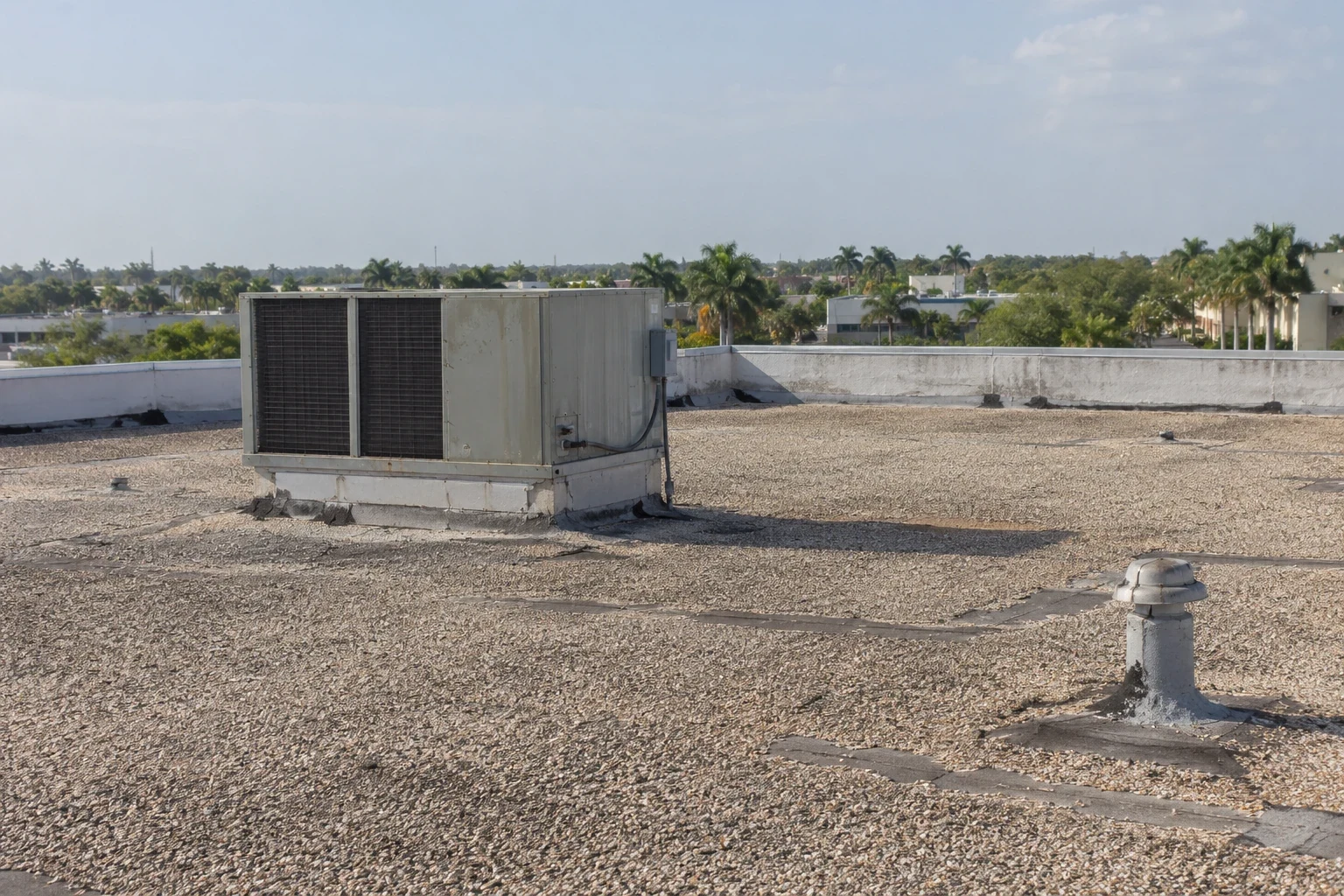
Control Access While the Detail Is Open
The property contact confirms the roof route, ladder or hatch, and any room beneath the work. A clinic or campus may have hours when ceiling noise or interior access is restricted. Lift placement and material staging should preserve entrances and emergency routes. The crew identifies an open-roof boundary and keeps temporary protection ready.
During replacement, flashing details are closed as each section is installed. If the substrate is wet or deteriorated, the crew records the area and pauses before extending the repair. The owner can review material quantities and approve the change. The proposal separates roof work from HVAC service, window replacement, masonry, and interior finishes.
Timing depends on roof height, access, detail count, substrate condition, membrane type, weather, and whether operations below can pause. Estimate lines can separate each curb, wall, skylight, and drain detail. That is more useful than a single allowance when the property has different assemblies across its roof.
Emergency response is available at any hour, including holidays, when a flashing opening allows water inside. The building contact directs access and protection below. Temporary sealing can limit entry until a permanent detail is installed and inspected.
Verify the Repair After Rain
Closeout names the component, roof zone, material, and repair method. Photos show the transition before and after work where permitted. If access was blocked or adjacent materials could not be tested, the record says so. Any temporary measure remains labeled separately from permanent restoration.
Keep roof plans, unit service records, skylight details, and prior repairs together. When equipment or wall work is scheduled, mark which trade can disturb the flashing and who restores it. The next roof walk can check the field-marked detail after rainfall.
Round Rock building code review is administered locally through the Building Inspection Division. Permit needs depend on project scope and applicable requirements. We can supply roof product data and repair details for the owner and design professional to review.
A repaired transition should be checked as a connected assembly. The vertical leg, termination, corners, and membrane tie-in each matter. If water returns, the report should compare the same components and identify any new movement instead of simply applying another surface bead.
Flashing repairs need to match the condition and geometry of the transition. Inspect the substrate, termination, counterflashing, corners, and adjacent field membrane, then determine whether the material has separated, cracked, corroded, or been disturbed by later work. A bead of sealant may conceal an open edge without restoring the assembly. The repair description should name the detail, preparation, compatible materials, and final verification. If the substrate is concealed or deteriorated, identify the investigation needed before setting a final boundary.
Check the completed transition after the repair materials have cured.
After materials cure, inspect the transition and record the finished edge.
Keep a dated photo of the finished transition with the work order.
Questions About Commercial Roof Flashing Failure Repair
Can you seal flashing without replacing it?
Possibly. We first check whether the metal or membrane remains attached and suitable for a repair. A failed substrate may need replacement.
What details are inspected around an HVAC curb?
We check corners, counterflashing, membrane attachment, service damage, and the area where water drains. Facility staff coordinate the unit itself.
Does one leaking skylight mean the whole roof is failing?
No. We inspect that curb and nearby roof field, then state whether other areas were included or remain untested.
Can flashing be repaired during wet weather?
Some temporary control may be possible, but permanent materials need suitable conditions and a dry, prepared surface. We explain the safe sequence.
What should the manager send before a flashing inspection?
Provide the roof plan, interior leak point, detail type, recent equipment or wall work, access rules, and any prior repair records.
Related Roofing Work

Taylor
University Boulevard Higher-Education District
Commercial Skylight and Penetration Flashing
Commercial Rooftop Equipment Curbs and Supports
Commercial Roof Edge Metal, Coping, and Gutters