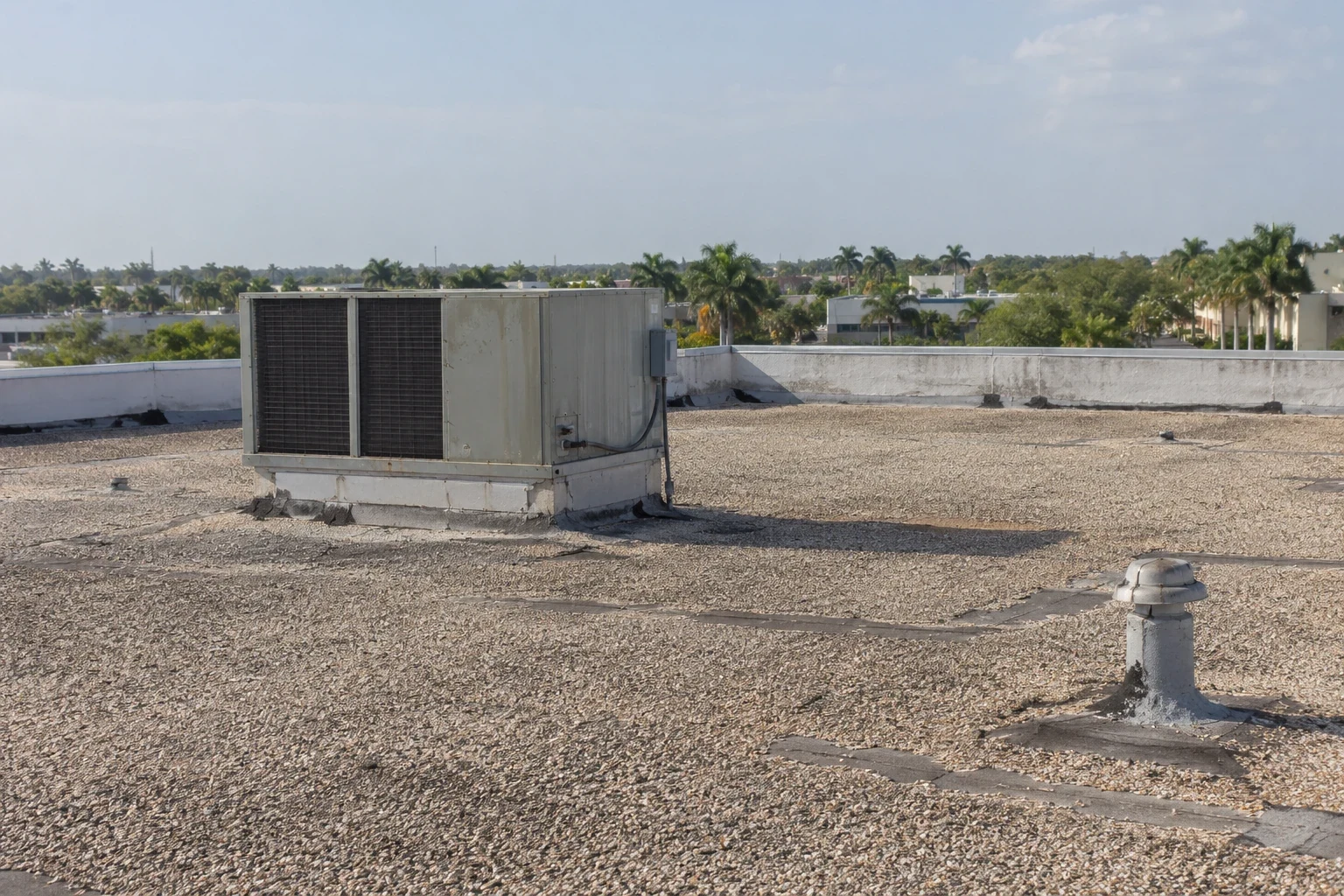
Inspect the Cap Sheet
A raised edge at a modified bitumen lap can hold water and hide a split below the surface. We inspect the cap sheet, seam, flashing, and underlying plies before deciding whether to patch or open the assembly. Round Rock has hospitality at Kalahari and commercial corridors along US 79 and SH 130 may have very different access and rooftop layouts, but the roof detail still determines the repair.
Modified bitumen is a multi-layer asphalt roofing system reinforced for commercial use. SBS and APP products differ in formulation and application. We identify the installed assembly before choosing material or heat method.
Send the roof plan, system records, leak location, prior repairs, and any site fire-prevention rules. We will identify the plies and define the repair method. Call 555-555-5555 or request a roof assessment.
Read the Plies and Cap Sheet
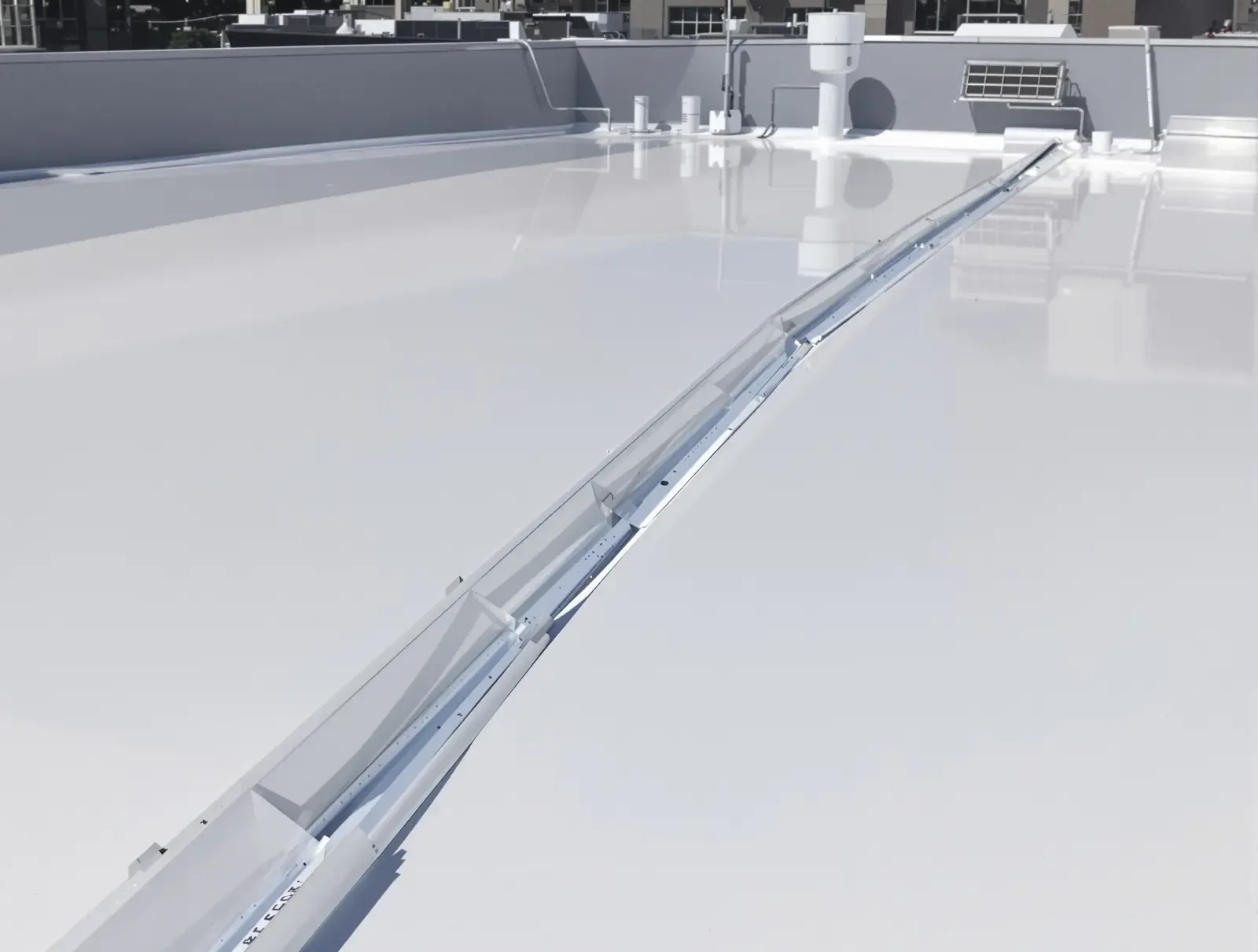
We check the cap sheet surface for granule loss, cracks, open laps, blisters, and patches that have lifted. At wall transitions, curbs, drains, and edges, the plies must turn and terminate in a way that sheds water. A split at the lap can admit moisture even when the field looks intact. We photograph the seam and mark its direction for a later repair.
Modified bitumen may be installed with heat, cold adhesive, or self-adhered products, depending on the system. The application method affects repair preparation and fire precautions. We review labels, drawings, and prior records, then confirm the material and substrate condition before selecting the work. A method suited to one product may damage a different cap sheet.
Blisters need careful review. Cutting every raised area can open a dry assembly unnecessarily, while ignoring a wet blister can leave damaged layers in place. We examine the area, check adjacent seams, and use an approved test cut if the layers below could change the recommendation. The owner sees the sample location and what each ply shows.
A granulated cap sheet protects the asphalt surface, while smooth or coated products have different finish characteristics. The granules can loosen near a frequent service path or at a sharp transition. We note where the surface has worn and whether the underlying sheet is exposed. Loose granules should be removed from drains so they do not collect at the bowl or travel into a leader.
At a wall or parapet, the base flashing may turn up behind counterflashing. We inspect the top termination, corner, and transition back to the field. A sealant line may have cracked while the membrane remains intact, or the membrane may have separated below the metal. The repair addresses the layer that failed and confirms that the top edge remains protected.
Patch the Lap and Flashing
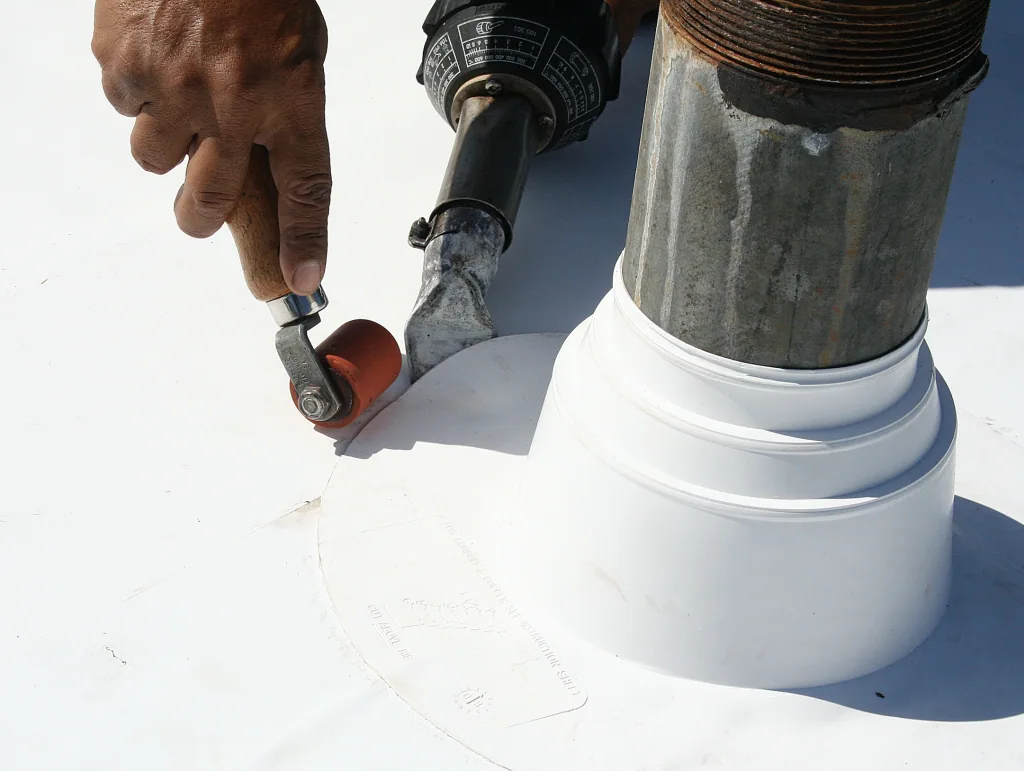
A local repair removes loose material, prepares a clean edge, and installs compatible reinforcement or cap sheet. The patch should extend beyond the damaged area and lie without a fishmouth or open corner. At a drain, the assembly needs a secure transition to the bowl. At a curb, the field membrane and vertical flashing need a continuous tie-in with a finished termination.
Where torch application is specified, the crew follows the approved fire-prevention plan, protects nearby materials, and checks concealed spaces before and after heating. The method may be unsuitable around combustible materials or occupied areas without the required controls. Cold-applied or self-adhered repairs have their own surface and temperature requirements. We state which method is included in the scope.
Central Texas summer heat affects the work surface and material handling. We schedule application within the product limits and protect rolls from damage before installation. Heat at the roof is a field condition, while a nearby climate station provides regional context only. If the substrate is too hot, wet, or contaminated for the specified method, the crew waits or changes the sequence with owner approval.
When a roof has several layers from earlier recover work, added material can raise the surface at door thresholds and equipment curbs. We measure those transitions before specifying another layer. If clearances are limited, a recover may not be appropriate even when the membrane can accept new material. The estimate describes tear-off or replacement options and notes the areas where elevation changes control the choice.
Choose a Repair Depth
A small lap failure may be repaired within the cap sheet if lower plies and insulation remain sound. Multiple cracks, widespread blisters, wet insulation, or a weak deck can call for a larger tear-off. We map the evidence and separate visible defects from concealed questions. A test cut shows the layers at its location; additional samples may be needed to define a broader boundary.
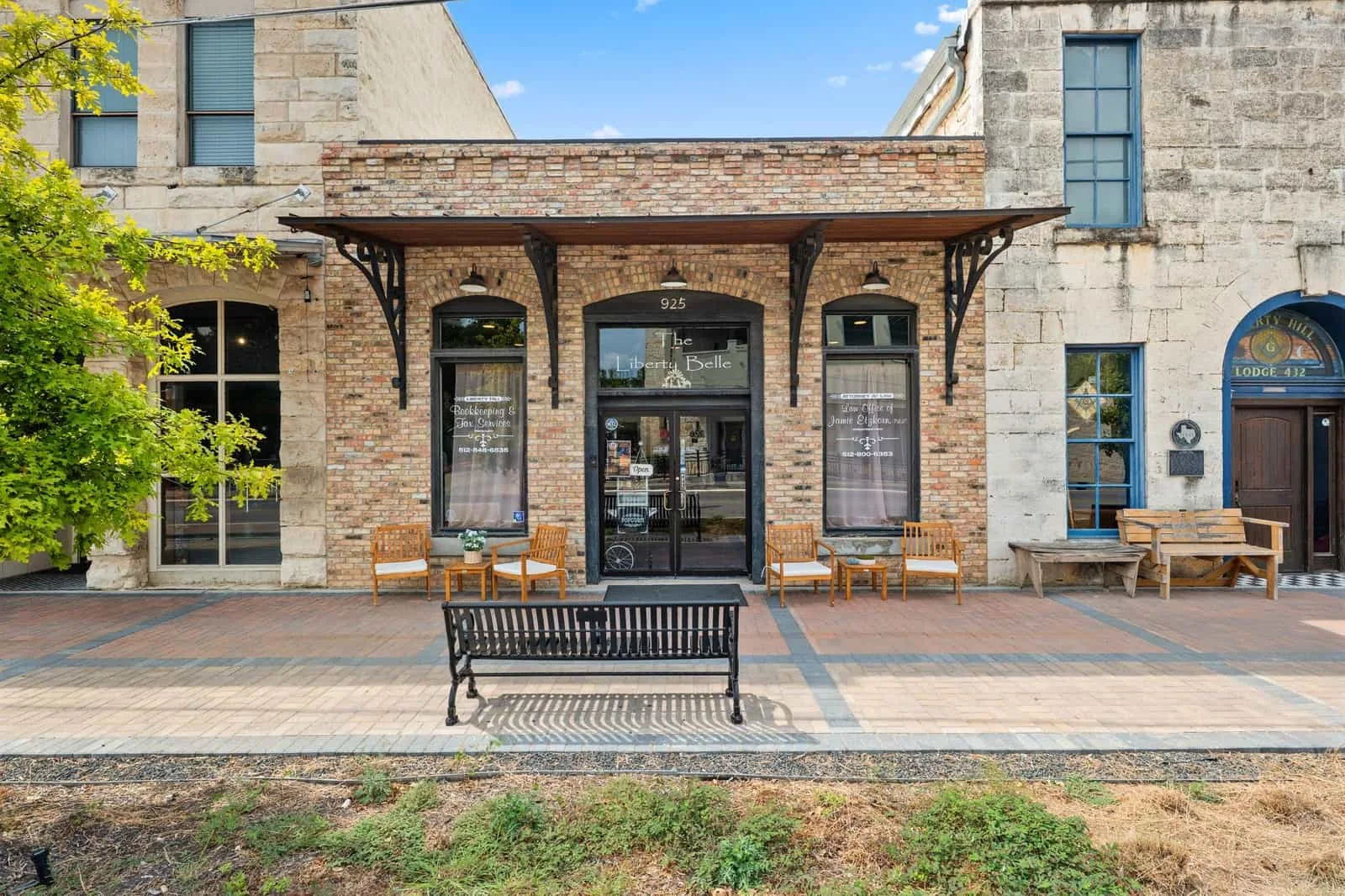
At a hospitality property in Liberty Hill, operating hours can affect roof access and lift placement. Along the US 79 and SH 130 corridor near Hutto, delivery routes and industrial schedules may influence staging. Cost drivers include layer count, surface preparation, repair area, edge detail, roof height, fire watch, and disposal.
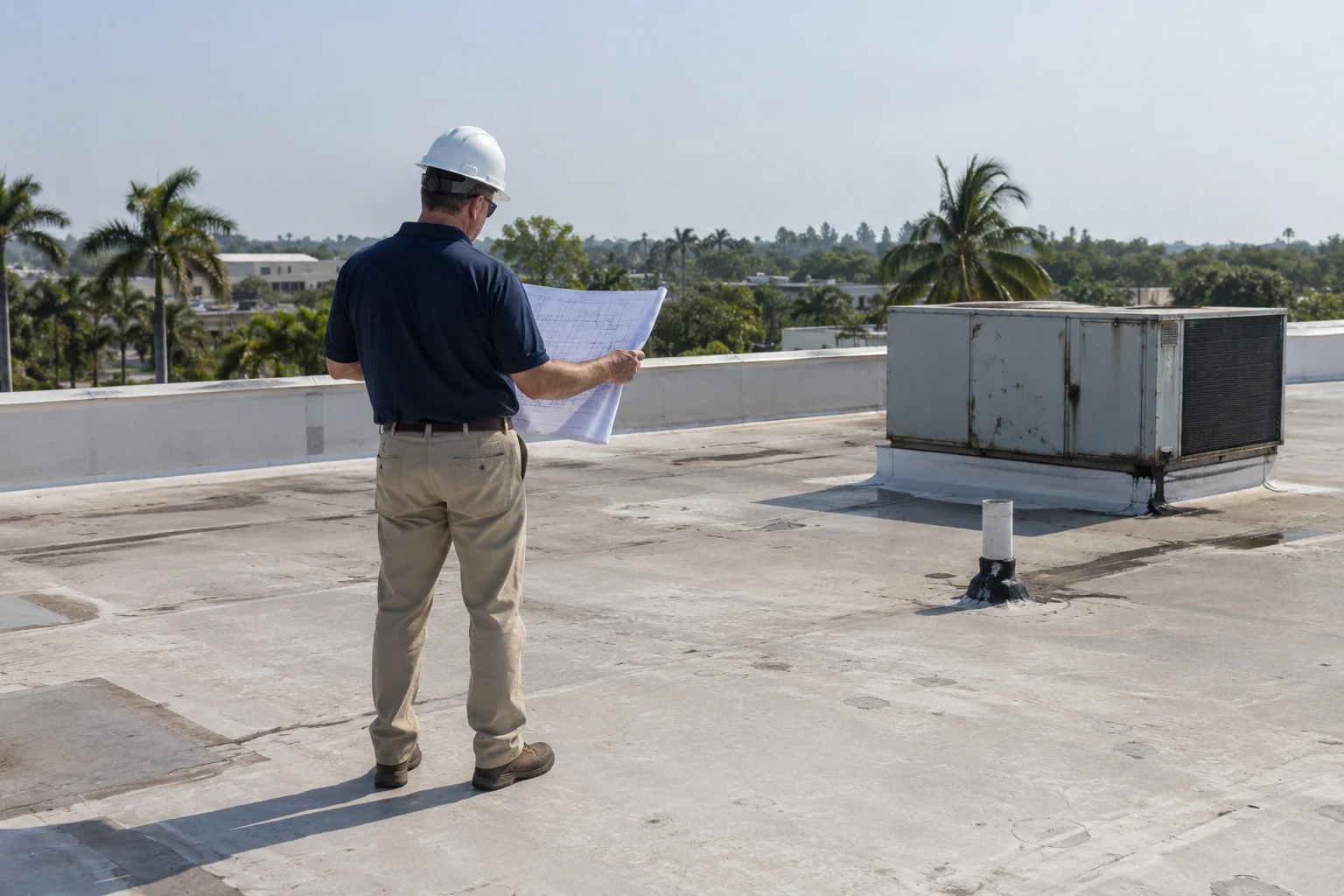
Related scopes may include a roof inspection, insulation replacement, or edge-metal repair. We can compare a built-up system or TPO membrane when replacement is planned. A hotel roof may require phased access around guest areas.
Where roof sections meet at different elevations, the work plan should show how temporary water shedding is maintained between them. We identify open edges, tie-ins, and drainage routes before removing material. If a shift ends with a transition incomplete, the temporary close-in is photographed and listed for the next crew. That record keeps a temporary detail from being confused with the final assembly.
Track the Repair Layers
Before work, photos show the cap sheet, lap edge, flashing, and repair zone. During removal, images record each exposed ply and any wet insulation or deck damage. The closeout lists the materials, application method, repaired seam, and any work that remains outside the approved boundary. For heat-applied work, the record also notes the specified fire-watch procedures.
Follow-up checks compare the repaired lap and nearby detail with the original photos. If no rain has occurred, the report distinguishes completed work from observed water performance. A later leak should be mapped to the roof zone before another patch is applied.
Keep the system label, installation records, maintenance notes, and repair images together. Modified bitumen repairs depend on the existing product and application method. A future crew can use the records to avoid mixing incompatible materials or applying heat where the assembly cannot support it.
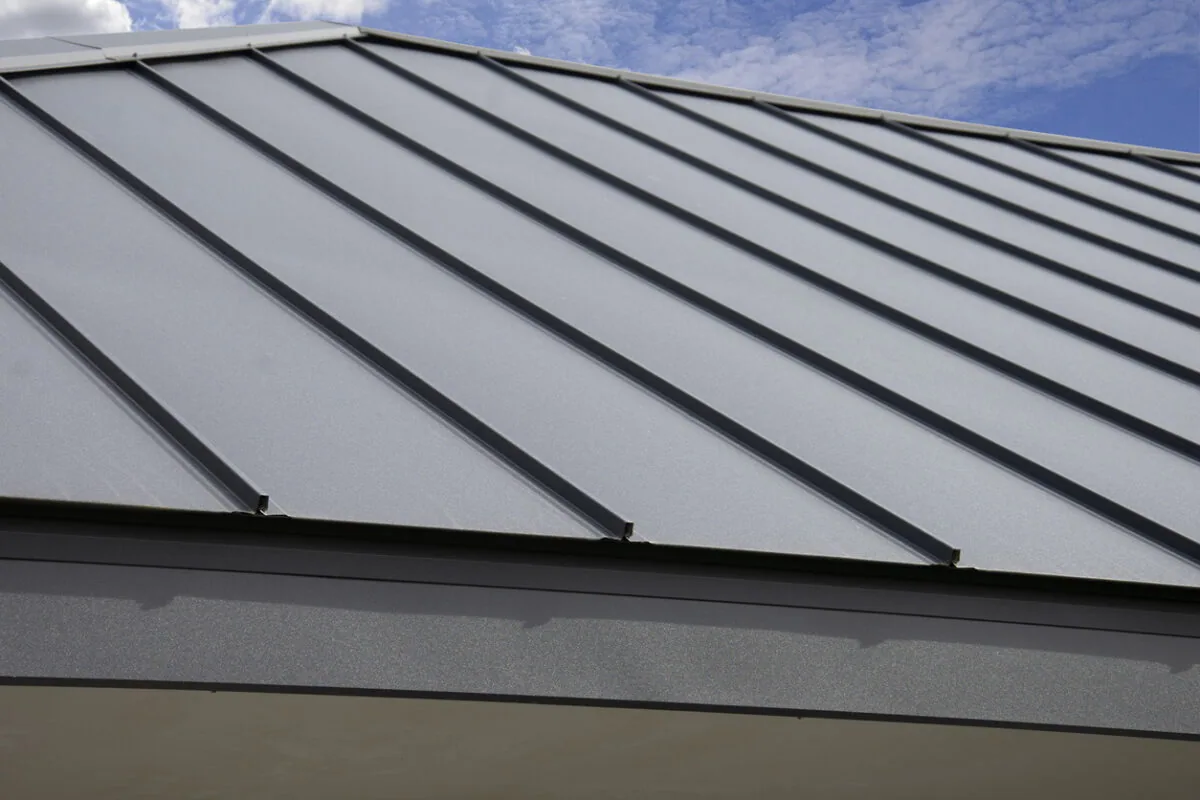
Modified-bitumen roofs can include multiple plies, surfacing, and layered transitions. During an inspection, distinguish a surface crack or granule loss from a breach through the waterproofing layer. Check laps, end joints, flashings, and areas where ponding or repeated foot traffic may concentrate stress. A repair proposal should describe the prepared boundary and tie-in method, plus any concealed condition that would require a change order.
Questions About Modified Bitumen Roofing
When should an owner distinguish SBS from APP modified bitumen?
They use different asphalt modifiers and may use different application methods. We identify the installed system and follow its product requirements for repair.
Can you repair a blister in the cap sheet?
First, we check whether moisture or loose layers are present below it. A sample may be needed before choosing a patch or broader replacement.
Will torch work be used on every repair?
No. The specified system and site conditions guide the method. Fire prevention, nearby materials, and occupancy can make another compatible application approach more appropriate.
How do you know how many layers are below the cap sheet?
A test cut can show the layer sequence at one approved location. Drawings may help, but concealed conditions elsewhere can differ.
Can modified bitumen be coated?
A coating requires a suitable surface and documented compatibility. We inspect the cap sheet and repair defects before proposing a restoration system.
Related Roofing Work
Liberty Hill
Hutto US 79 and SH 130 Corridor
Commercial Roof Inspection
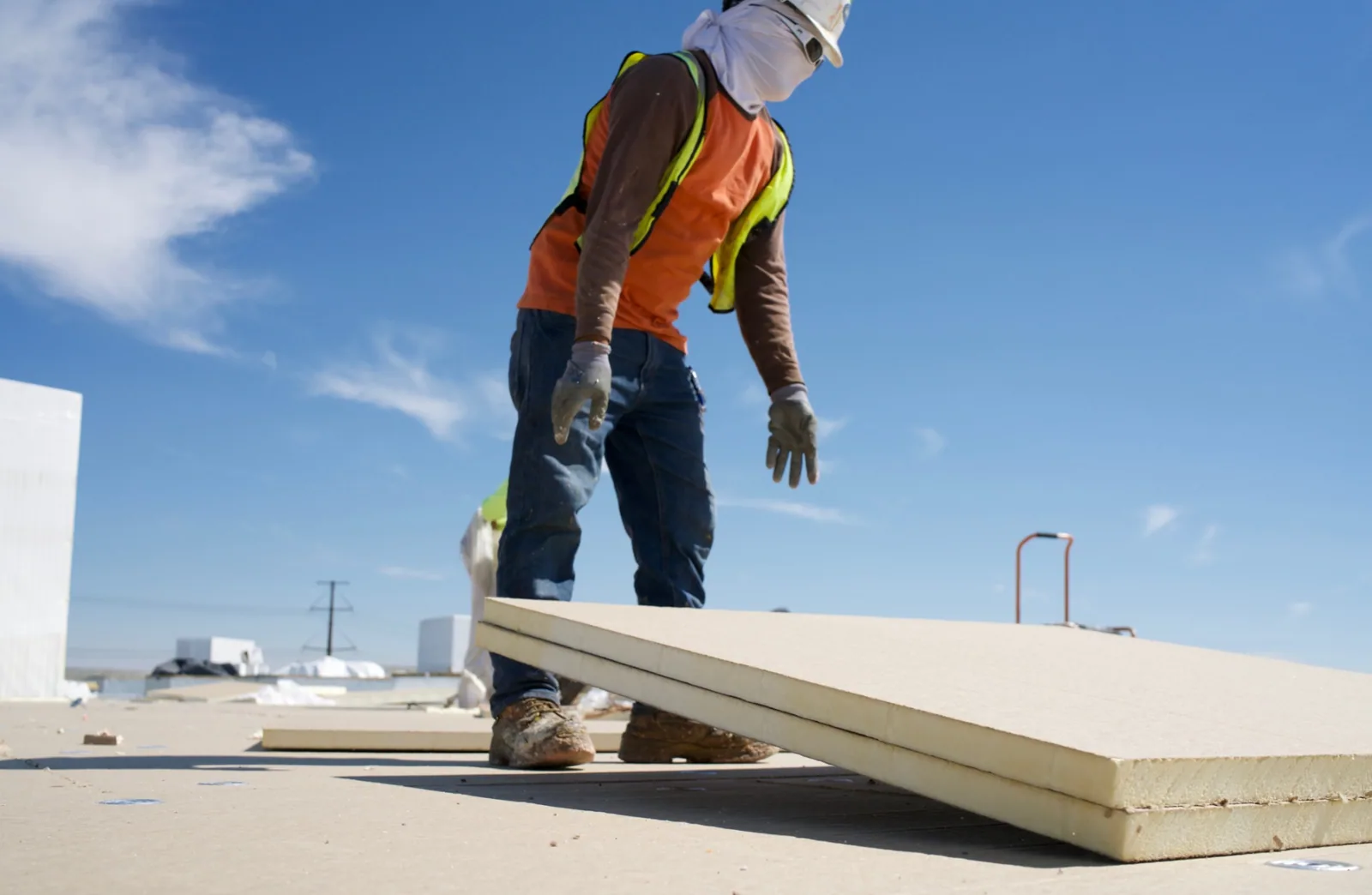
Commercial Roof Insulation and Cover Board
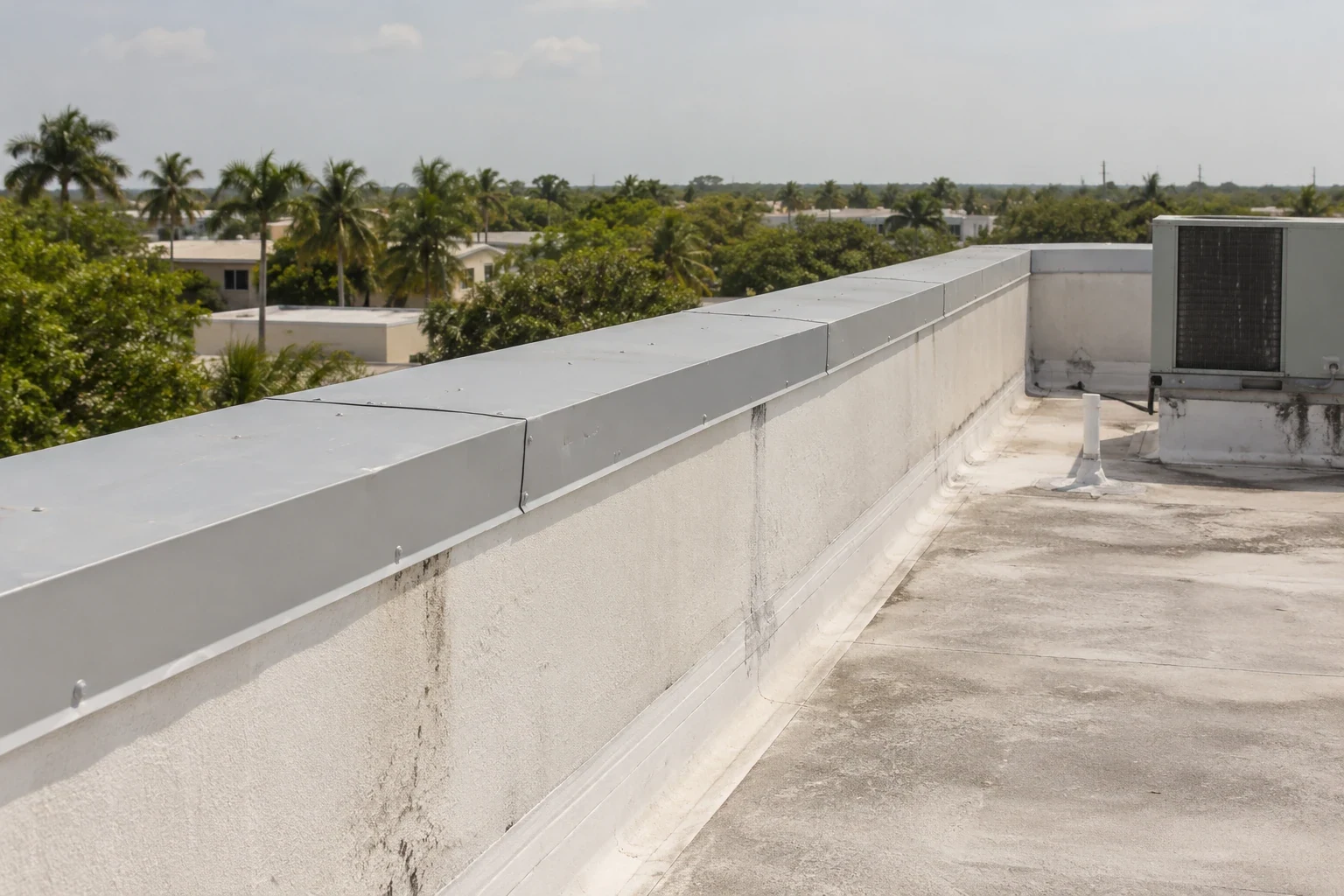
Commercial Roof Edge Metal, Coping, and Gutters