Request a Cedar Park Roof Walk
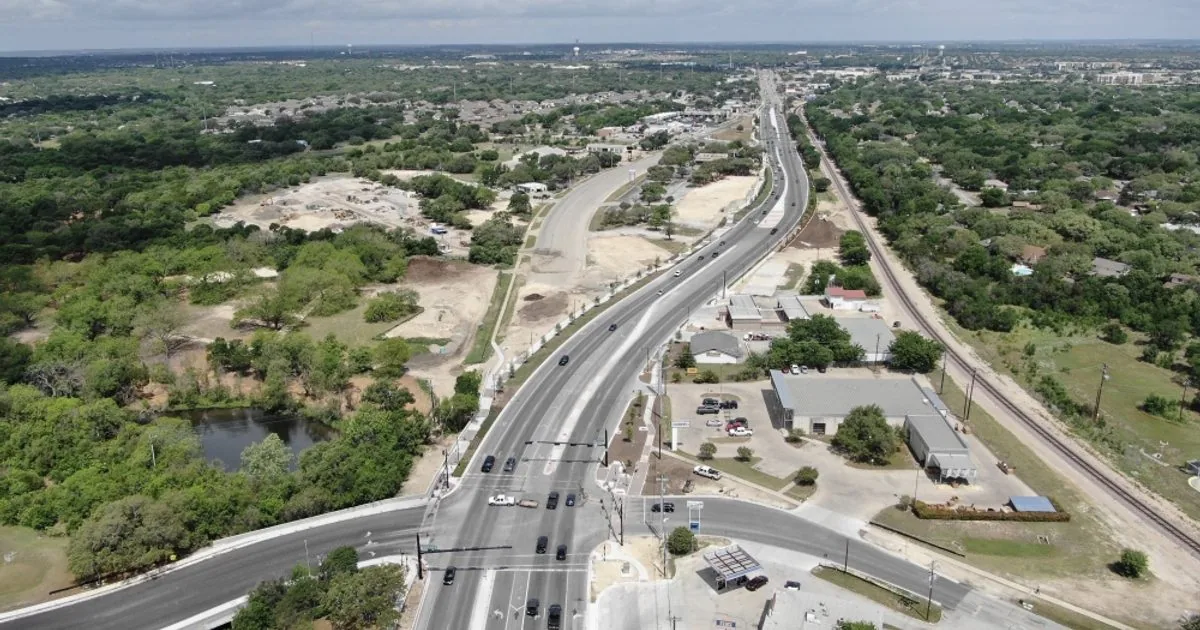
Cedar Park’s commercial properties sit across a city with different operating patterns: retail corridors, employment sites, offices, and community facilities. The City identifies Bell Boulevard (US 183) as a major north-south route and Whitestone Boulevard (RM 1431) as a major east-west route. Those corridors help plan arrival and material handling; they do not tell us what is installed on a particular roof. The inspection starts with the building, the leak history, and the roof details that can be reached.
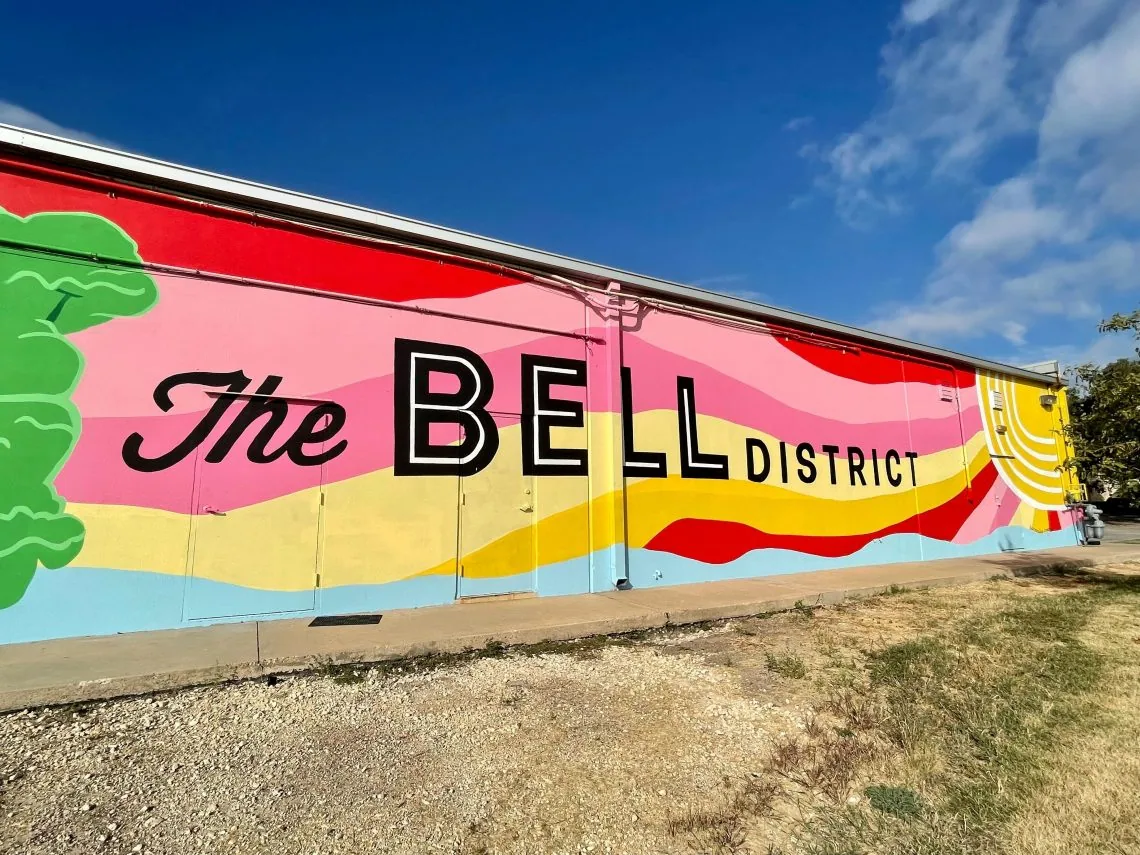
Owners also operate across places such as the Cedar Park Bell District and the Cedar Park Bell Boulevard commercial corridor; the inspected building, not its district label, determines the repair plan.
Share the building record, roof history, and area of concern; we will map the details and explain the next step. Call 555-555-5555 or request a roof assessment.
Trace water before choosing a repair
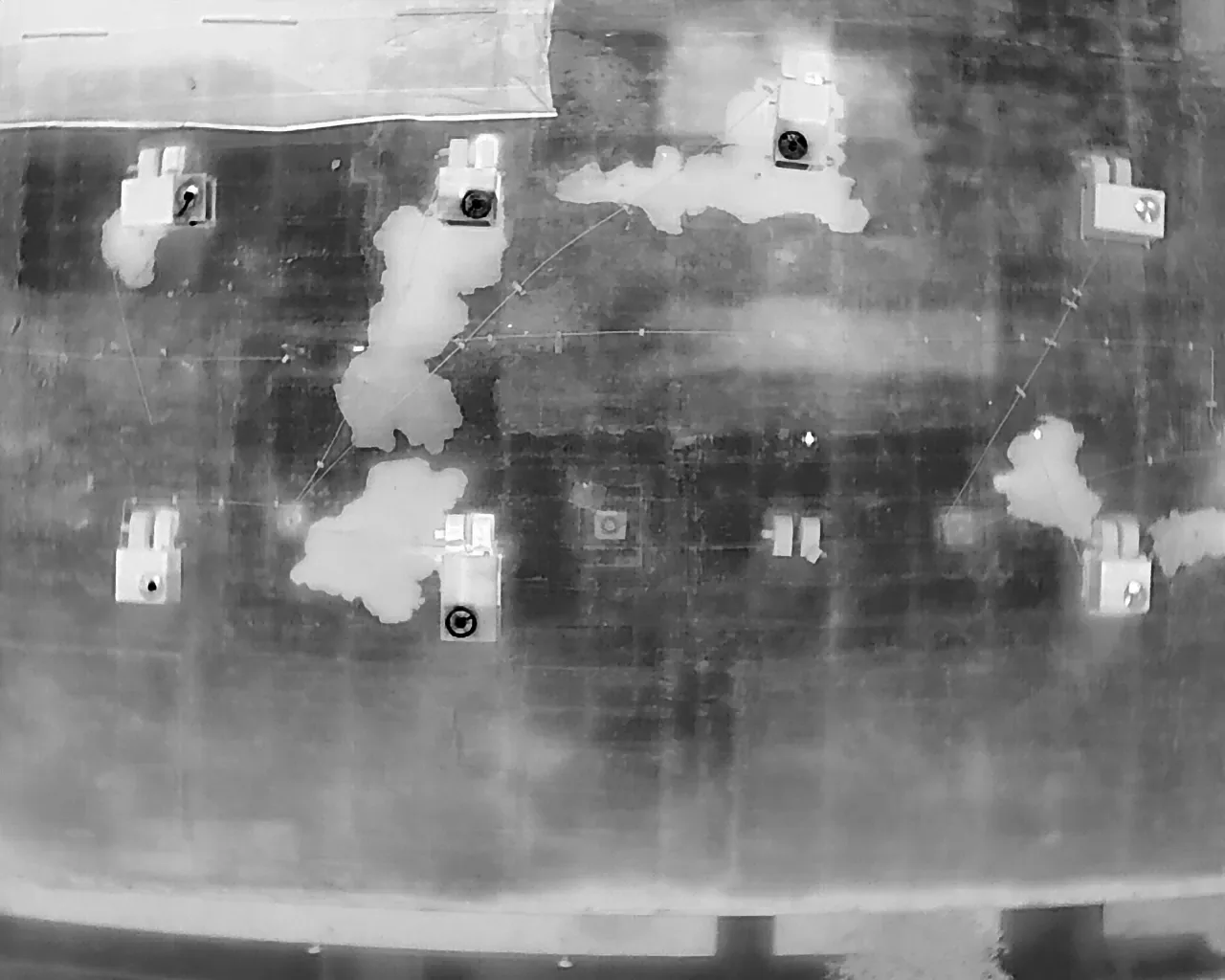
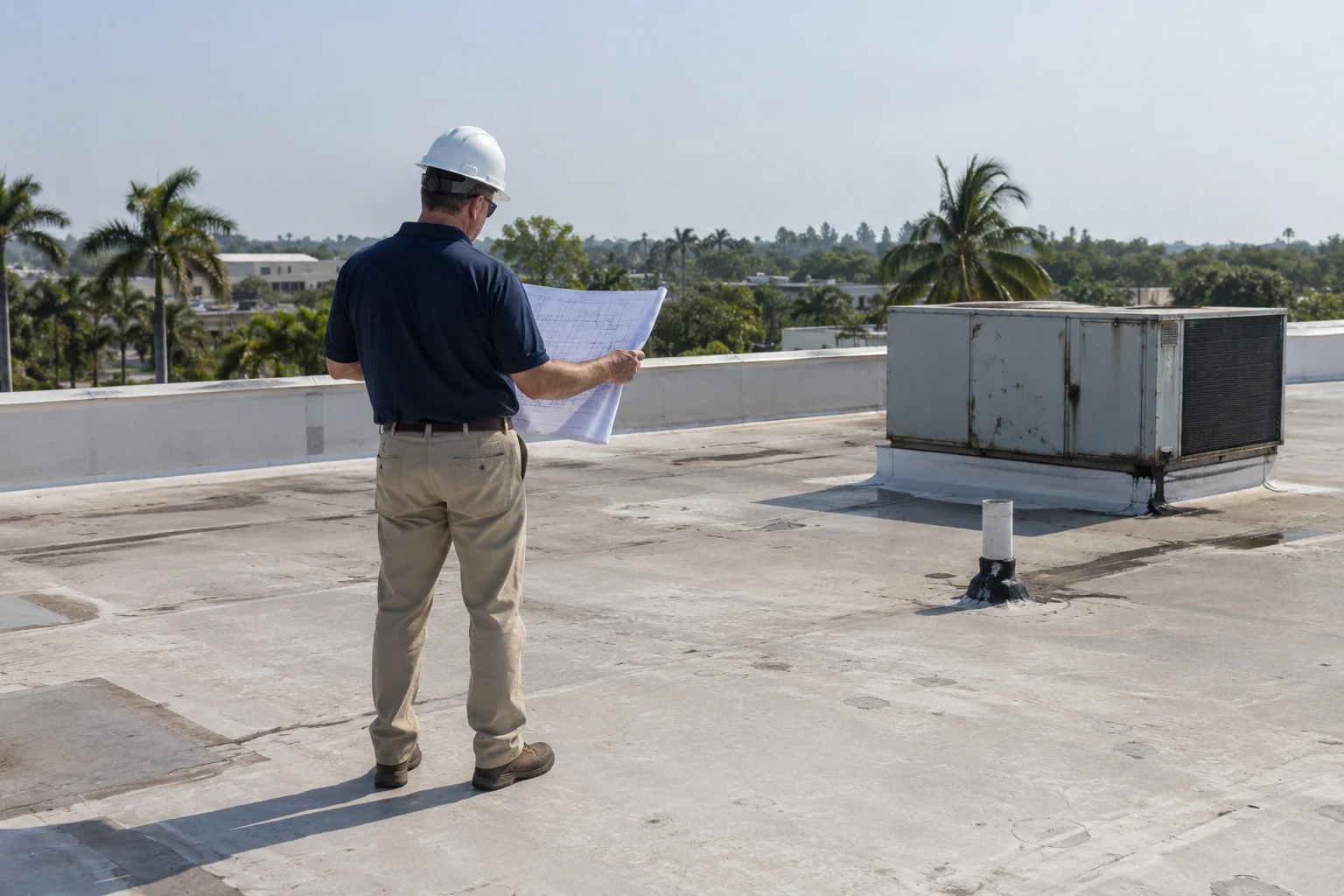
A stain inside can sit several feet from the roof opening that feeds it. Water follows the deck, insulation joints, or structural framing, then drops where it finds a break. On the roof, we compare the reported room with the nearest seam, drain bowl, wall line, curb, and previous repair. A roof sketch with numbered zones keeps the inspection tied to the building instead of to a general assumption about where the leak began. For a clear baseline, this roof needs a commercial roof inspection with zones marked on the plan.
The first visit should answer a practical question: is there a visible defect, a drainage issue, or a condition that needs testing? We photograph the detail and note whether it is wet, displaced, open, or simply aged. If evidence is incomplete, we say what access or test would narrow the cause. A targeted commercial roof inspection gives the owner a record of findings and limits before a crew opens a larger area.
Check seams, curbs, and perimeter details
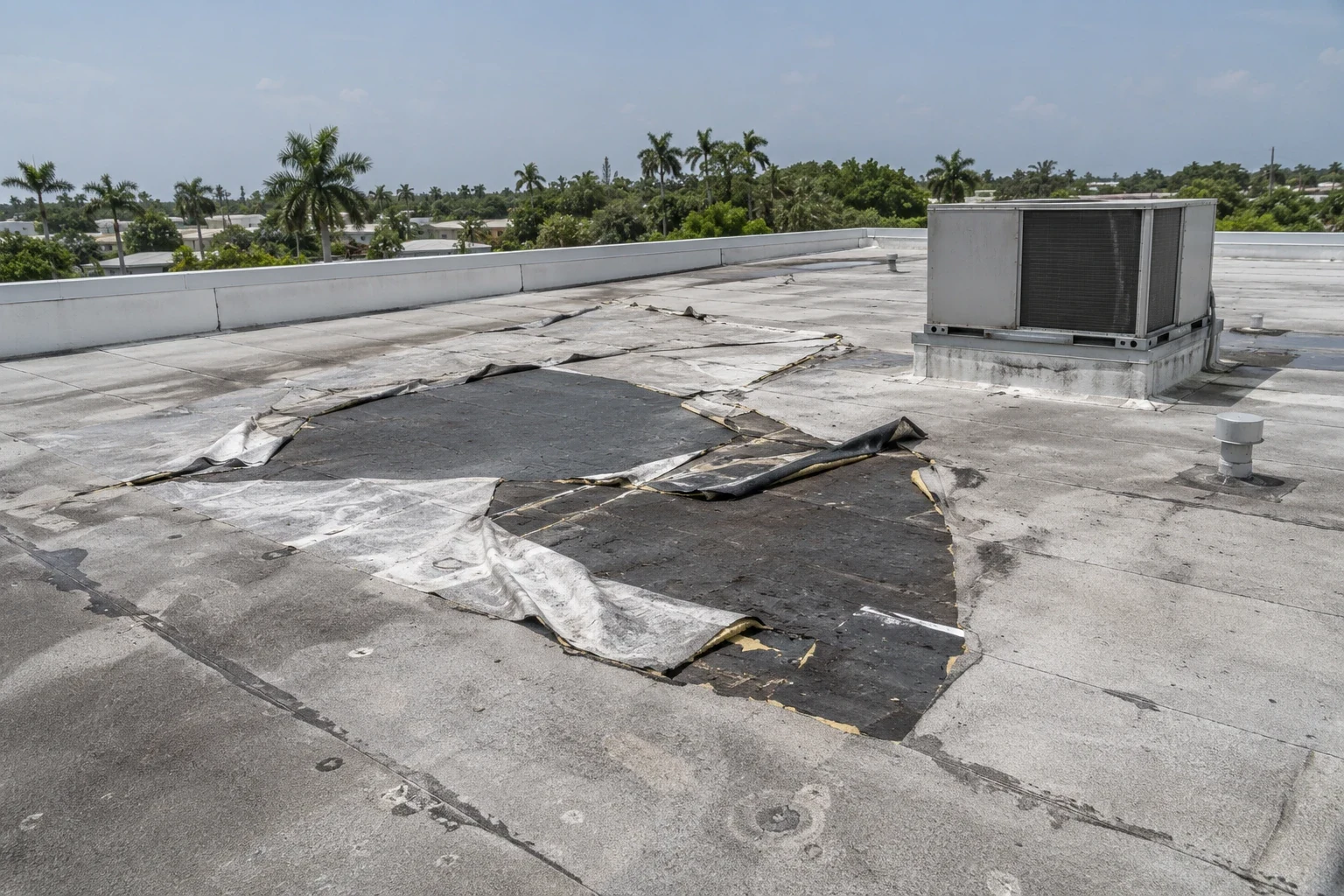
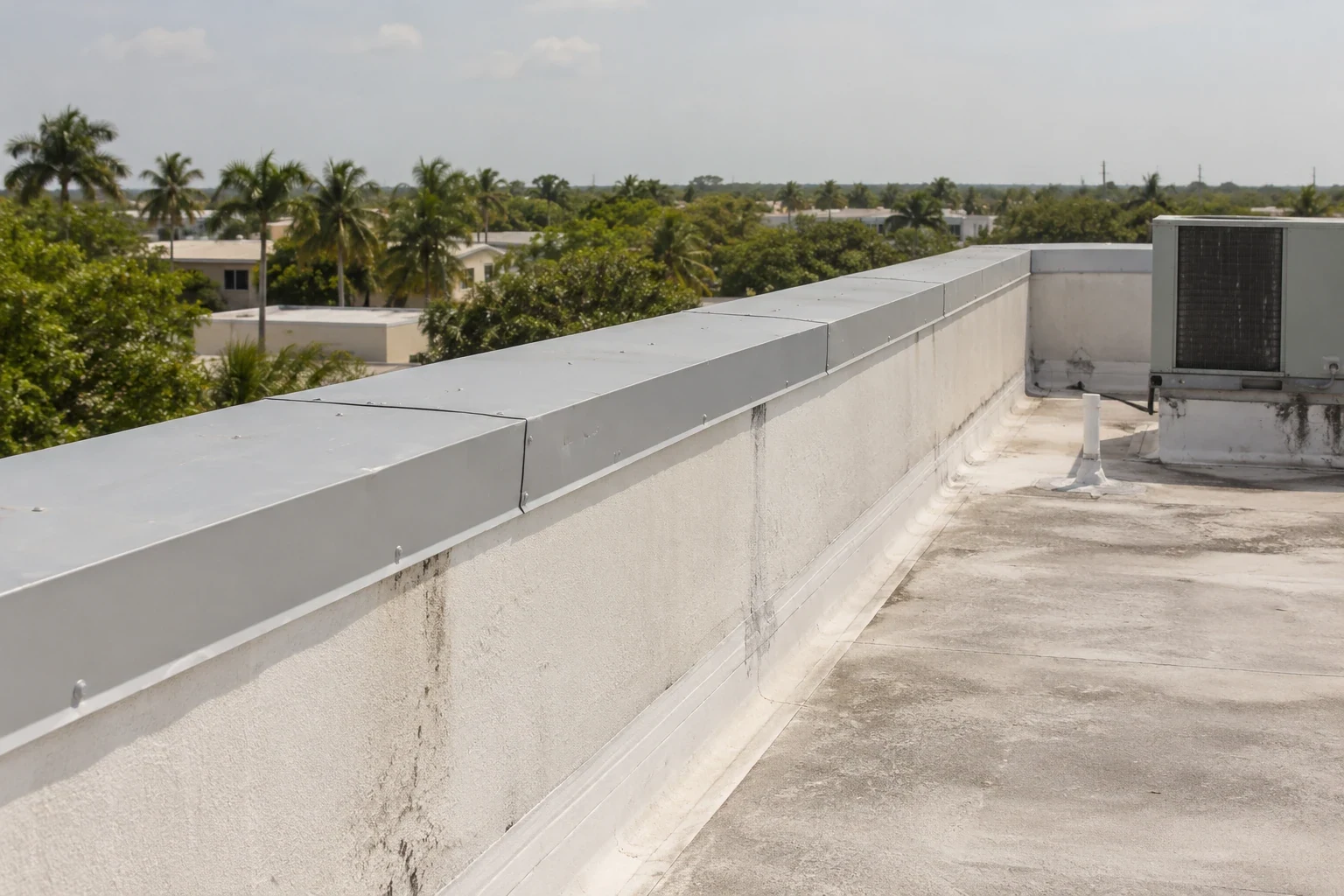
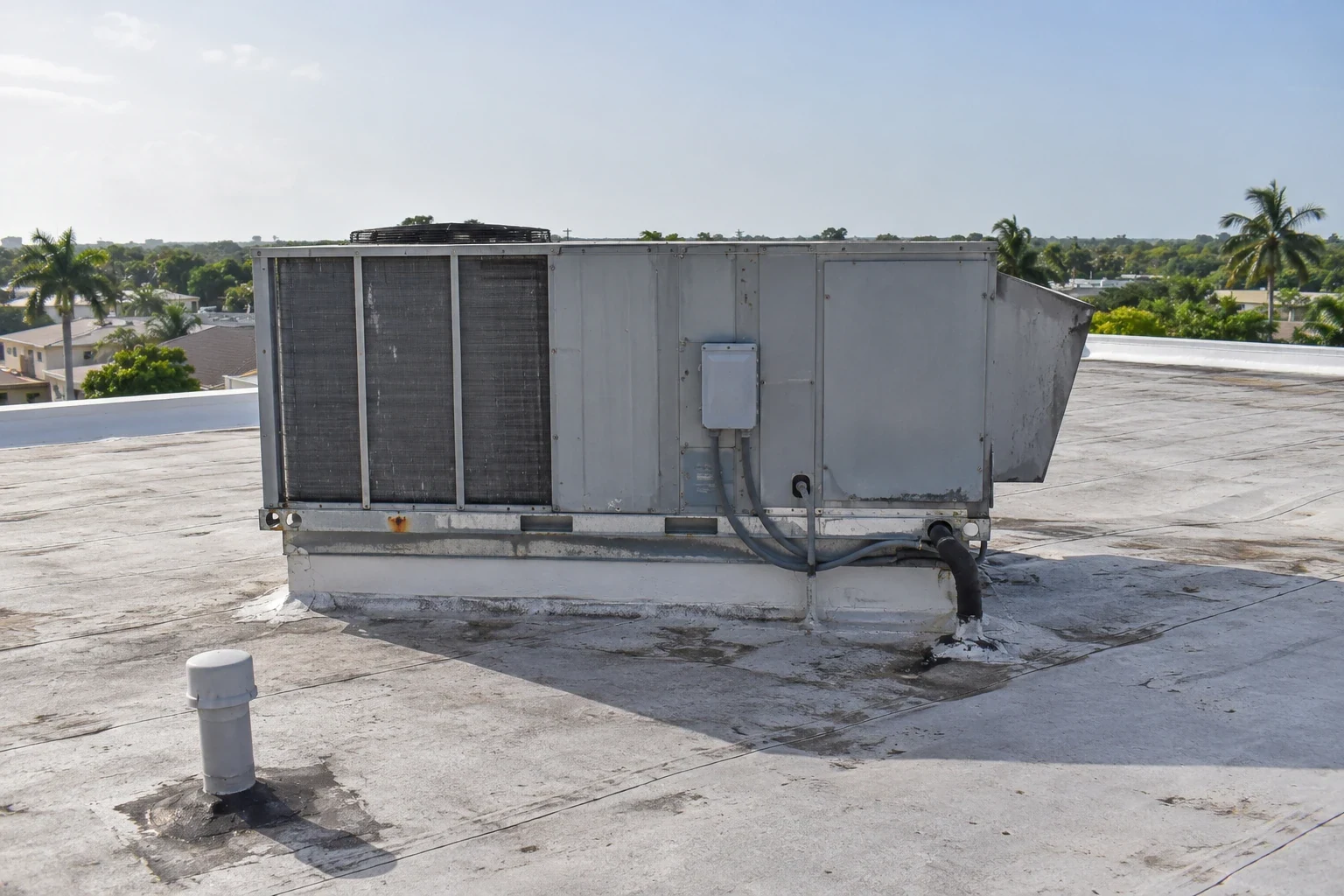
Seams move as the roof heats and cools. At a curb, the membrane turns up around equipment; at the edge, it terminates against metal or a wall. Each transition can fail differently. We check for open laps, split sealant, loose counterflashing, punctures, or movement around supports. The inspection also looks at roof traffic: service paths may concentrate wear from tools, carts, or repeated trips to mechanical units. A limited defect can be scoped as a commercial roof repair once the surrounding material is checked.
A repair must fit the existing membrane and the detail around it. A sealant bead can help at a compatible joint, but it cannot replace missing securement or bridge a wet substrate. We inspect nearby fastening and insulation when a detail has lifted. Where equipment work contributed to a damaged curb, the mechanical contractor and roofer should agree on the boundary and who restores the flashing. The completed scope should leave one accountable record for the roof-to-equipment transition.
Coordinate work with occupants
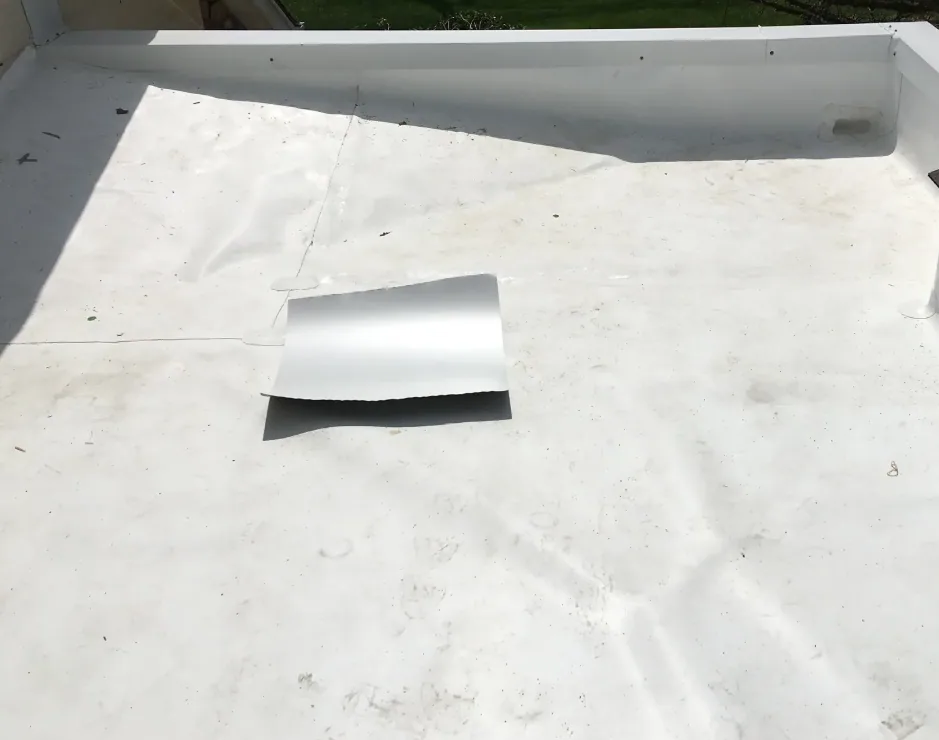
An occupied office or retail building needs clear notice before roof work begins. The owner identifies rooms beneath the active area, delivery hours, access points, fire lanes, and tenant contacts. The contractor can then schedule tear-off, lifts, or noisy fastening when the building can accommodate it. Work areas should be marked so tenants do not mistake an active roof zone for a safe access path. Following hail, the crew can perform a hail-damage assessment of the affected roof areas.
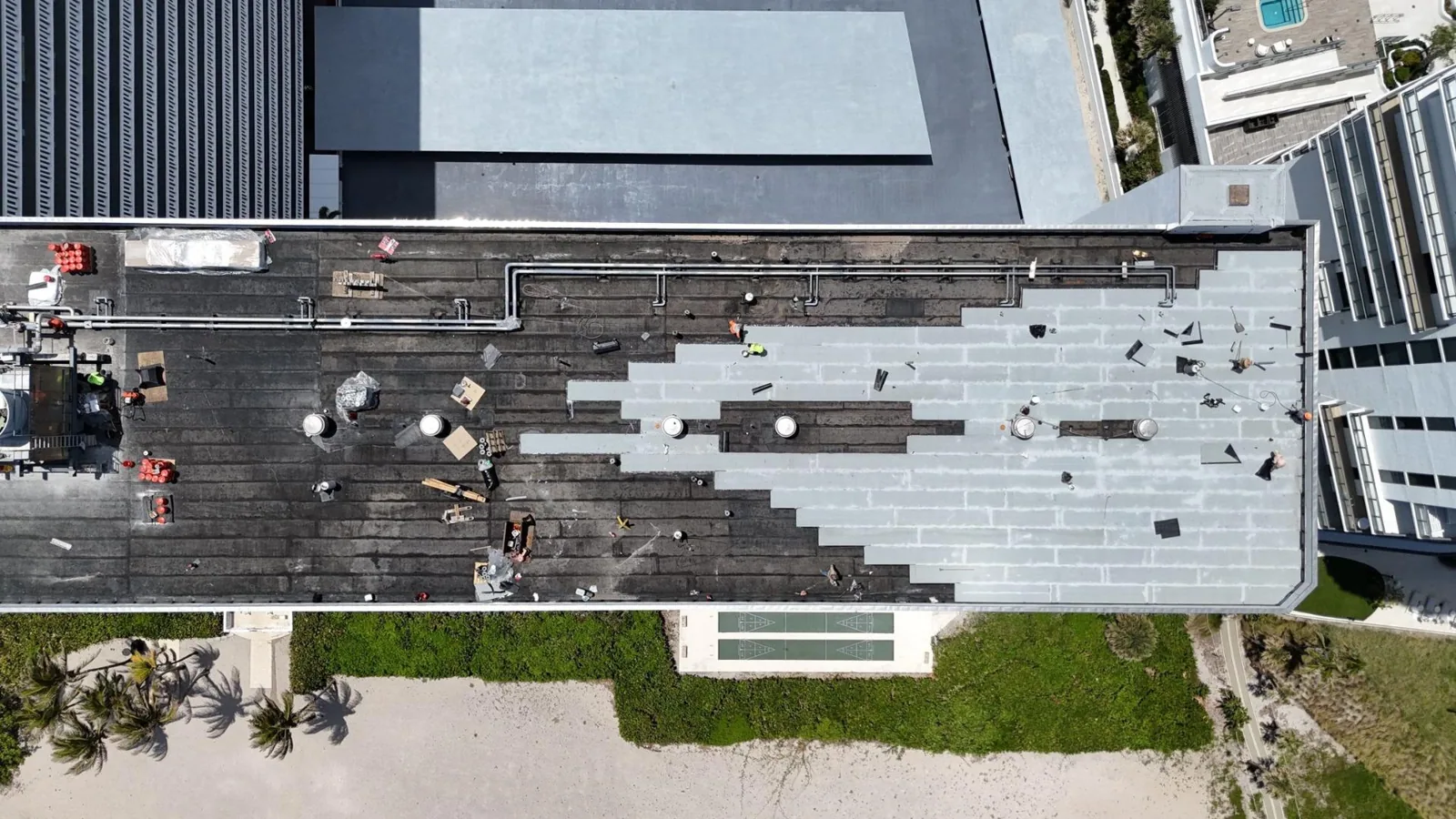
Every open section needs a dry-in plan for the shift. We set a daily limit, keep insulation and membrane protected, and finish transitions before leaving. If rain is forecast, the plan may shrink the opening or add temporary protection. When tear-off reveals wet insulation or damaged deck, the crew records the location and quantity, secures the roof, and waits for scope approval before expanding. This keeps a localized discovery from becoming an undocumented change order.
Make drainage part of the inspection
Ponding is often a geometry problem, not simply a clogged drain. We check whether water reaches the bowl, whether the bowl and strainer are clear, and whether the surrounding membrane has wrinkles or compression. Scuppers and overflow paths matter too; a primary drain can be clear while secondary drainage is blocked. A roof plan should mark low areas so the owner can compare them after cleaning or repair. If the field is dry and attached, a modified-bitumen assembly can be evaluated against other renewal options.
If water remains after a storm, note how deep it is and how long it persists. A photograph immediately after rain and another later can distinguish temporary wetting from a recurring condition. Cleaning debris may restore drainage, but it cannot change a settled deck or inadequate slope. The repair scope should separate maintenance from design work and identify any plumbing or structural review the owner needs. A drainage correction is strongest when the path from high point to outlet is documented.
Compare repair, coating, and replacement
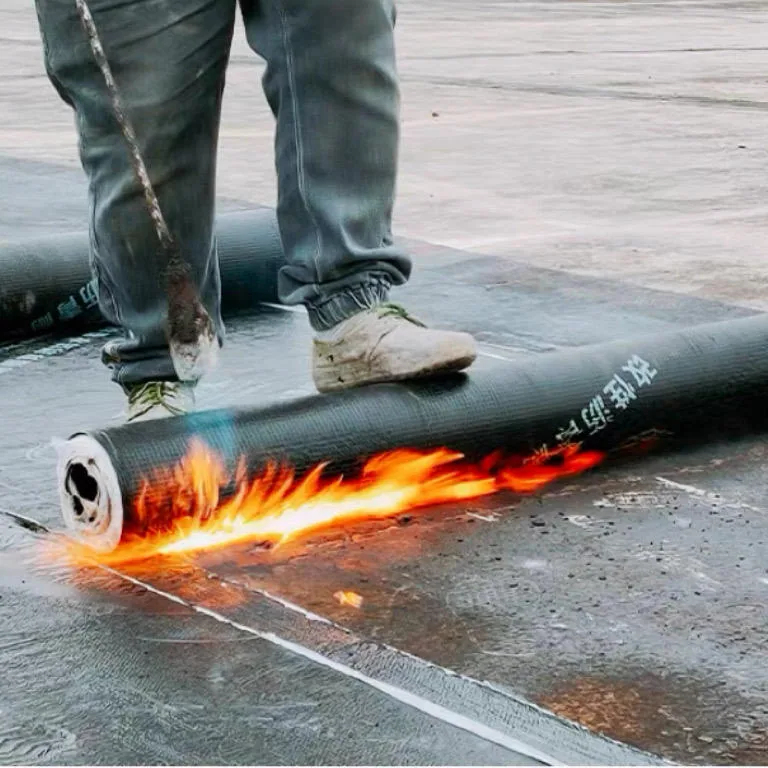
A localized repair is often the least disruptive option when the defect is isolated and the surrounding assembly remains serviceable. Repeated leaks, widespread wet insulation, loose attachment, or failing edge details can point to broader work. We define a repair boundary that includes the visible defect and the transitions required to make it durable. The estimate lists removal, substrate work, membrane tie-in, flashing, protection, and testing as separate items. When repair no longer fits, the owner can compare a full roof replacement with phased alternatives.
A coating or recover should be considered only after checking moisture, attachment, compatibility, drainage, and warranty requirements. It can preserve a sound roof surface but does not solve concealed wet materials. Replacement may provide the clearest long-term reset, with phasing that keeps the building weather-tight. A proposal should explain what stays, what comes off, how equipment is handled, and how roof access will change during work. Owners can then compare cost, disruption, and maintenance implications rather than a single number.
Leave records that guide the next visit
The final report should show the inspected zones, photographs, test points, repairs completed, and areas that could not be reached. If a test cut was made, it should identify that sample location and its finding without extending the conclusion to an entire roof. Keep the report with warranty documents, equipment replacements, and tenant work orders. When another trade adds a penetration, the record can show who must restore the flashing. To keep service history current, schedule a preventive maintenance inspection based on roof use.
A maintenance plan can prioritize drains, seams, roof traffic routes, and details with repeat history. After a major storm, the owner can request a focused review of edges, corners, rooftop equipment, and prior repairs. Findings from one building should not be applied to the next building in a portfolio; every roof has its own assembly and repair history. To prepare a useful inspection, share the leak location, roof access contact, available plans, and recent repair notes.
Questions About Cedar Park
What should I include when requesting a Cedar Park estimate?
Provide the leak room, roof plan if available, property access contact, repair history, and any delivery or tenant-hour restrictions.
Will you inspect drainage during a leak visit?
Yes. The walk follows runoff to the drain or scupper and notes where water collects or leaves the roof.
Does a patch solve repeat leaks?
Only if the cause is local and surrounding material is serviceable. A repeating pattern calls for broader mapping and testing.
Can work proceed while a store remains open?
The property team defines customer routes and work windows. The crew phases the roof area and protects the space below.
How is hidden wet insulation confirmed?
An agreed test opening can confirm the layers at that point; the report records the sample and does not generalize beyond it.
Related Roofing Work
Bell District
Bell Boulevard in Cedar Park
Commercial Roof Inspection

Commercial Roof Repair
Hail Damage Roof Repair