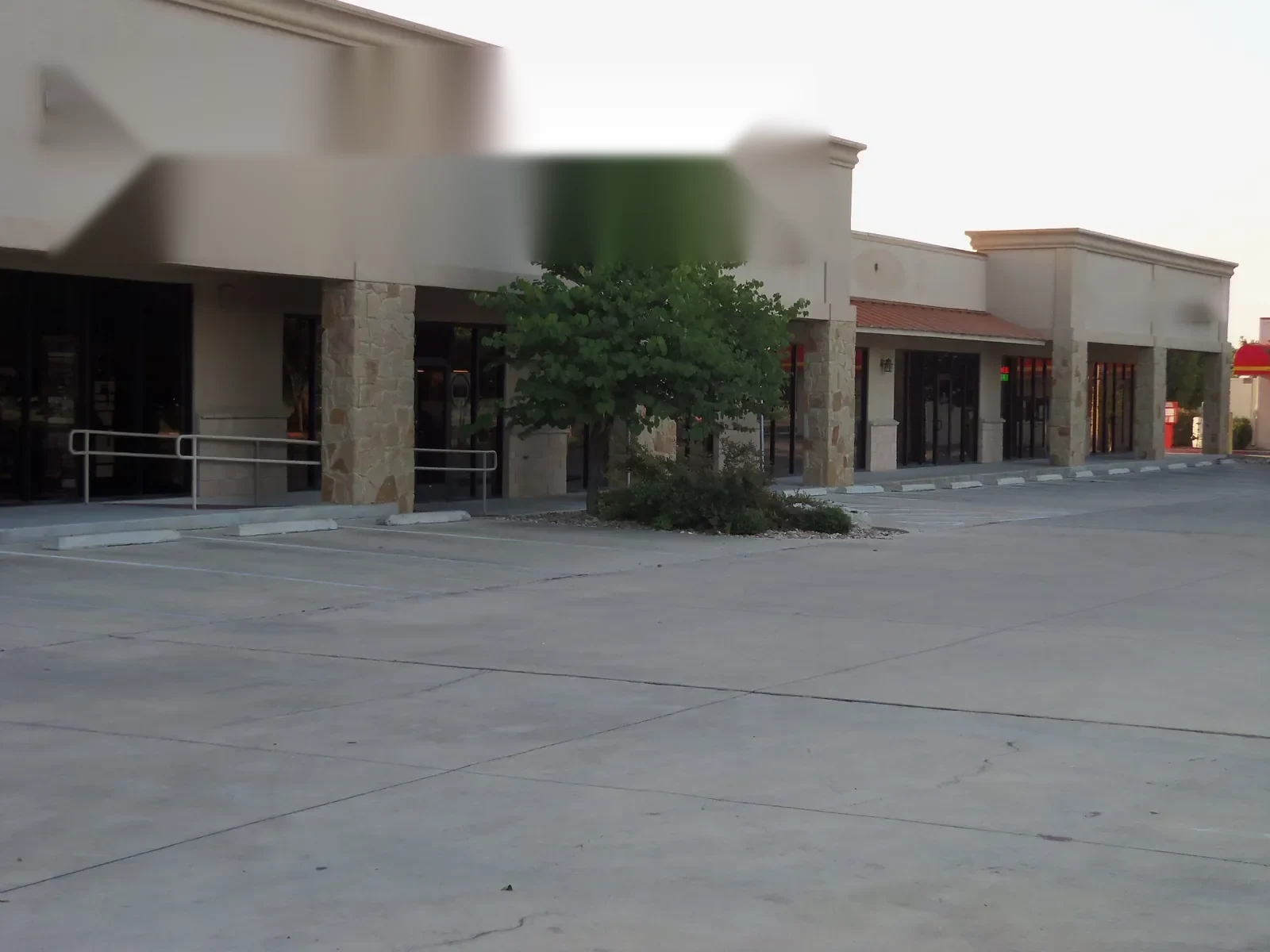
Schedule Commercial Roof Service in Jarrell
Commercial roof service in Jarrell starts with the property, not the name of a nearby operation. We identify the building, access contact, roof system where known, and the reported leak or maintenance need before setting an inspection route. Along an active transportation corridor, delivery movement and operating schedules can shape staging. The work boundary and any area that cannot be accessed stay clear in the report.
Jarrell Economic Development Corporation describes commercial property within the city limits and extraterritorial jurisdiction with immediate I-35 access, and identifies I-35 as a Texas Triangle supply-chain route. That broad city context can help coordinate service, but it does not establish a roof assembly or property access. We verify both at the building before recommending a repair or larger project.
Describe the roof concern, building operations, and who can authorize access. We will set the inspection boundary and recommend a practical next step. Call 555-555-5555 or request a roof assessment.
Establish the Assembly and the Water Path
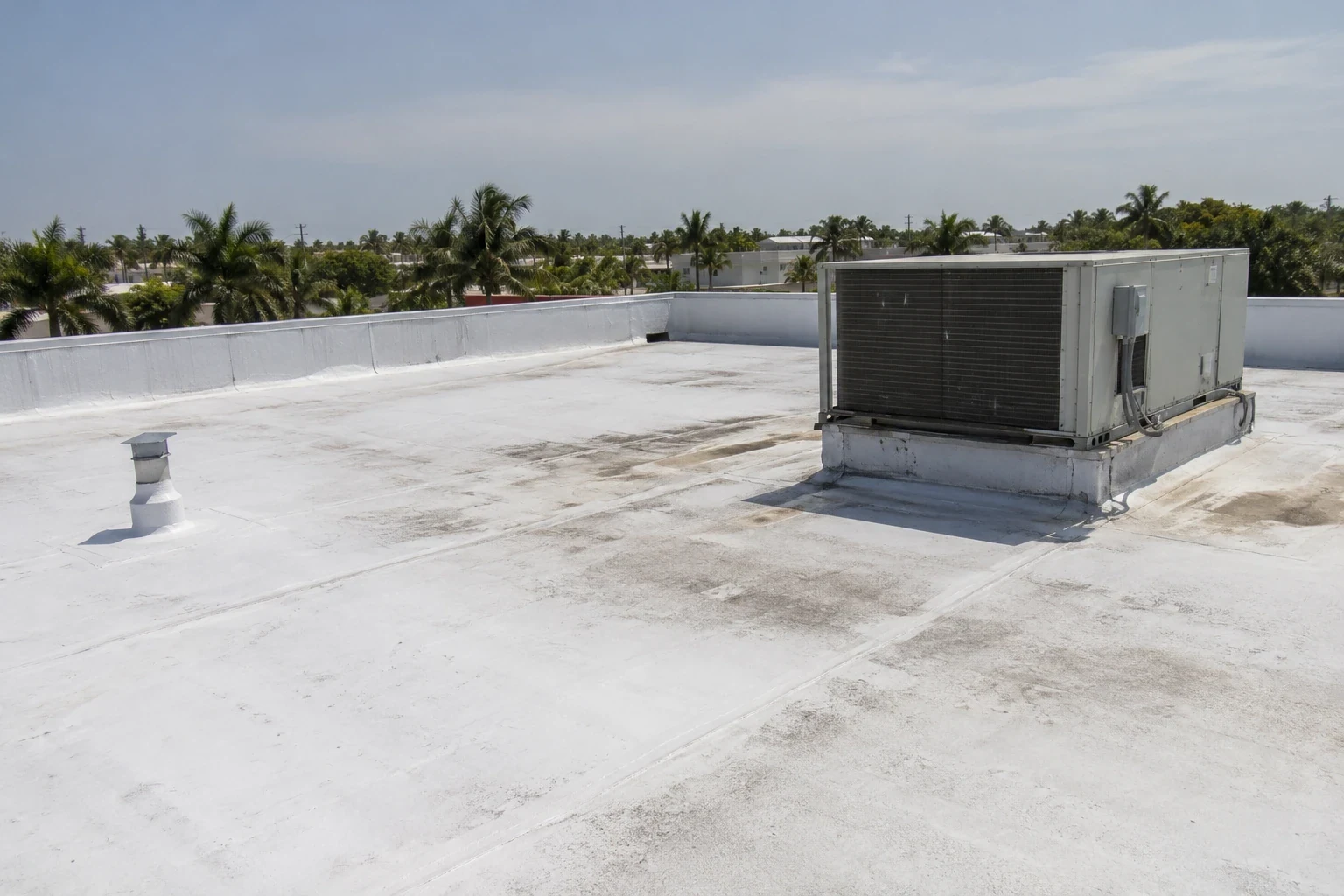
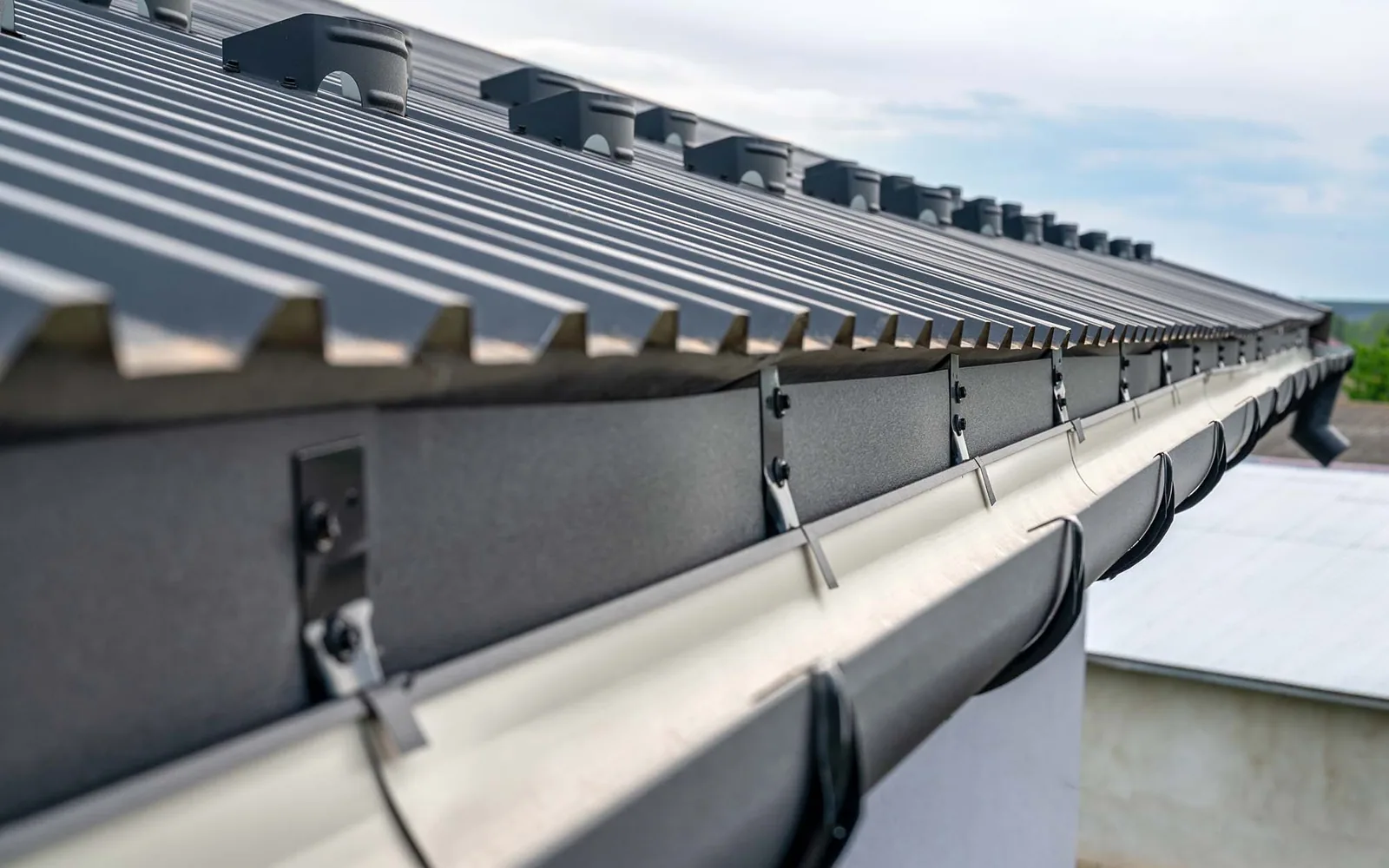
A brown mark on an interior ceiling is a location clue, not a roof diagnosis. We compare the reported room with roof penetrations, membrane seams, drains, edge transitions, and any repair that may intersect the path. Where the roof plan identifies equipment or controlled areas, we check that the drawing still matches the field. If the source is not clear, a moisture scan or test cut can answer a narrower question. The record marks the test point and untested area.
We verify the assembly, equipment, and access limits with the facility contact. If the roof serves a process area, the contact identifies operational or equipment constraints relevant to staging.
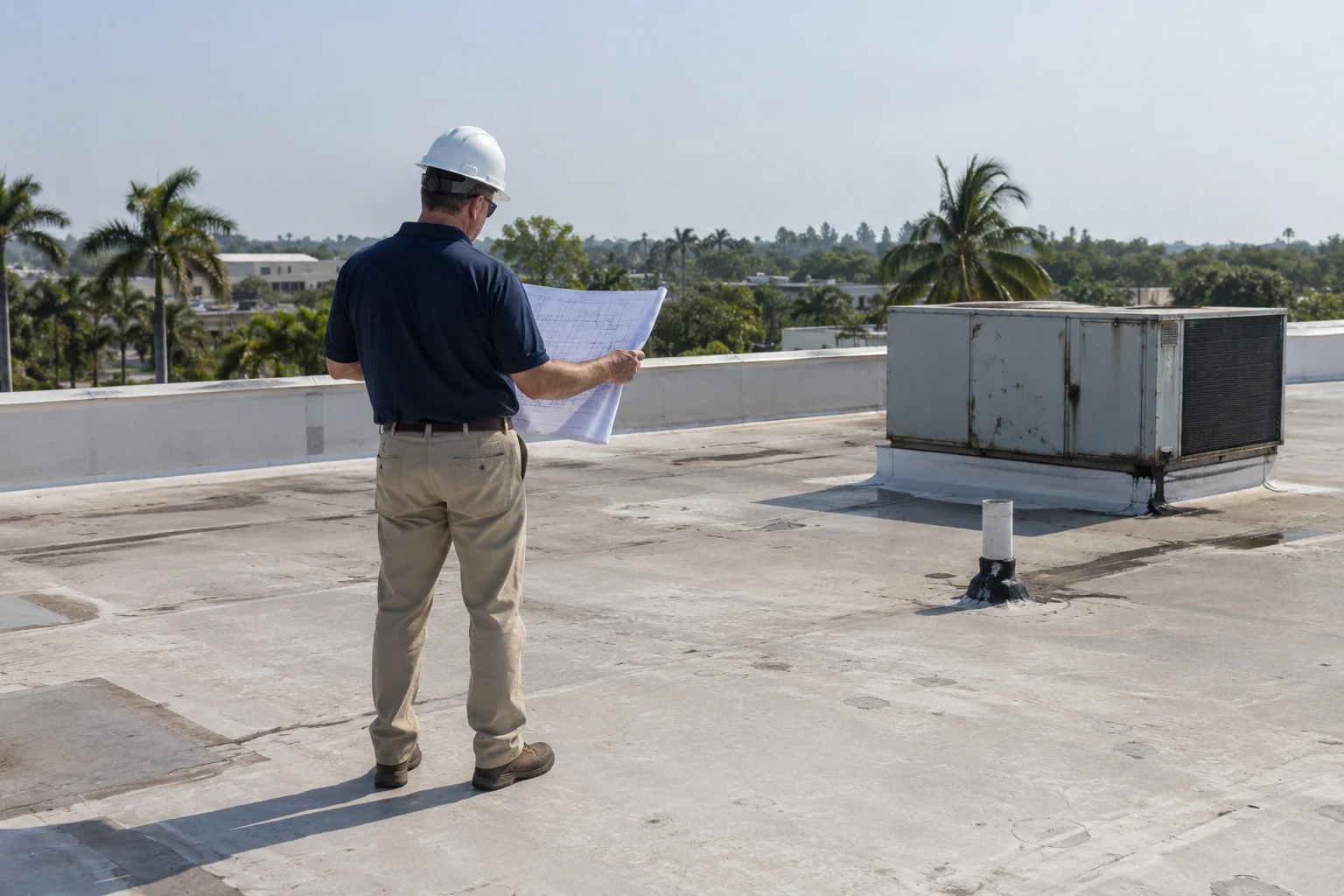
After a reported leak or storm, we inspect perimeter attachment, exposed seams, drainage, and penetrations, then distinguish visible damage from conditions that need testing. The roof evidence sets the work boundary.
Set a Work Boundary for Active Sites
Before dispatch, we ask who can approve access and who receives the roof findings. The site contact identifies active entrances, material delivery points, roof hatches, and any areas that need protection. A work plan can then set a safe route and a stop point if operating conditions change. The facility contact identifies production windows or process restrictions that affect staging and inspection.
Emergency response is available day or night, weekends and holidays included. A first visit can limit active water entry and protect equipment or interior finishes while the roof-side detail is checked. Temporary measures and permanent corrections belong in separate lines of the work record. The closeout records whether rain has tested the repair and names the next check if it has not.
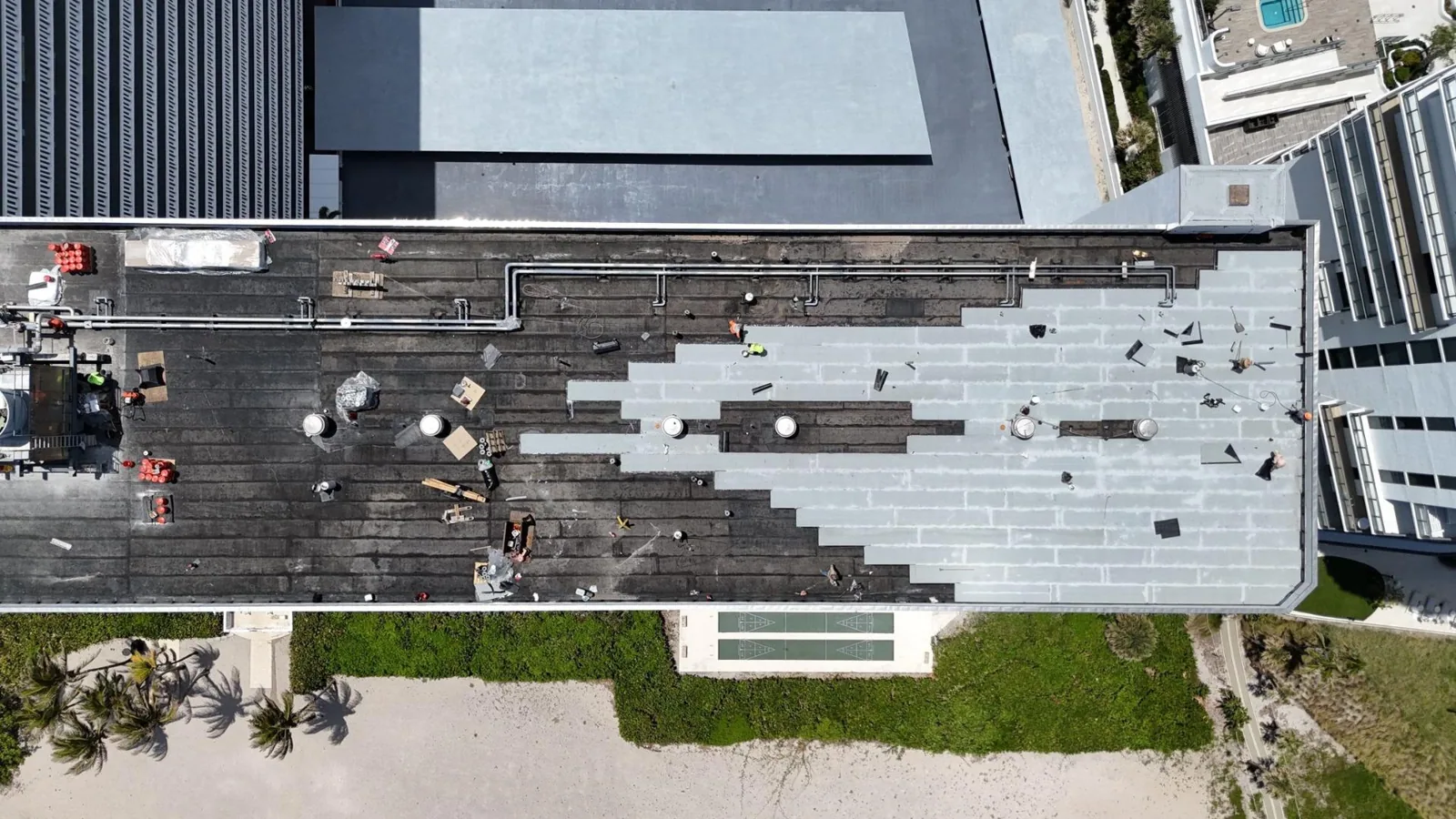
For replacement, we set a daily tear-off limit and agree how an open area will be made watertight before the crew moves to another zone. The scope names the system, insulation, flashing, edges, and daily close-in. If removal reveals wet insulation or a damaged deck, we stop at the safe boundary, document what changed, and get owner direction before extending the work. This protects the building and keeps added scope visible.
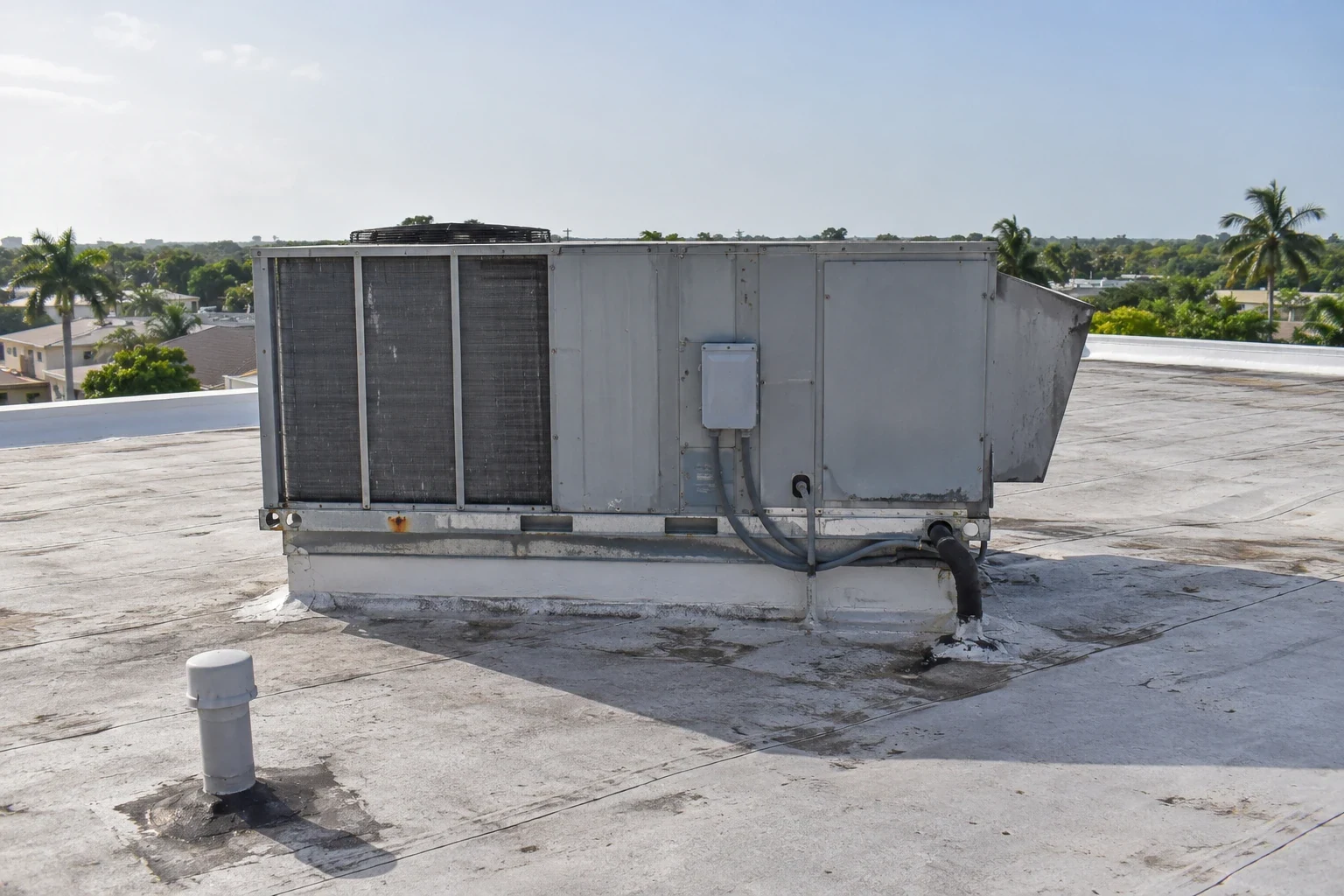
Useful related work can include commercial roof inspection, occupied-building reroofing, and roof insulation and cover board work. If a penetration or rooftop unit is part of the leak path, curb and equipment-support service can address that detail. A condition report keeps the finding tied to the actual roof zone and test point.
Compare Repair with a Larger Roof Scope
A repair is strongest when the defect is confined and the surrounding materials remain sound. A recurring leak or a cluster of wet readings may mean the visible opening is only one part of the problem. We document the repair boundary, the test area, and the next step needed to confirm hidden conditions. Owners can then compare a defined repair with a broader assessment without assuming that one sample represents the whole roof.
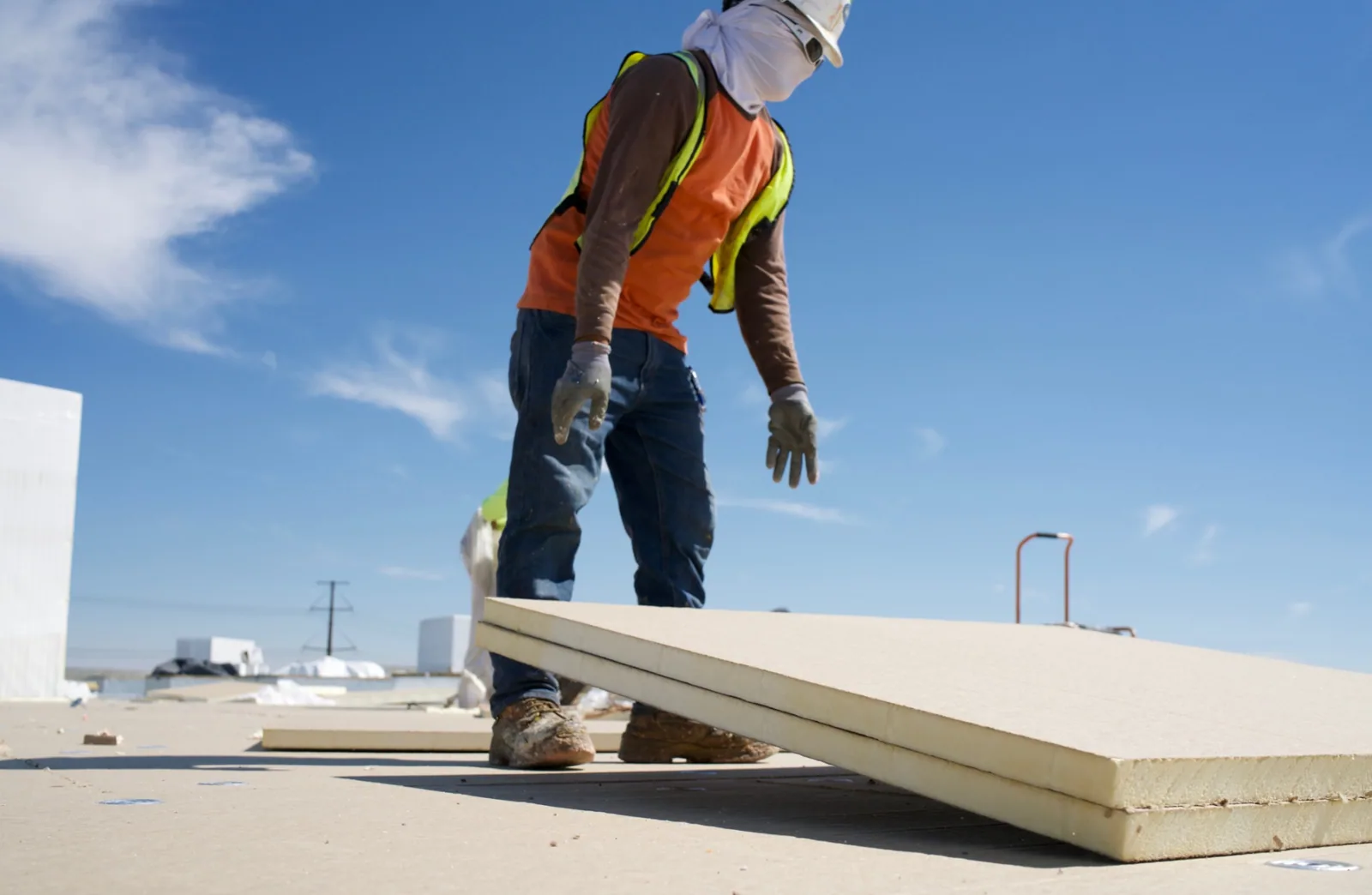
A recover or coating depends on the condition below the proposed new surface. We review moisture, attachment, drainage, compatibility, seam and flashing details, and whether existing edges can accept another layer. Coating cannot dry wet insulation or fix drainage. Replacement requires more removal and weather control, but it can expose concealed conditions and allow new transitions to be tied into a known assembly. Each option should explain what remains, what is removed, and how the work is closed at the end of each shift.
When a Jarrell repair becomes a larger replacement, confirm which local approvals apply before finalizing details. The roof scope identifies its system, attachment, insulation, and transition points for that project review.
When a leak continues, water can move into insulation, deck, and interior finishes. The likely impact depends on the assembly and exposure, so we describe the inspected evidence instead of predicting a damage area. A temporary dry-in, a focused repair, or replacement can be priced as separate decisions. That makes it possible to stabilize the building and schedule the next capital step with a known scope.
Make Findings Useful to the Next Facility Review
A useful report identifies the building, roof zone, system observed, defect, test method, and repair boundary. Photographs should correspond to a roof plan or field mark so the next reviewer can find the same seam, curb, drain, or edge. The report also notes areas not accessed and any operating restriction that shaped the inspection. Record the property address, building, and roof zone so a later reviewer can find the exact repair.
Keep the report with roof plans, work orders, equipment changes, and the maintenance schedule. Record who restores flashing after new penetrations. A zone map helps compare later leak reports; monitoring notes should set the return condition.
For each service request, include the access contact, affected zone, and work-hour limits. We tie the findings to the inspected assembly and the property record.
For a Jarrell building near the interstate, the service plan should account for delivery movement and the site's own operating schedule. The I-35 connection is a citywide logistics reference, not a substitute for confirming the property entrance or roof access. We identify the roof system where it can be verified, mark the affected section, and check the details most likely to carry water: seams, curbs, drains, and perimeter transitions. If a repair will interrupt operations, the work order should state the daily limit and weather close-in method. Closeout photos then give the facility team a traceable record for later maintenance.
For a building near Jarrell's I-35 commercial area, truck movement and property-specific access can shape staging; a building in Georgetown follows its own contact and roof plan. Inspection results remain tied to the building visited.
At Jarrell properties with I-35 access, the receiving window and gate route help determine when roofing material can arrive. The contact confirms those limits; the work plan keeps deliveries away from active loading lanes and names the protected roof zone for each shift.
Questions About Jarrell
What should a Jarrell facility share before a roof inspection?
The affected room or roof zone, site contact, access instructions, and any current roof plan help define the visit. We document areas we cannot reach.
Does proximity to I-35 change the roof repair method?
No. The system and observed condition set the repair method. The corridor may affect access and material scheduling.
Can emergency service protect an active leak first?
Yes. We can address immediate water entry and record temporary protection separately from the permanent repair.
What does a moisture scan tell the owner?
It can help select a test area when conditions support it. A scan alone does not establish how much insulation needs replacement.
When should a building compare repair with replacement?
Repeated entry, widespread moisture, or failed details across several zones may support a larger review. The recommendation follows the evidence collected.
Related Roofing Work
Commercial Roof Inspection
Occupied Commercial Building Reroofing
Commercial Roof Insulation and Cover Board
Commercial Rooftop Equipment Curbs and Supports
Commercial Roof Condition Reports