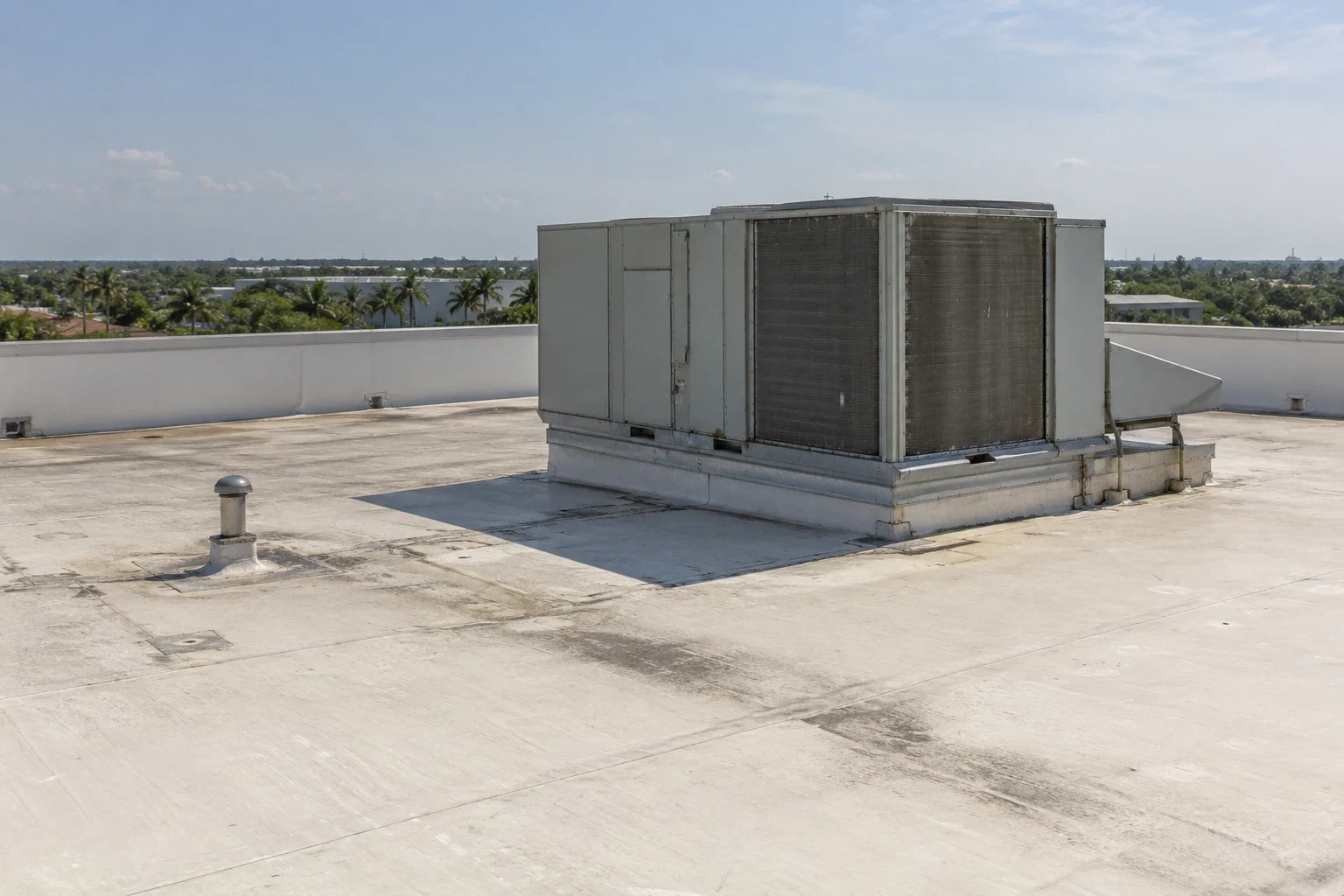
Mark the Equipment Base
A rooftop unit rocks slightly when its fan starts. That movement can fatigue a curb seam or pull a pipe support against the membrane. We inspect the equipment base, curb flashing, nearby seams, and support attachment before proposing a patch. The roof detail and the mechanical connection work together, but each trade has a separate role. The report marks what can be repaired from the roof and what needs equipment service.
Round Rock includes technology sites such as the Dell Technologies campus and industrial properties around Chisholm Trail Trade Center. Their equipment layouts and access rules vary by building. We identify each roof zone and coordinate restrictions before approaching a unit, so the inspection does not interfere with electrical or mechanical controls.
Send the address, unit or pipe-support location, leak symptoms, roof access rules, and recent equipment service notes. We will inspect the detail and identify trade coordination. Call 555-555-5555 or request a roof assessment.
Read the Curb and Its Movement
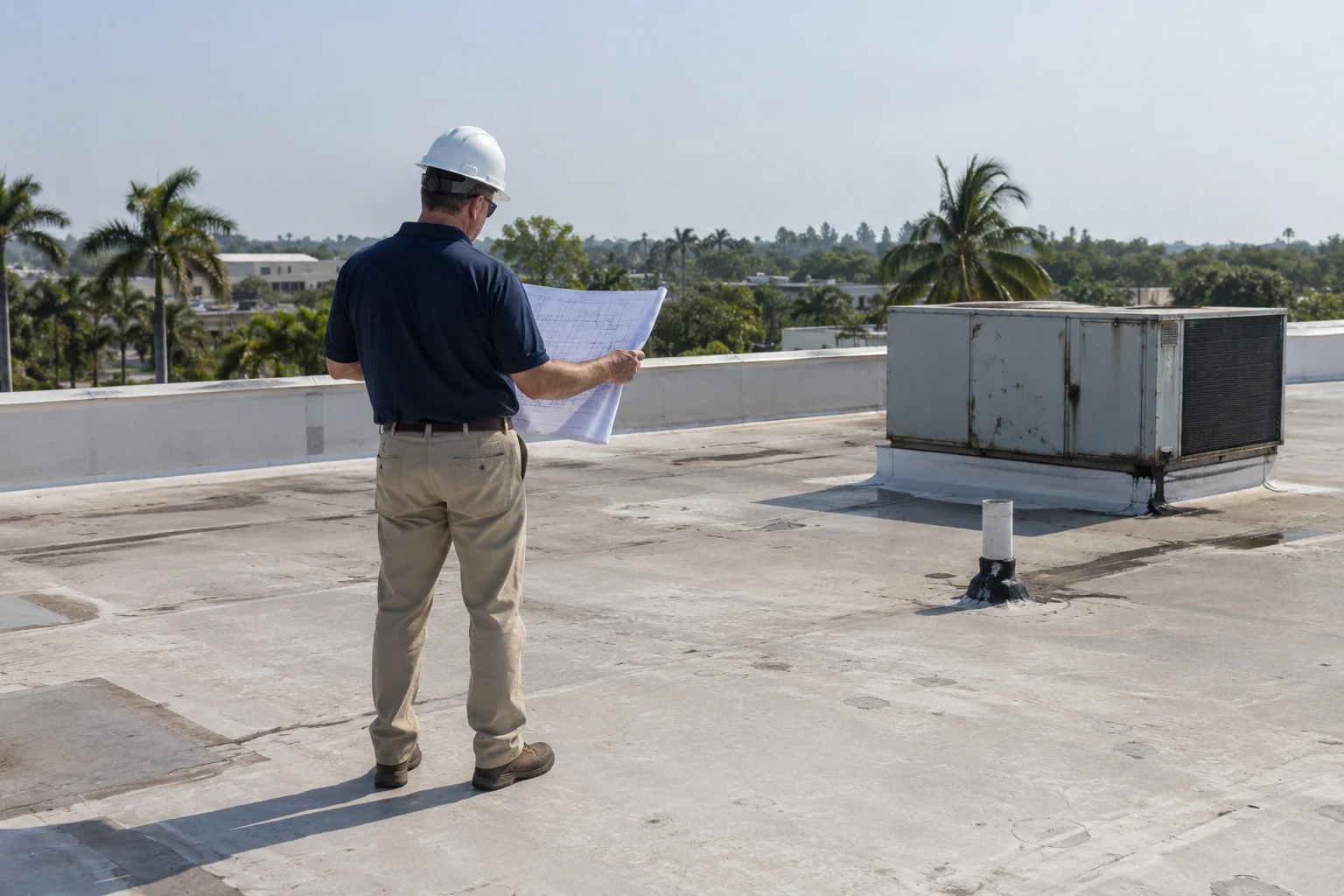
A curb raises a rooftop unit above the roof surface. We check curb height, corners, seams, counterflashing, fasteners, and the membrane transition. Rust, a separated corner, or a loose cap can admit water. A curb that shifts under load may have a support problem below the roof surface. We record the visible condition and ask the facility contact whether vibration, service work, or recent equipment replacement preceded the leak.
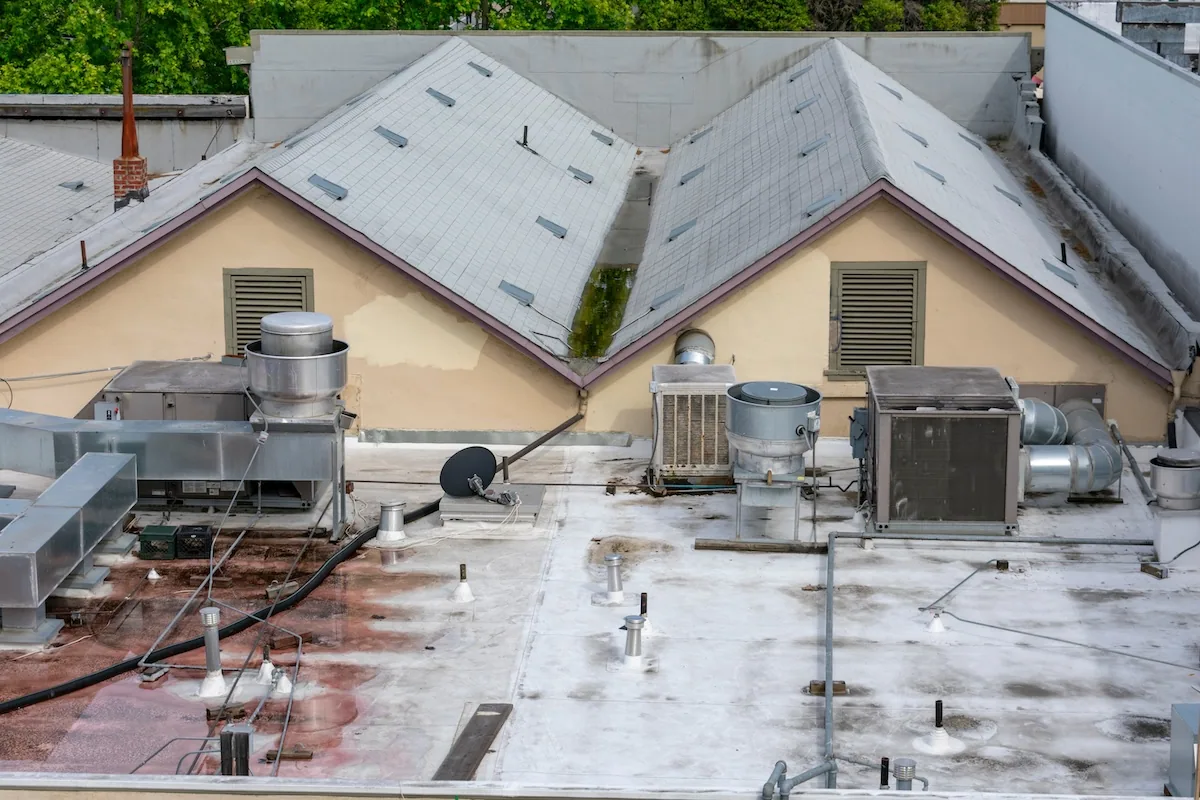
Pipe supports need a stable bearing surface and enough clearance for the roof membrane. We look for cracked pads, crushed insulation, sharp contact points, loose straps, and support legs that have moved. A pipe resting directly on the membrane can abrade it as the line expands or vibrates. A support that blocks drainage can also leave debris or standing water beside its base.
Equipment creates several paths for service traffic. We trace the access route from the hatch or ladder and note where technicians cross seams or step over piping. A walkway may protect the membrane, but its edges and transitions need inspection too. The field record identifies the unit, support row, and any damage that continues beyond the base.
Separate Roof Work from Mechanical Work
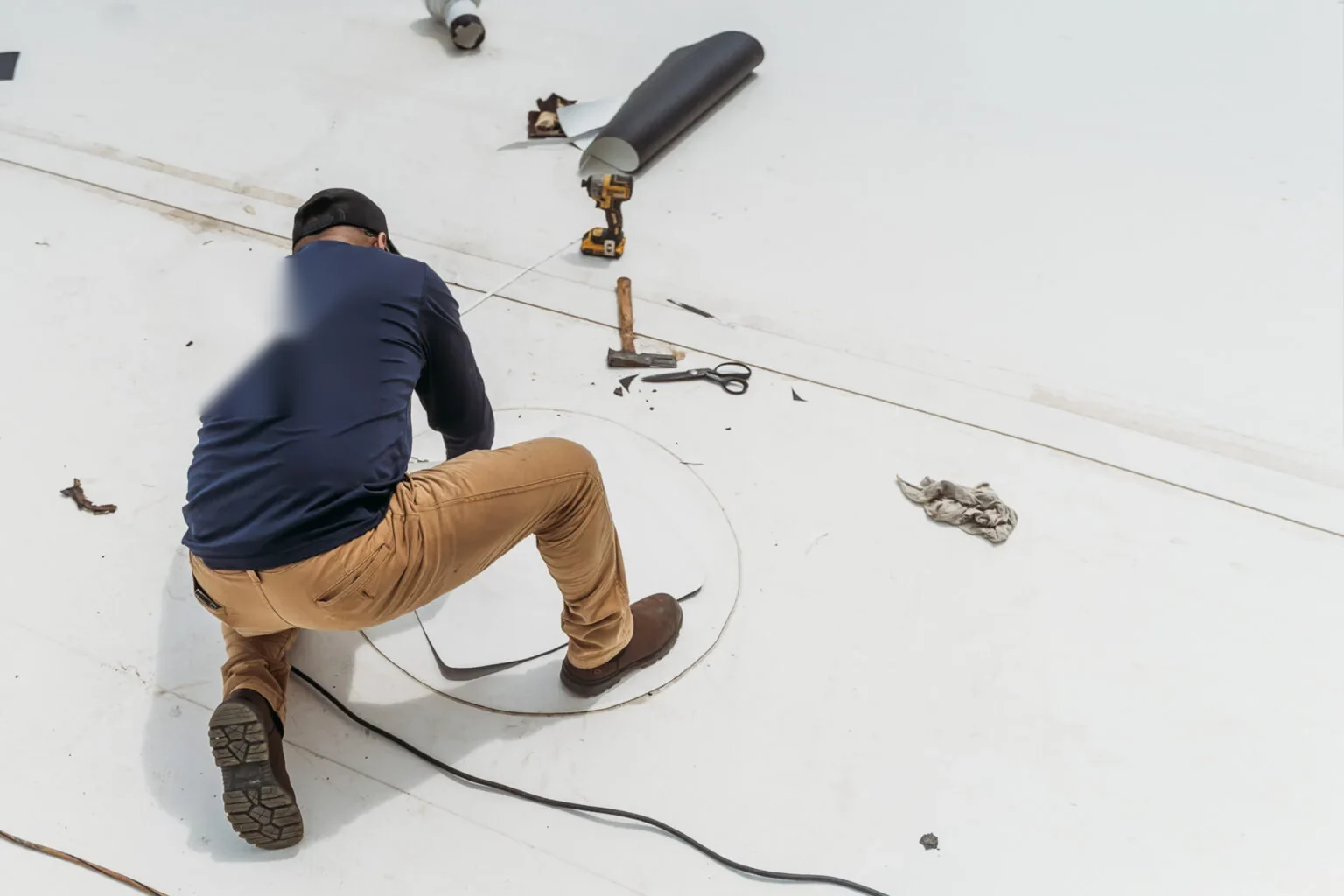
Roofing work may include rebuilding a curb flashing, replacing a support pad, adding a compatible walkway, or repairing membrane damaged by a moving leg. The equipment contractor may need to disconnect a line, lift the unit, or correct vibration. We state that boundary before work begins. If the curb itself is too low or damaged, the proposal can separate curb extension or replacement from the membrane tie-in.
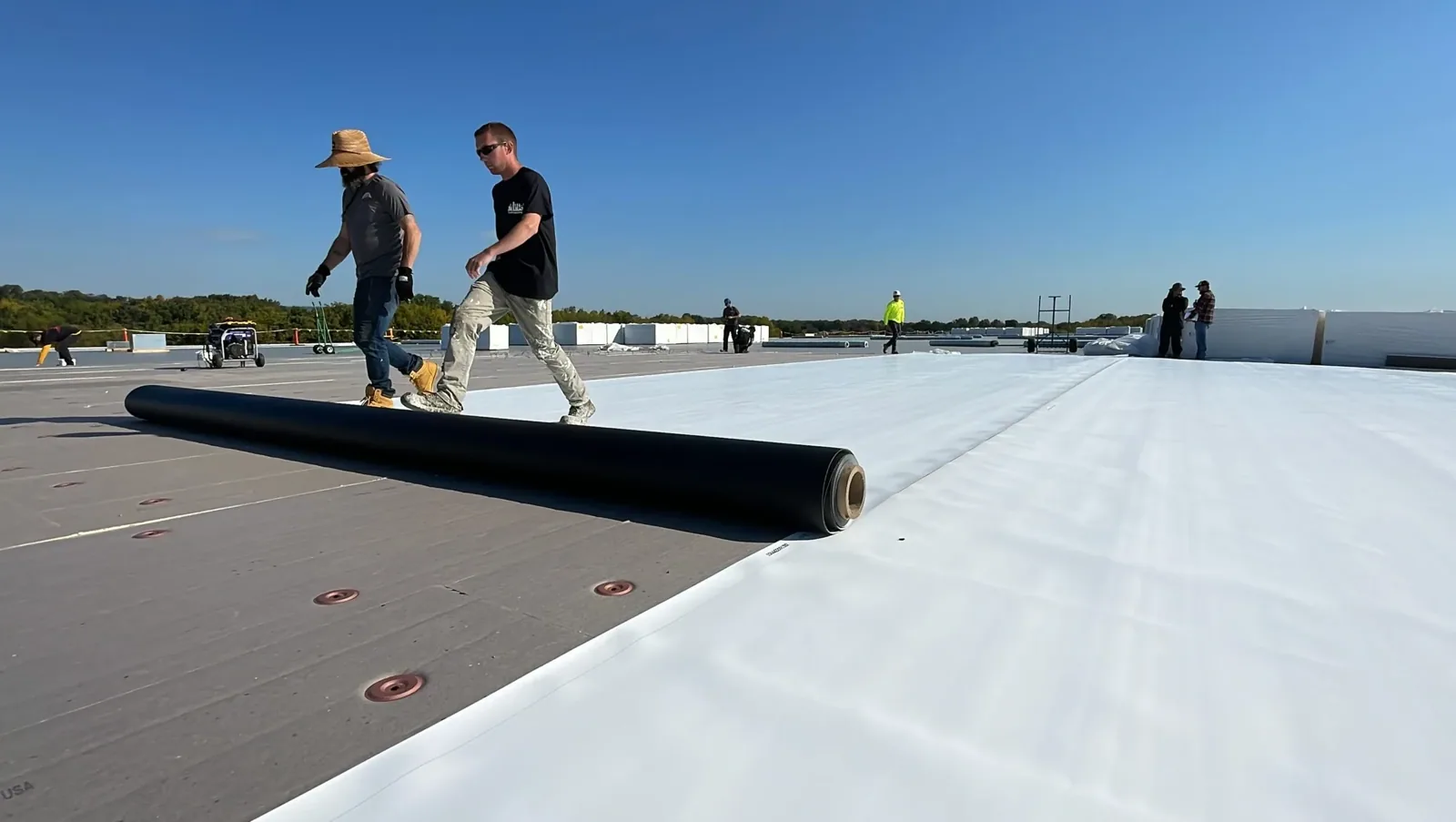
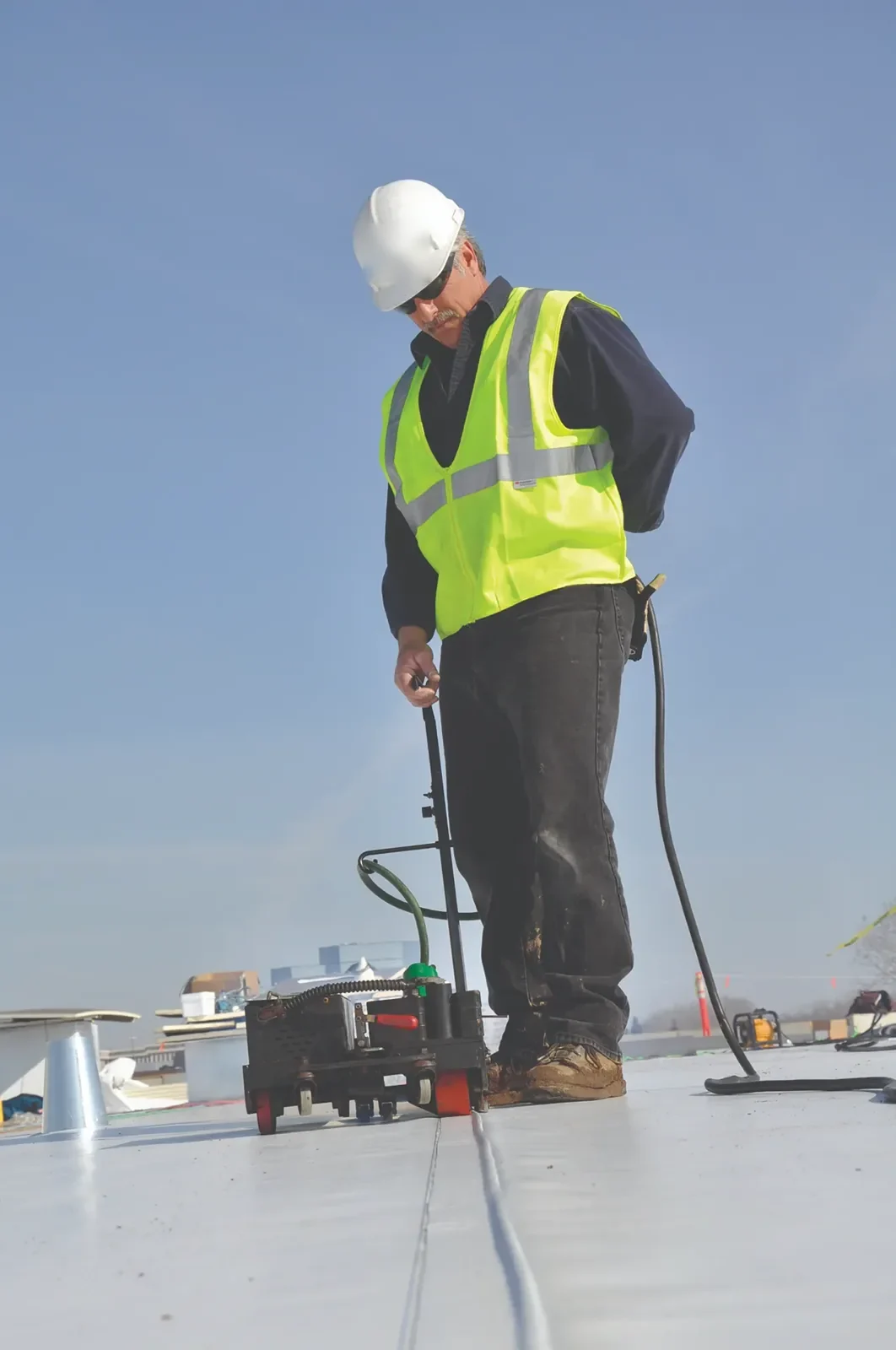
Repair materials must fit the installed roof system. A thermoplastic membrane may need a welded flashing and formed corners. Other systems use a different adhesive, primer, or reinforced detail. We identify the membrane when possible and review the applicable installation detail. A bead of sealant around a curb cannot correct a loose attachment or a base that continues to move.
When hidden conditions could change the repair, we agree on an opening or test cut before removal. The sample can show whether insulation or deck beneath the curb is wet. It cannot establish the condition under every piece of equipment. The owner receives the photos and a defined repair limit before a larger area is opened.
A replacement unit can have a different footprint or service clearance than the one it replaces. Before installation, we compare the curb dimensions with the equipment submittal and roof detail. If the opening changes, the owner can decide whether to modify the curb or select a unit that fits the existing base. That check can prevent a rushed field cut through the deck after delivery.
Schedule Around Unit Access
Unit location, operating status, electrical hazards, and crane access drive the work sequence. At an occupied technology or healthcare property, the facility contact may require escorts, restricted work windows, or notice before an alarm or unit is shut down. We record those conditions and identify the equipment that must stay in service. Roof repair should not assume that a unit can be switched off without approval.
Cost and timing depend on curb count, unit size, flashing type, support layout, roof height, membrane access, equipment lifting, and interior protection. A simple pipe pad replacement differs from a curb rebuild that needs mechanical disconnection. For a distribution building in the Chisholm Trail Road and Old Settlers Boulevard corridor area, delivery flow and rooftop staging may also affect material movement.
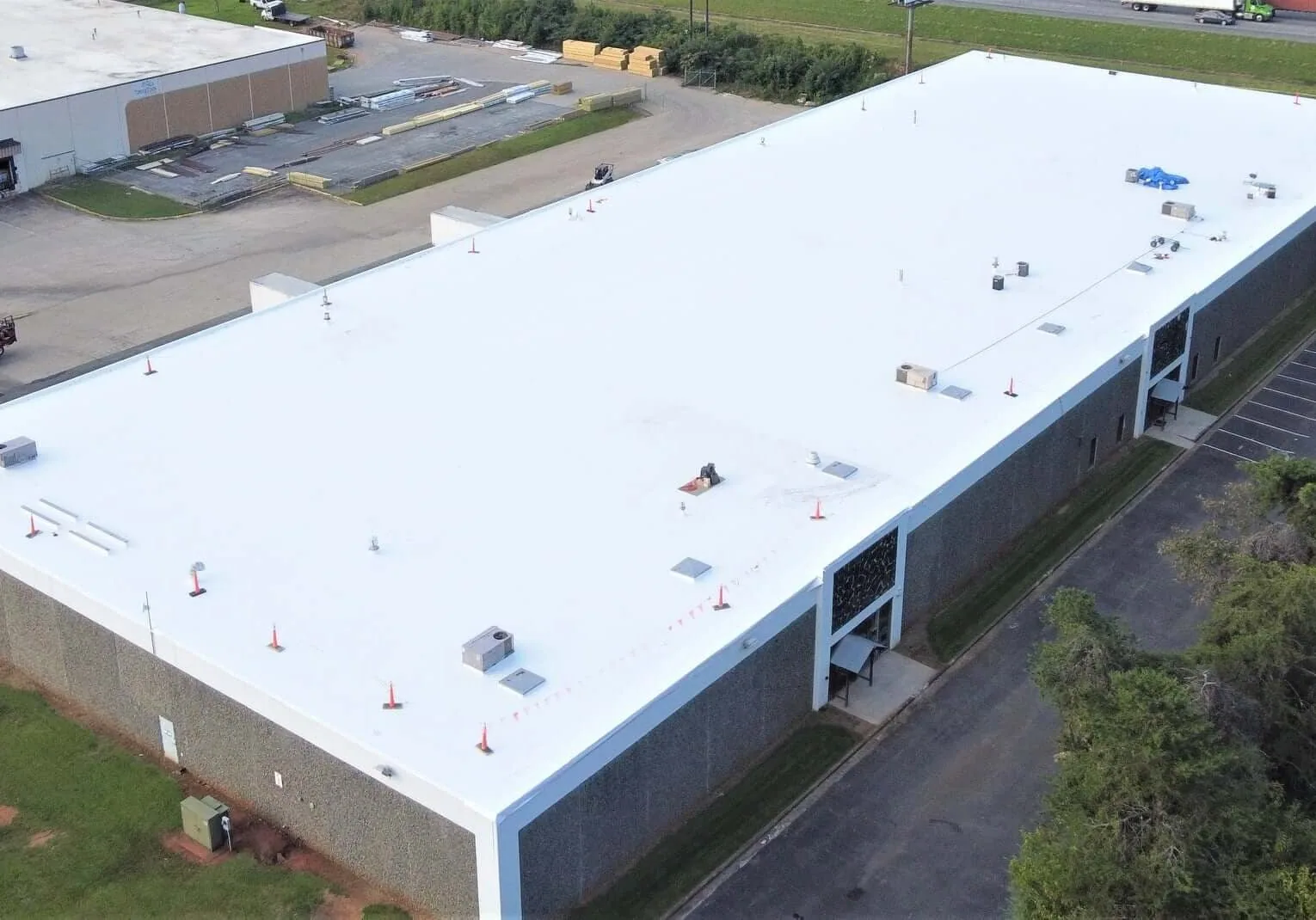
Related scopes may include a roof inspection to map several bases, membrane repair around a damaged support, or insulation replacement if the curb opening reveals wet layers. The system matters: a TPO roof needs its specified flashing detail. For a data-center roof, we also record the access rules for the equipment zone.
For a multi-unit building, we number each base on the roof plan and attach photos to that identifier. The estimate can then separate urgent leak locations from supports that show wear but remain dry. This makes phasing easier when one shutdown or lift cannot serve every roof zone at once. A facility manager can approve the first group while the remaining bases stay on a documented next-check list.
Close the Detail with Photos
Before work, the crew photographs each unit and support from a wide view and close views of the corners, flashing, and membrane contact. During repair, images capture the prepared curb, new attachment, and concealed transition before it is covered. The closeout names the unit or pipe row and records what the mechanical contractor completed separately.
After work, we check whether the flashing remains seated and whether the support no longer contacts the roof in a damaging way. A roof walk can verify visible conditions. It does not measure equipment vibration or confirm hidden structural capacity. If movement continues, the report assigns the next check to the proper trade instead of repeating surface sealant.
Owners should retain unit schedules, curb details, repair photos, and records of equipment changes together. When a new unit is installed, the roofing scope should be coordinated before the equipment is set. That sequence allows the curb, attachment, and membrane transition to be checked while the relevant surfaces remain accessible.
Before equipment moves, agree who disconnects services, lifts the unit, and restores the roof detail. Photograph curb dimensions, support feet, existing flashing, and membrane condition before the mechanical work starts. A replacement unit can have a different footprint or service clearance, so the curb may need modification before new flashing is installed. Protect the opening while the unit is raised, keep fasteners and debris out of drains, and inspect the completed transition from every side. The owner should receive one handoff record showing both equipment reset and roofing closeout.
Questions About Commercial Rooftop Equipment Curbs and Supports
Can a roofer repair a leaking rooftop unit curb without moving the unit?
Often, if the curb is stable and the membrane transition is accessible. A unit may need lifting or mechanical disconnection when the flashing is concealed or the base itself has failed.
Why does a pipe support damage the roof?
A leg can slide, bear too much load, or rub against the membrane as the pipe moves. We inspect the support contact and confirm whether the line needs adjustment by its mechanical contractor.
Will you work around equipment that must stay online?
We coordinate with the facility contact on access, clearances, and any approved work window. We do not shut down or open equipment without the required site authorization.
How many curbs can be included in one visit?
The count depends on access, unit type, roof zones, and the repair needed at each base. We identify the locations and group work only when the operating plan allows it.
What records help before a curb repair?
Send the unit schedule, roof plan, prior repair photos, leak location, and any service notes about vibration or equipment replacement. Those records help locate the right trade boundary.
Related Roofing Work
Chisholm Trail Road and Old Settlers Boulevard
Commercial Roof Inspection
Commercial Roof Repair
Commercial Roof Insulation and Cover Board
Commercial TPO Roofing