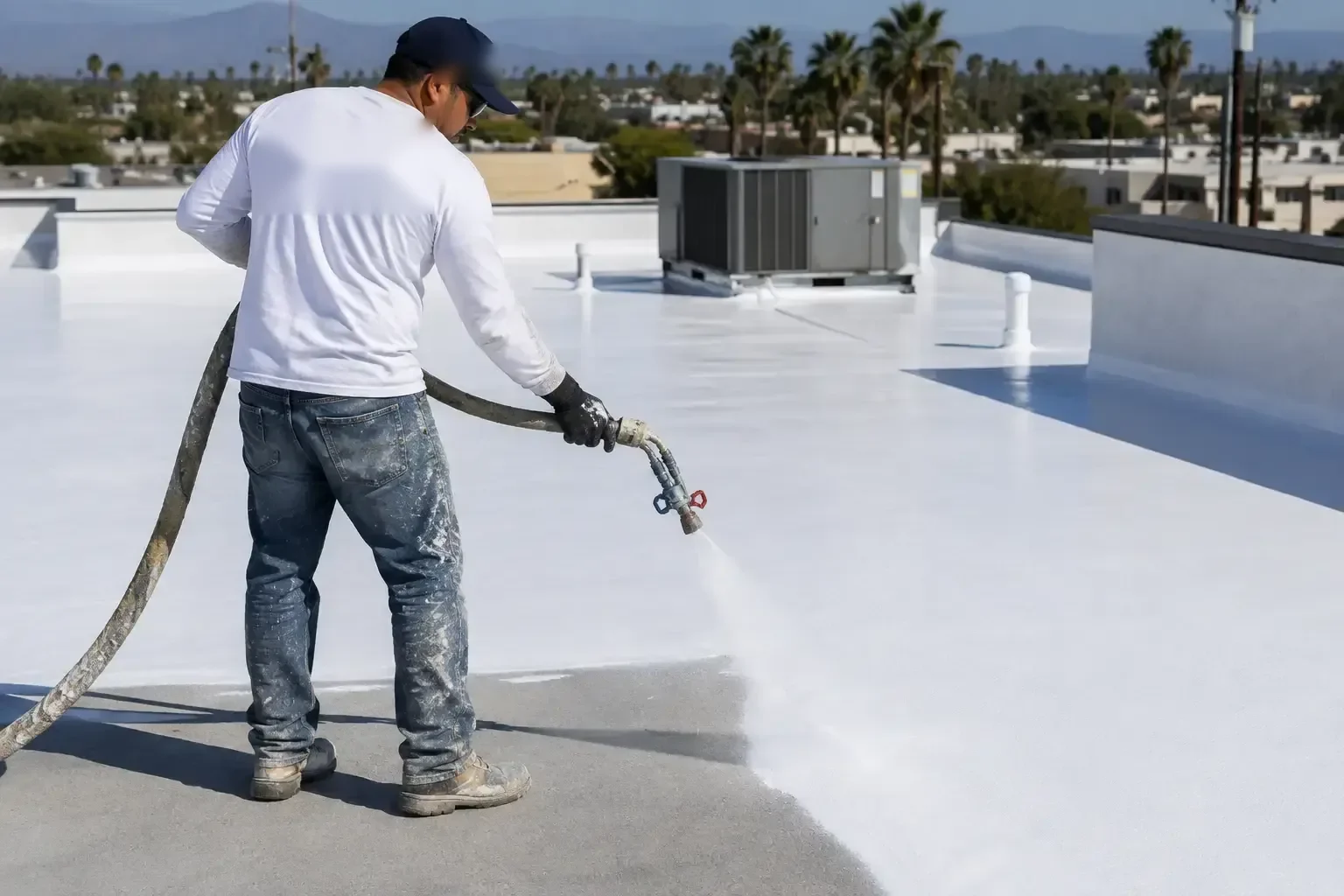
Check Coating Readiness
A silicone coating may tolerate standing water better than some coating types, but it still needs a sound surface beneath it. We inspect the existing membrane, seams, drains, and prior repairs before considering restoration. Round Rock healthcare facilities near Seton Parkway and the hospitality uses planned at Kalahari have different access requirements; the roof condition and installed system still decide whether silicone can be used.
Silicone is a liquid-applied roof coating that forms a protective film after curing. Product chemistry and application limits vary. We check the selected system documents before writing a scope.
Send the roof plan, coating history, leak or ponding location, product records, and access rules. We will inspect the substrate and identify needed repairs. Call 555-555-5555 or request a roof assessment.
Test the Surface Before Coating
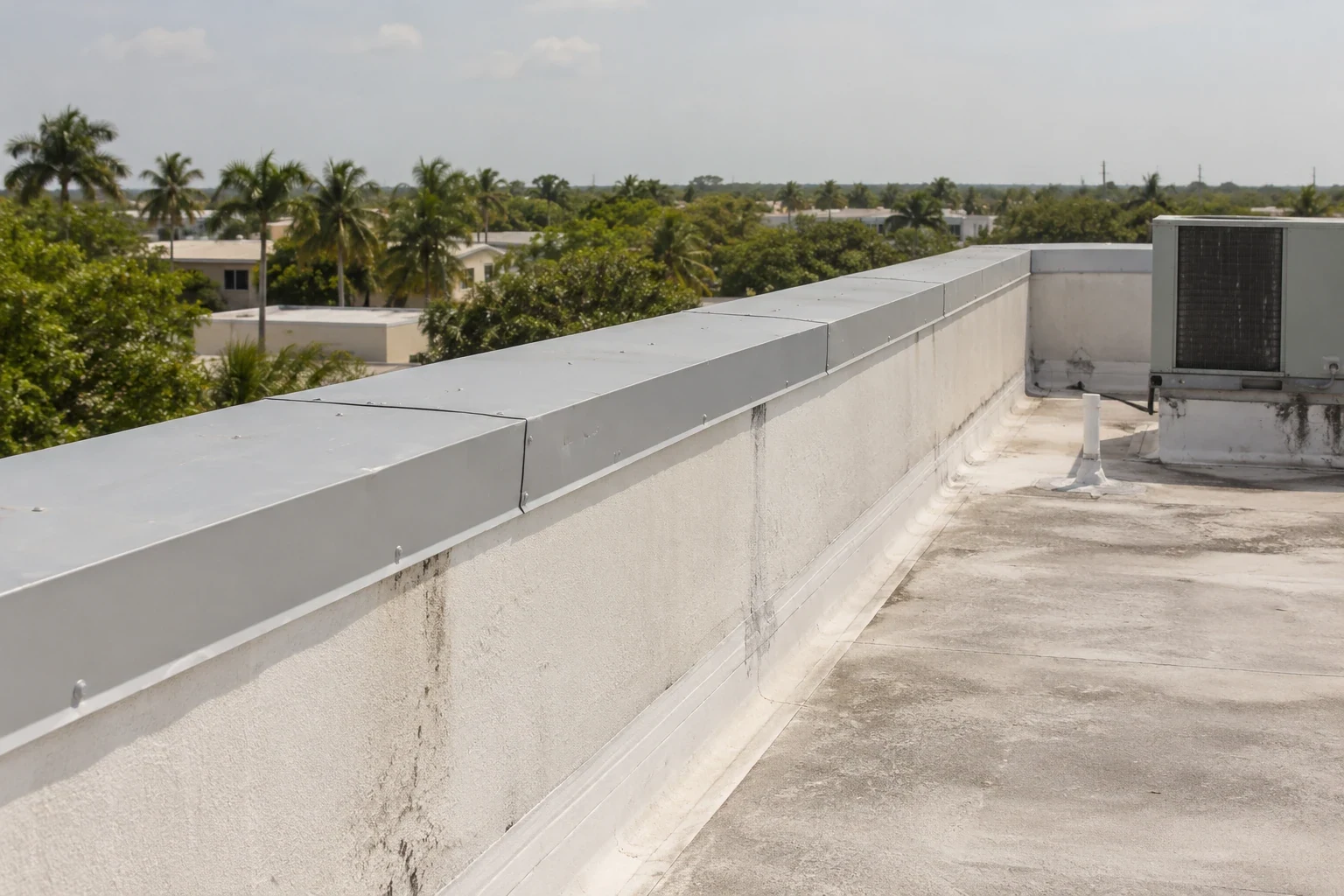
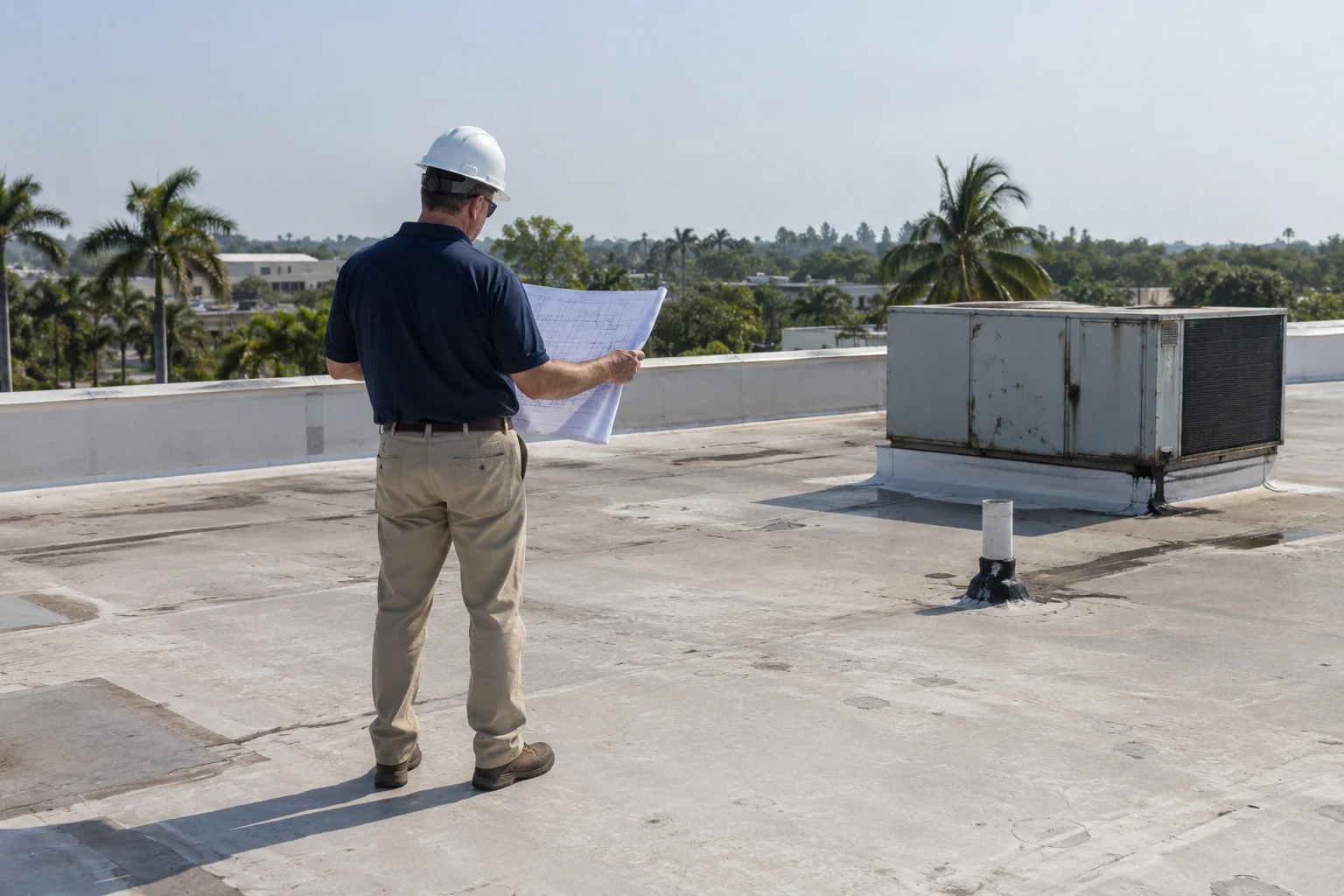
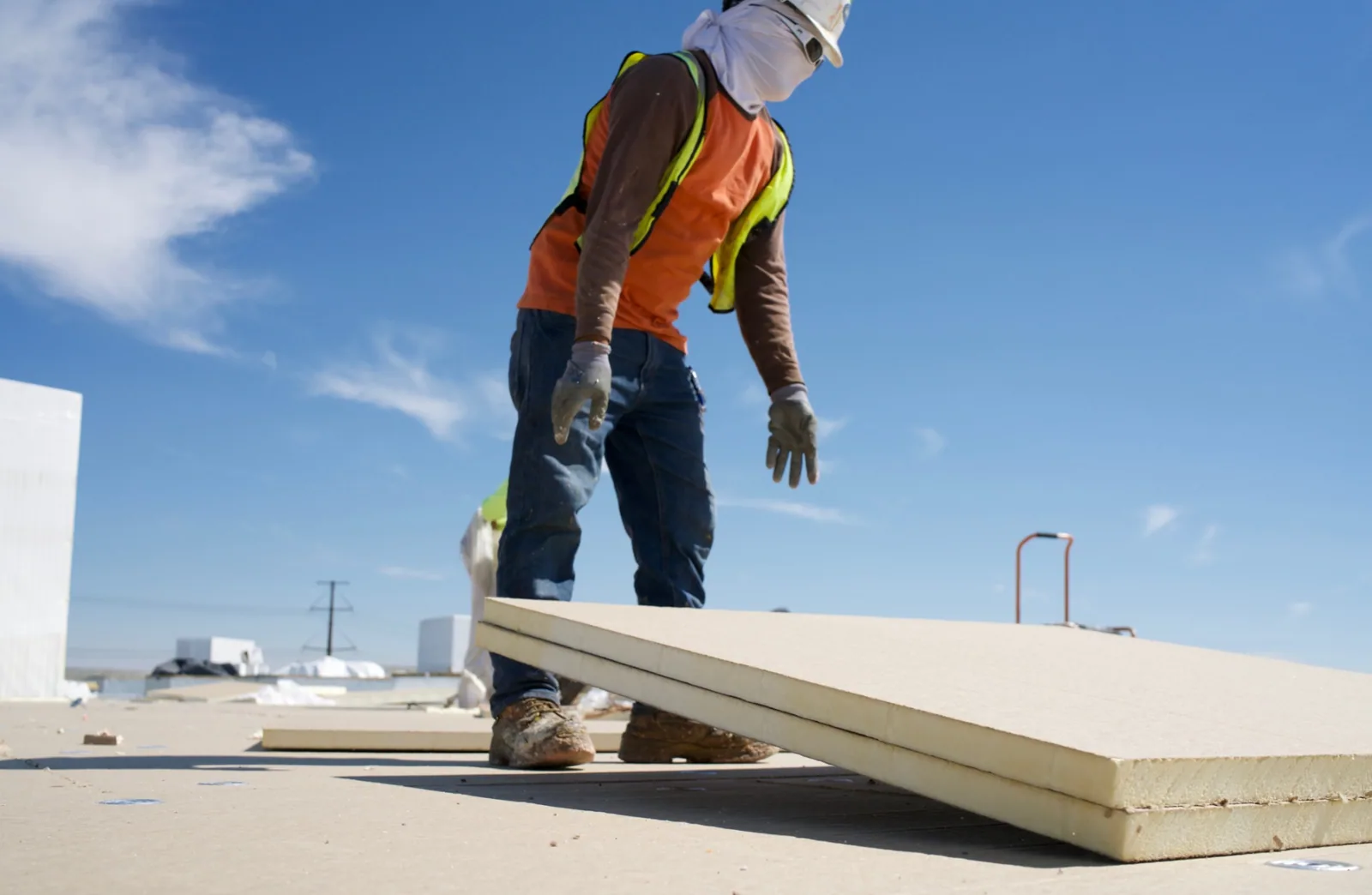
We look for loose coating, open seams, blisters, wet insulation, damaged flashing, and dirt or residue that could affect adhesion. The coating does not repair a loose membrane or dry out a wet assembly. If moisture is suspected, a scan can help select a test cut. The owner approves the opening and receives photos showing the layers found at that point.
Adhesion testing can compare the proposed coating with the existing surface. We record the preparation method and test location. If prior silicone, acrylic, asphalt, or another coating is present, its compatibility matters. A new layer should not go over unknown material without checking the product requirements and observed bond.
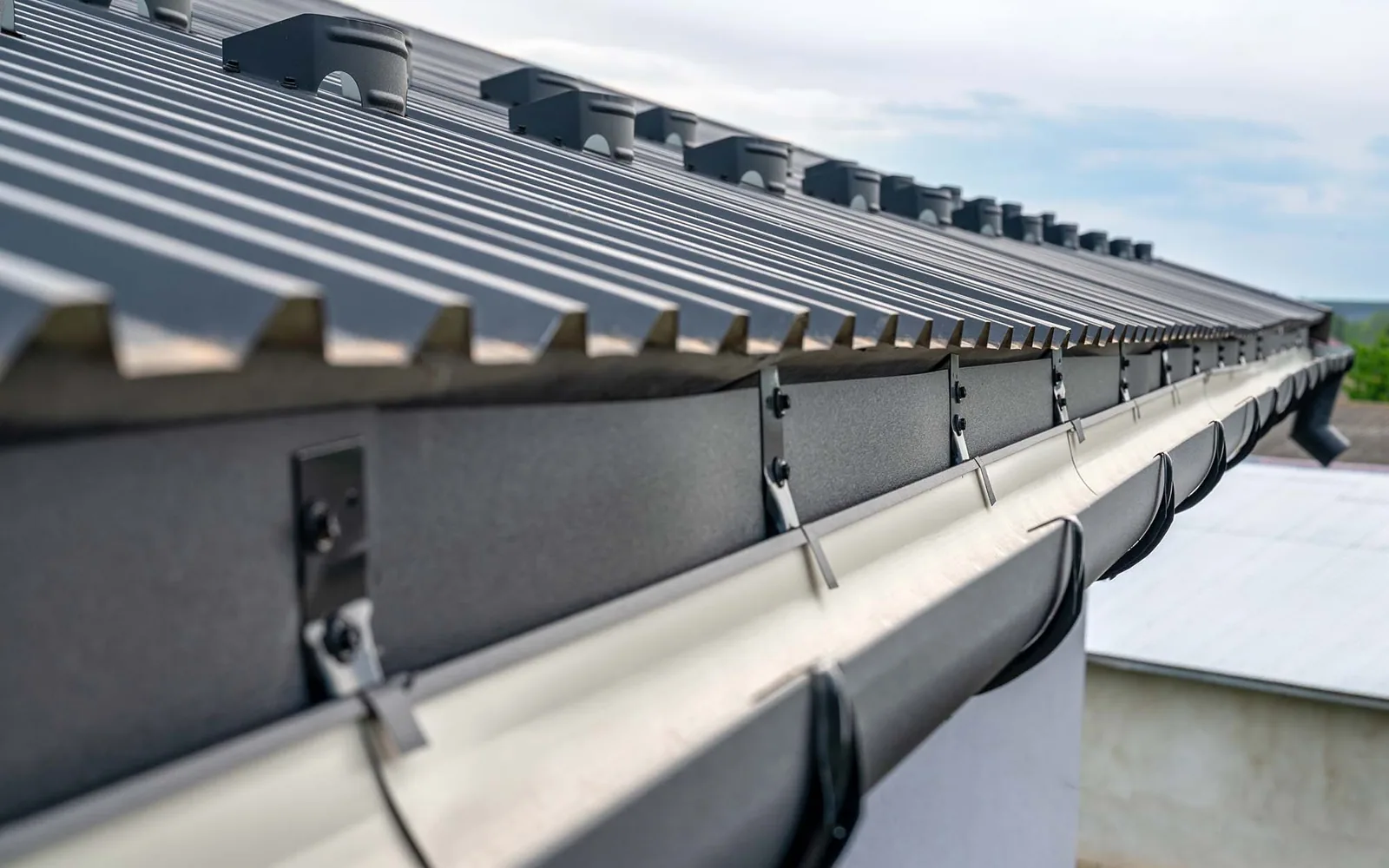
Drain bowls and scuppers must remain open. Coating can build up around a sump or narrow an outlet if the work boundary is not marked. We photograph each drain and identify areas to mask or protect. If the roof holds water because of low slope or deck movement, coating will follow that shape rather than correcting it.
Water remaining after a storm should be measured and photographed after the outlet is cleared. A thin film of moisture can persist on a flat roof, while a deeper pool may point to slope, settlement, or a blocked route. We record the depth and area, then compare that evidence with drain locations. The coating specification should state any ponding limit supplied by the manufacturer.
Test patches need enough cure time before adhesion is judged. We mark the sample area and note surface preparation, primer, and application thickness. If the coating releases, we check whether the problem is contamination, incompatible film, or a weak membrane below. The test result can prevent coating a larger area that will not hold the new layer.
Prepare Seams and Penetrations
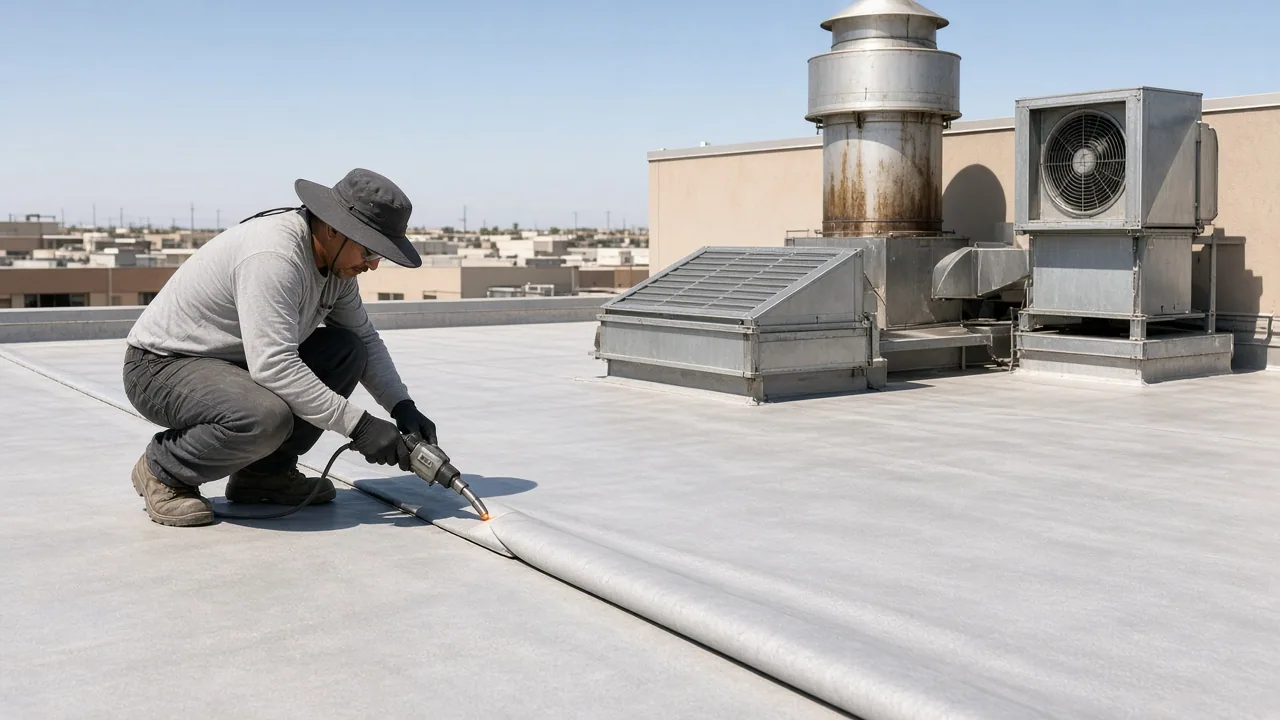
Before coating, the crew cleans the substrate, removes loose material, and repairs details that need more than a surface film. Seams, curbs, pipe bases, and roof edges may receive reinforcement or a separate flashing repair. We identify which areas need fabric or additional passes according to the selected product. Those transitions should be finished before the field coating is applied.
Silicone application rate and dry-film thickness must follow the product specification. The crew checks coverage, cure conditions, and mil thickness at required points. Wind, moisture, and temperature can change the application window. If rain arrives before the film cures, the affected area needs review before another coat is added.
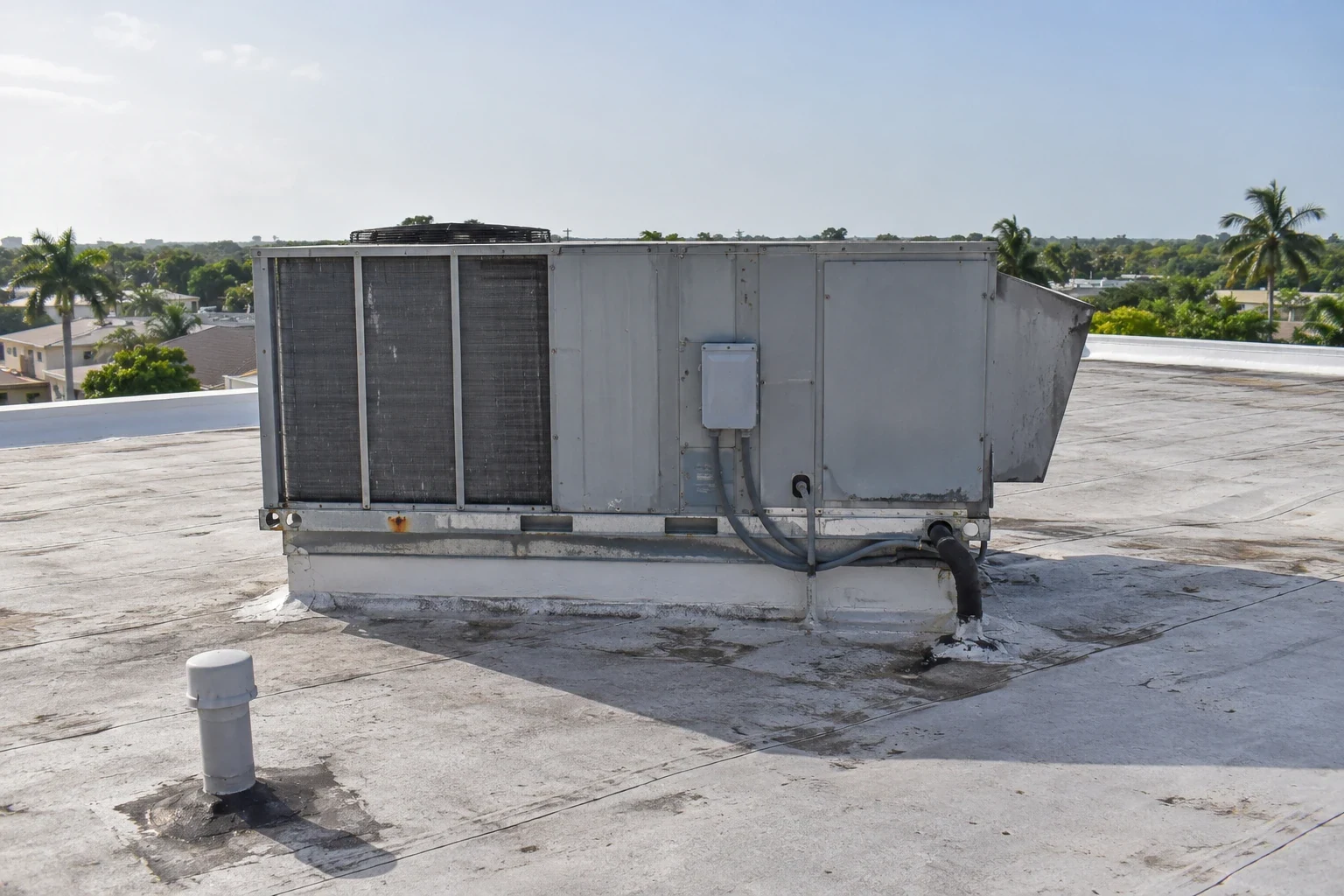
At a commercial property in Georgetown or Liberty Hill, secure access, air intakes, and operating hours can shape the work sequence. The site contact identifies sensitive areas before application begins.
Rooftop details may need separate materials from the field coating. A pipe boot with a split collar, loose metal counterflashing, or failed drain clamping ring needs a repair that restores its own connection. Coating can bridge some surfaces only where the product detail allows it. We list each reinforced transition and photograph its edges before they disappear beneath the field coat.
Compare Coating with Replacement
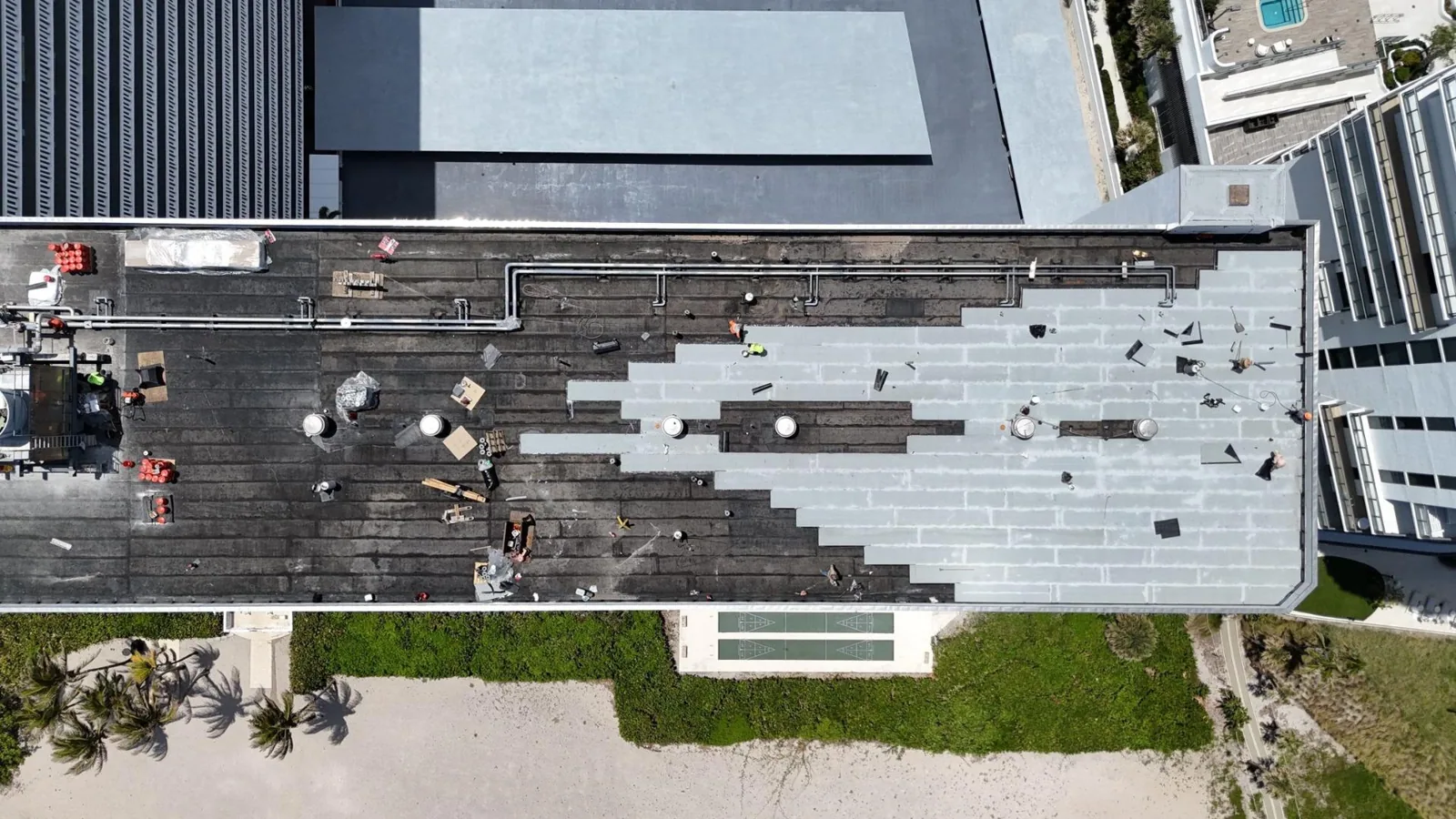
A coating can extend service on a compatible, stable assembly. Widespread wet insulation, loose attachment, multiple failing layers, or a damaged deck may call for a larger repair or replacement. We map the condition and explain what stays below the new film. A coating estimate should state preparation, repair work, coverage rate, thickness, and excluded areas.
Cost and timing factors include cleaning, adhesion tests, detail reinforcement, drain protection, access, and the area requiring additional coats. A building with extensive rooftop equipment needs more masking and movement around the units. If the roof is used for frequent maintenance, walkway pads may need to be included in the plan.
Related work may include roof inspection, drain correction, or wet-insulation removal. We can compare a silicone coating alternative such as acrylic only when the system and exposure support it. An existing TPO assembly or modified-bitumen roof needs its own adhesion review. A hospital roof may require a protected access schedule.
Silicone generally cures by reacting with moisture in the air, so thickness and weather exposure affect cure time. A heavy application may skin over while material below remains uncured. We follow the specified rate and allow the surface to cure before reopening rooftop access. Where rain or dew may arrive, the daily plan protects the work and records the portion that needs a later review.
Record the Coating Thickness
Before coating, photos show the surface, test areas, drain openings, and repaired details. The closeout lists material, preparation, application rate, measured thickness, and the roof zones completed. Any area that could not be coated or tested remains identified. The record also notes product cure time and restrictions on foot traffic.
Later maintenance checks look for cuts, worn routes, open flashing, and accumulated debris. Silicone can attract dirt and lose reflectivity over time, so future cleaning should follow the system guidance. New material should not be applied before confirming compatibility with the existing film.
If rainfall has not occurred after the coating cures, the closeout does not claim a rain test. A future leak report should include the roof zone and interior symptom, then the inspection can check both the coated area and nearby details. Keeping dated photos helps distinguish a new puncture from an older repair edge.
When another trade cuts or scrapes the coating, staff should mark the location and arrange a compatible repair before water reaches the substrate. A dated photo and roof-zone label help connect that repair with the original application record. New silicone should overlap a properly prepared edge according to the product detail.
Before adding silicone, confirm that the existing surface is clean, dry, and compatible with the proposed system. Check adhesion, coating thickness, seams, drains, and areas of trapped moisture. A new layer cannot correct an unresolved leak path or saturated insulation. The scope should identify preparation, repairs before coating, and the test or inspection used to confirm coverage at critical details.
Questions About Commercial Silicone Roof Coatings
Can silicone coating go over standing water?
Some silicone systems tolerate ponding better than other coatings, but the roof still needs a sound, prepared substrate. We identify why water remains and confirm the selected product requirements.
Will silicone fix a roof leak?
It can be part of a repair after the leak path and assembly condition are understood. Open seams, failed flashing, or wet insulation may need separate work.
How do you check coating thickness?
We measure the installed film at specified points and compare it with the product requirement. The closeout records the zones and readings.
What must be checked before recoating an existing membrane?
The existing product and bond need identification. We use product data and adhesion testing before including another layer.
Does silicone require maintenance?
Yes. Future checks look at drains, penetrations, walk paths, and cuts. Cleaning and recoating follow the installed system instructions.
Related Roofing Work

Georgetown

Liberty Hill
Commercial Roof Inspection
Commercial Roof Drains and Scuppers
Commercial Roof Insulation and Cover Board